|
|
Major cities in China like Beijing and Shanghai are being driven to pay greater attention to public transport security amid the increasing number of commuters. PROVIDED TO CHINA DAILY |
The major tool for that should be a differentiated pricing system, it said.
"The integration of the bus and metro systems is also not ideal," said Li Xian, deputy director of the Beijing Transportation Research Center, a think tank on traffic for the municipal government.
The two systems act more like competitors instead, Li said.
|
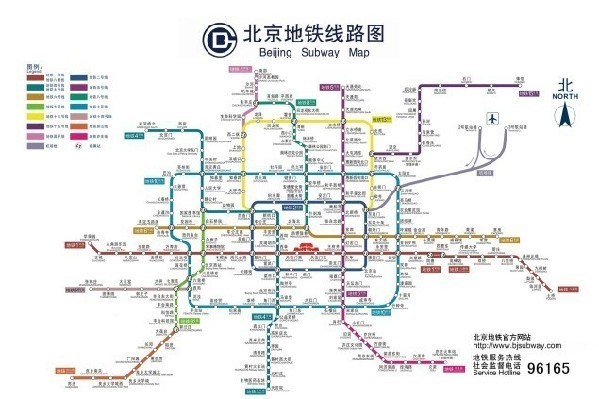
Improving access Guo Taisheng, a professor at People's Public Security University of China, conducted research on subway security in Shanghai in May and found a few gaps. He suggested adding more exits to improve security. Shanghai's Renmin Guangchang subway station handles about 3 million visits a day but it has more than 20 exits, "which can effectively split crowded passenger flow and provide more convenience for commuters", Guo told China Daily. Commuters in Japan and Hong Kong can head directly to their destinations underground because almost every tall building or major plaza is connected to an exit in the subway stations, he said. The well-extended subway lines of Tokyo serve as a good example. More than 100 subway stations exits are distributed at the station area and in neighboring commercial spots, Guo said. Conversely, most Beijing subway stations have only four exits, which cannot effectively handle the increasing number of passengers and can pose as security or safety risks when emergencies occur. The exits are also scattered around the business area instead of directly accessing commercial buildings, especially those in the CBD areas. The design similarly overloads ground traffic since many commuters will transfer to buses to get to their destinations, said Li Xian, deputy director of the Beijing Transportation Research Center. "The exits and extended underground passages are better for connecting more commercial buildings like offices and shopping malls to reduce traffic flow on the roads," she said. By Zheng Jinran and Cao Yin
|
The State-owned bus enterprises echoed that view, saying that many people preferred to take the subway even for short distances, resulting in a decline in the number of bus passengers in recent years.
Nan Tao from Beijing Public Transport Holdings said the number of passengers in ground public traffic (mainly buses) has declined continually, dropping by 37 million in the past five years.
Statistics from the research center showed that in 2013, 32.7 percent of passengers taking the subway traveled within 10 kilometers, and about 60 percent traveled no farther than 16 kilometers.
"The buses are recommended for short distance trips (within 10 kilometers), and the metro for longer ones. But many passengers have drifted to the metro because of its low price," said Li, the deputy director.
Beijing Public Transport Holdings agreed. The enterprise added that improper distribution of passenger flow also brought lower revenues, affecting the performance of the municipal transport system.
Ma Boyi, spokesman for the Transportation Administration of Beijing Municipal Commission of Transport, told People's Daily that it wanted to use prices to improve the travel structure with decentralized departures, to guide more people to take buses for short distances, thus making subway trips safer and more comfortable.
Pricing tools
The various government departments, think tanks and transport companies have mentioned the use of a differentiated pricing system to deal with current transport problems, pointing to high expectations of improving the overcrowded subway and less-popular public buses.
In 2000, when the price of a subway ride rose from 2 yuan to 3 yuan, the total number of passengers taking the trains dropped by 400 million in a year. But when the price was lowered to 2 yuan in 2007, the number began to climb and has increased by up to 30 percent.
Many also believe that the financial burden is a major reason behind the potential rise in prices since the transport companies seldom reported profits. Beijing Public Transport Holdings reported revenue of about 2.5 billion yuan ($408 million) from bus tickets in 2013, while its operating costs reached 17 billion yuan. The metro companies also reported a large deficit, with income at about 3.2 billion yuan in 2013 and spending hitting more than 6.6 billion yuan.
The municipal budget report showed that subsidies for public transportation hit about 20 billion yuan in 2013 to guarantee its normal operation for millions of residents.
Average expenses on public transportation in Beijing are also relatively lower than those in other Chinese cities as well as foreign ones.
Under current pricing, Beijing residents spent 87 yuan a month on the subway, accounting for 2.6 percent of their disposable income on average; or 40 yuan a month for those taking buses, accounting for 1.2 percent, a report from the research center showed.
"Based on international experience, it's reasonable to keep the expenses on public traffic between 5 and 10 percent of their disposable income," Li said.
"Though the cost would grow, it's still affordable," said Beijing commuter Shi Chao.
"But the government needs to guarantee that the buses and subways run on time and are comfortable."
Like Shi, more than half of the 40,000 suggestions from a public consultation in July on transport prices expressed support for price increases. But there were disagreements on details, including the range of increase, discounts for traffic card users, and subsidies for special-needs passengers like the elderly and people with disabilities.
"The price for the subway should be different in line with the distance traveled. The farther, the higher," said Li Xian from the government think tank. The difference in prices can guide passengers traveling short distances to take public buses instead, Li said.
Pricing by distance has been widely adopted both in domestic and foreign cities. In Shanghai, the price for a subway ride starts at 3 yuan and goes up to 11 yuan.
"Special needs passengers should be given subsidies directly instead being given free passes," Li said. The subsidies will also help improve the accuracy of research on usage to continually improve the system and its benefits, Li said.
Bus companies also suggested price differentiations based on distance. The current price for most trips is one yuan, or 0.4 yuan for passengers with travel cards, the lowest in the country.


Copyright 1995 - . All rights reserved. The content (including but not limited to text, photo, multimedia information, etc) published in this site belongs to China Daily Information Co (CDIC). Without written authorization from CDIC, such content shall not be republished or used in any form. Note: Browsers with 1024*768 or higher resolution are suggested for this site.
License for publishing multimedia online 0108263 Registration Number: 130349