Time to play the import card









China must use its big domestic market to counter rising trade protectionism
The recent World Trade Organization ruling that the European Union is illegally taxing Chinese steel fasteners is of great significance and will help Chinese enterprises enjoy better competitive conditions in the international market.
The WTO's appellate body said in its ruling on July 15 that the EU isn't complying with international commerce rules by imposing anti-dumping duties on Chinese-made fasteners.
The EU imposed anti-dumping duties of 26.5 to 85 percent on all Chinese fastener pieces for a five-year period in January 2009. China filed a complaint with the WTO later.
It is China's first victory against the EU at the WTO, 10 years after the country joined the Geneva-based global trade body.
The move will encourage more Chinese companies to defend their rights in dealing with unfair anti-dumping rules. The fastener industry is of relatively small scale, with most companies small- and medium-sized. Since they can win, why can't some bigger industries and larger companies?
In this case, China has changed the EU's unfair trade rules against Chinese goods by applying the WTO laws, setting a good example to take the initiative to "push forward the evolution of rules" instead of passively "following international practices".
Inspired by this victory, there will be more occasions where Chinese companies employ the WTO laws and dispute settlement mechanism to urge Western partners to change unfair trade rules. On the other hand, Chinese companies have to consider carefully when they want to impose unjust trade restrictions.
However, China is more likely to deal with unfair trade rules made by non-Western countries through bilateral negotiations, instead of appealing to the multilateral mechanism.
The main reason is that Western nations are unwilling to take the highly efficient, but low-cost bilateral negotiations, as they believe they may have a better chance to win trade disputes through the multi-lateral mechanism.
The current WTO rules are made under the Western domination, thus representing more of their interests.
Meanwhile, China's victory in this case, by increasing the confidence of Chinese companies and other developing members to use WTO rules to defend their rights, will benefit the organization's own development.
Dominated by Western countries in legislation, the WTO laws seem to always serve their interests instead of those of the developing members, who seem never to have the chance to win, even if it is China, the world's second largest economy. In that case, the organization will be unable to continue without the support of the developing members.
In the international trade dispute arena, China often finds itself positioned as the defendant. Beside the trade rules (including some fundamental ones and the huge compromise China made when joining the WTO), a more important reason is that China mainly is the exporter, but importers enjoy more rights.
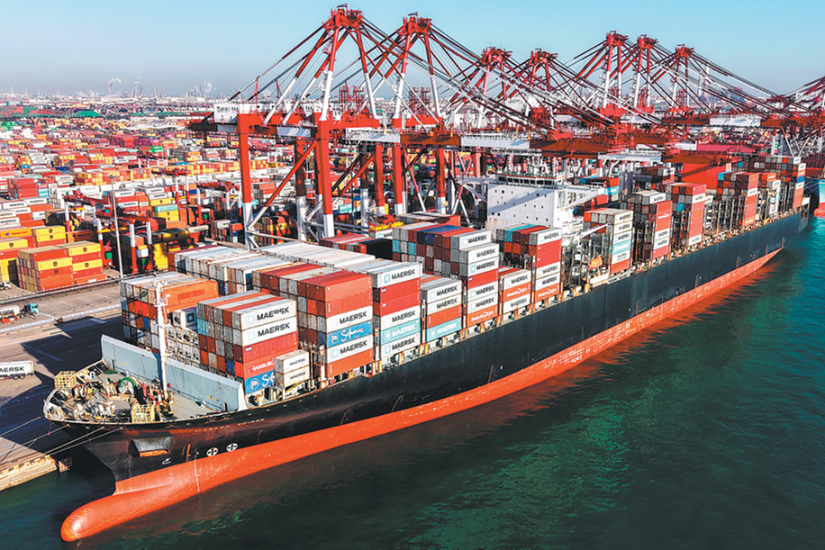
Europe and the United States constitute the world's largest import markets. To keep these key markets, export companies usually have to accept import countries' restrictions, and even humiliations.
As a result, to better deal with trade disputes, except actively coping under the current ruling system, and exerting efforts to construct a global mechanism more beneficial to ourselves, China needs to think about how to make proper use of its increasing import rights as a fast growing import country and a market crucial to an increasing number of companies around the world, to help our citizens and companies to gain fair treatment overseas.
We can have a look at the huge capacities of the domestic market. Merely from the perspective of the retailing of consumer goods, there is already a big market that is growing rapidly.
Between 2000 and 2009 China's retail sales enjoyed an average annual growth of more than 13 percent. Retail sales hit 12.5 trillion yuan (1.36 trillion euros) in 2009, among which the wholesaling and retailing sales' value of tradable goods was 10.54 trillion yuan, or $1.5 trillion, much higher than the value of goods China exported that year, $1.2 trillion.
China's retail sales rose 18.4 percent year on year to 15.46 trillion yuan last year.
As the biggest victim of global trade protectionism during the past 10 years, China is now confronted with a new surge of trade protectionism.
However, we have also been endowed with strong import capacity by the tremendous domestic market and huge sum of foreign exchange reserves. Exercising the import rights properly will help China's trade partners realize their real interests and can prevent their domestic protectionism from imposing unjust rules on Chinese companies and citizens, contributing to build a fair and open competition stage for all players.
The author is a scholar with the Chinese Academy of International Trade and Economic Cooperation.