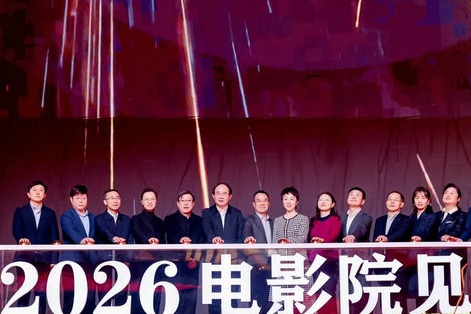
High taste









| Yu Long, artistic director of the Beijing Music Festival, says that his job is to serve the people who need classical music. [Liu Zhe / China Daily] |

Artistic director of premier music festival aims for the best
Yu Long, the man behind one of China's premier music events, is not someone who cares to pander to the lowest common denominator.
The Beijing Music Festival, now running through October and of which he is artistic director, is aimed directly at those who like serious classical music.
"My job is to serve the people who need classical music. I don't need to force people to go to the concert hall to listen to music. It is not my job," he says.
Yu, 47 and a somewhat larger-than-life personality, was in an uncompromising mood this week at Beijing's Poly Theater, one of the venues for the 22 concerts that make up this year's festival, which is set to attract 30,000 people.
Again, it has attracted some of the biggest names in the classical music world, including Riccardo Muti, the music director of the Chicago Symphony Orchestra, British conductor Daniel Harding and the astonishing Grammy Award-winning South Korean soprano Sumi Jo.
"Some people like rock 'n' roll, some jazz music; but my aim is to serve those who like classical music. I am a professional musician. I am a professional organizer. I give them the best," he says.
The festival, which is in its 14th year and in the past has put on concerts by pianist and conductor Daniel Barenboim and world-famous Chinese artists Lang Lang and Yo-Yo Ma, has now established an international reputation and is certainly regarded as one of the premier Asian music events.
"The Beijing Music Festival is actually an organization and I think it has played a role in developing classical music to a professional standard in China," he says.
Classical music audiences in China are renowned for their enthusiasm on the musicians' international circuit, often not just demanding one but two, and sometimes, three, encores.
"They sleep before but when it comes to the encore they wake up. They are very good business people. They know they have paid for what comes before the encore and they want the extra," he says laughing.
Yu, who is constantly having to juggle his schedule to cope with the demands of the festival, was getting ready to attend that night's concert featuring the Chinese bass-baritone Shen Yang who would be singing Mahler's lieder at the Beijing Concert Hall.
 |
Yu has been instrumental in staging challenging works in China such as those by the 77-year-old great Polish composer Krzysztof Penderecki, who made an appearance at last year's festival, as well as premiering works such as Chinese composer Zhou Long's opera Madame White Snake, also last year, which went on to win the Pulitzer prize this year. He was also the first in China to stage Richard Wagner's Ring cycle and Alban Berg's opera Lulu.
"We have premiered a lot of works and given a lot of support to Chinese composers and introduced a lot of composers to Chinese audiences such as (Gyorgy) Ligeti and Philip Glass," he says.
Some see this in contrast to the National Center for Performing Arts (NCPA), China's impressive new concert hall next to Tian'anmen Square, which regularly serves up a diet of Beethoven and Tchaikovsky symphonies.
"This is their decision. I have no comment. Each music or artistic director has a different vision. I wouldn't say mine is the best but mine is in line with what people are doing in Berlin and London."
Yu, who is from Shanghai but now lives in Beijing, is the grandson of well-known Chinese composer Ding Shande and had classical music drummed into him at an early age.
"No one is willing to become a musician at a very young age. They are forced into it. Some people say they loved classical music from the age of three. That is bull...
"As a result, I don't force my daughter. She says she doesn't want to become a musician and I say that is fine. You can become a journalist or a lawyer. That is fine."
After studying at the Shanghai Conservatory in the 1980s, he went on to the Hochschule der Kunst in Berlin, which he says was a transforming experience.
"The German music family tree is very important. I learnt so many things from Germany, like discipline, order and management.
"I used to speak German very well but I now speak lousy German and English. Thank god, I didn't forget my Shanghainese."
He grew up at a time when classical music was effectively driven underground during the "cultural revolution" (1966-76).
"After the 'cultural revolution' people tried to re-establish classical music but the steps were very slow. I still remember when Isaac Stern (the American violinist) came to China in the late 1970s and made the movie From Mao to Mozart," he says.
Few have done more since to develop classical music in the country since. The China Philharmonic Orchestra, which he co-founded in 2000, was voted by Gramophone magazine as one of the most "inspiring" orchestras in the world.
Yu, who is also music director of both the Guangzhou Symphony Orchestra and the Shanghai Symphony Orchestra, says Chinese orchestras are gradually climbing up the international league table.
"I don't think we can compare yet with the top orchestras like the Berlin Philharmonic, Vienna Philharmonic or the New York Philharmonic but we can stand very well now against many European and other Western orchestras," he says.
The theme of this year's music festival is works by Gustav Mahler, marking the 100th anniversary of the composer's death.
"Mahler is one of my favorite composers. His music is different from the person you read about in the biographies about him. His music is from the inside."
Although Yu has a passion for bringing serious music to China, he is the first to recognize there are limits to what can be achieved in a world dominated by pop music and lighter fare.
"I am not Napoleon. I don't want to change the world. I don't have to tell people to like classical music. If they like it, they can listen. If they don't like it, they don't have to. It is so simple."

Today's Top News
- Lai's 'separatist fallacy' speech rightly slammed
- Xi's message for New Year widely lauded
- New Year's address inspiring for all
- Xi congratulates Science and Technology Daily on its 40th anniversary
- Xi congratulates Guy Parmelin on assuming Swiss presidency
- China Daily launches 'China Bound'