Maintain manufacturing momentum









Huge domestic market potential may deter firms from moving out of China
The successful development of a manufacturing sector in a developing country often sows the seeds of its own demise. Increasing demand for labor and other inputs leads to rising costs, and the firms that are engaged in the labor-intensive manufacturing activities that originally fueled growth gradually lose their competitiveness to places that are lower on the developmental ladder.
In China, this progression is clearly evident as firms in coastal areas are struggling with rising labor costs, an appreciating yuan, and the rising input costs. This often raises the question of what comes next for manufacturing in China.
One concern is that firms that had invested in China hoping to take advantage of an unlimited supply of cheap labor and Chinese firms that had prospered by taking advantage of cheap labor will forced to relocate to countries that have lower labor costs. This is already happening and it will inevitably continue.
A recent report on global sourcing by KPMG indicated that firms engaged in labor-intensive sectors such as apparel and footwear are moving to locations in South and Southeast Asia that have cheaper and younger labor forces. Firms can find cheaper workers in China's interior, and many are aggressively pushing into the interior, but demographic trends in China and the government policies focused on developing the interior could make any of the advantages that are gained relatively short-lived.
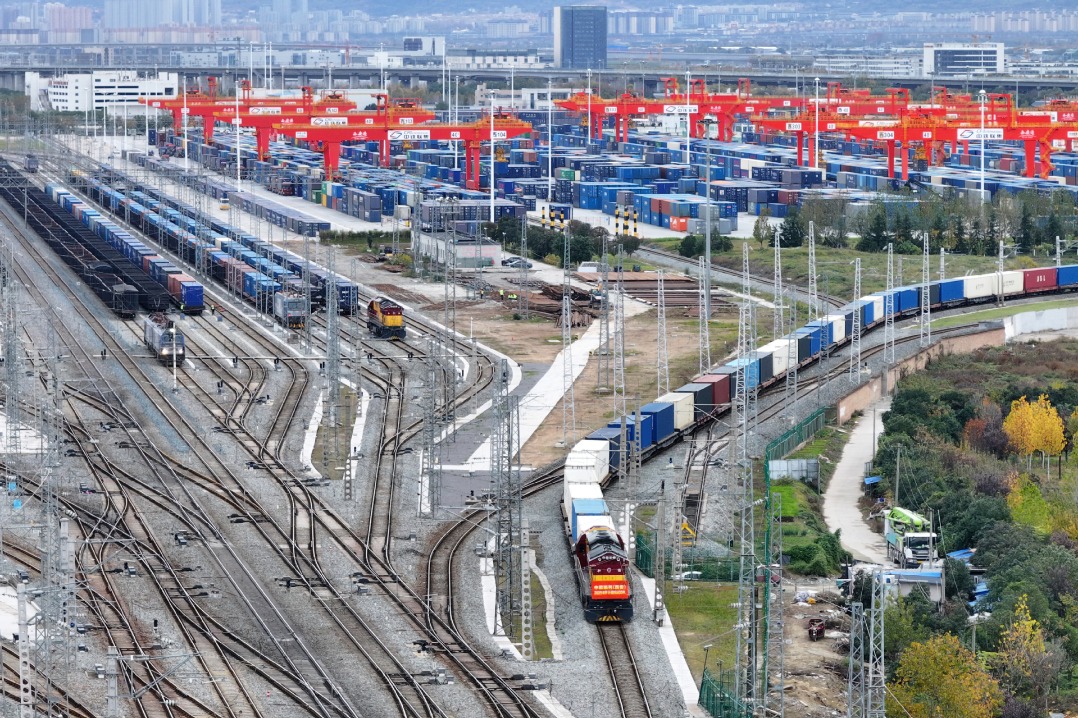
The importance of the flow of investment out of China should not be overstated, however. Even as costs in China rise, there are important reasons why a firm will continue to manufacture within the country. One of the most important is the depth and quality of the supply base, and in many sectors, China has the most advanced cluster of suppliers in the world. The industrial clusters in China are quite different from the clusters that might be found in traditional manufacturing powerhouses such as Japan, Germany, or the United States, where clusters are usually dominated by local firms and emerge slowly over time.
Chinese clusters combine the world's leading firms in an industry, which have co-located in China and feed off each other's strengths, and low-cost Chinese firms that are rapidly gaining capabilities. In sectors such as electronics, these advantages far outweigh the lure of a slightly cheaper labor bill.
Another reason for retaining manufacturing capability in China is the importance of the Chinese market. In an ever increasing number of sectors - mobile phones, personal computers, automobiles, construction equipment, and machine tools to name a few - the Chinese market is the largest in the world, and in order to understand to this market and be able to respond quickly to changes in this market, firms are locating more activities in China rather than less.
Although China is often portrayed as a classic case of export-led development, it is the domestic market that has been the key driver of growth. Manufacturing in China is not necessarily manufacturing by Chinese firms.
A second concern, particularly among policymakers in Beijing, is that Chinese firms will fail to gain the capabilities that are required to shift from low to high value-added manufacturing. The need to promote innovation and technical-upgrading is a core theme of China's 12th Five-Year Plan (2011-2015).
Here again, the growth of the domestic market gives China a considerable advantage because it provides strong incentives for capability building within the Chinese economy. Much of the growth in the Chinese market has been in the middle segments of the market, segments that demand much less expensive products than foreign firms are used to providing.
In order to succeed, these firms must build design capabilities within China, train low-cost Chinese suppliers to provide quality components, and develop organizational structures that can respond quickly and flexibly to the Chinese market. The end result is exactly the type of capability building that the Chinese government seeks to promote.
The key challenge for the Chinese government is to provide a fertile environment for capability-building and increasing productivity and in this area there is much room for improvement.
The author is lecturer in Chinese business studies at the Said Business School at Oxford University.