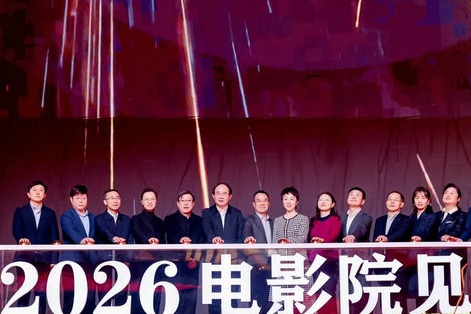
Eastern lightning, Western skies









Filmmakers must learn to communicate creatively, constantly and effectively
As a British writer/director/producer based in Hong Kong for over 20 years, I consider myself lucky to be a witness to the extraordinary transformation that has occurred in the Chinese film industry.
When I first arrived in the city, Hong Kong films still dominated East Asia. Cantonese-language films were hugely popular across the region, though the biggest potential market (the mainland) still remained untapped.
In the intervening years, the Hong Kong film industry has undergone a steep decline, while the mainland, as a market for both production and distribution, has grown in a manner and scale that no one could have anticipated.
Today, the mainland makes more films than ever before, and the Hollywood films that are allowed distribution in the mainland can make almost as much money there as they do in the US. The movie that best illustrates this point is James Cameron's Avatar.
The last decade has seen American studios and independent filmmakers more eager than ever to cooperate with their Chinese counterparts to make movies that will succeed in both markets. But to date, the results have been mixed.
The much-anticipated Forbidden Kingdom, starring Jackie Chan and Jet Li, performed better in China than in the US. In contrast, The Karate Kid (also starring Chan) did more business in America. Highly awaited co-production projects including a live-action version of Mulan (starring Zhang Ziyi) and Snow White and The Seven Shaolin (to be directed by Yuen Woo-ping) have (so far) failed to get off the ground.
Evidently there is a desire on the part of filmmakers from both the East and West to cooperate, and it's to the benefit of both that they do so. Besides the potential financial rewards, these crossover projects allow for a cultural exchange that can increase understanding between the different cultures.
The biggest problem that often afflicts these co-productions is a basic failure to communicate, and a very different approach to the art and science of filmmaking.
In China, a filmmaker like Feng Xiaogang is viewed rather like an artist in Renaissance Italy. He paints what he likes, and, as Michelangelo told the Pope, it'll be ready when it's ready. Directors, and particularly those with a proven record, are financed by their version of Florentine patrons, one or more of the affluent film production entities, and they deliver as they "art" a film that matches their personal vision.
In Hollywood, movies are the result of "development", a process that involves a lot of people other than the director. In fact, many American movies are developed long before a director is even signed. On a big-budget Hollywood blockbuster, even a high-profile director is compelled to deliver his or her film on time, and to deliver a film deemed acceptable by the studio concerned.
Hollywood studios or independents that cooperate with Chinese filmmakers are dismayed when the director decides to change the script on a whim. "This isn't the film we paid for", they complain. From a Chinese point of view, all that matters is that this was the film that the director decided he or she wanted to make.
Conversely, successful Chinese directors, such as John Woo, have gone to Hollywood and found themselves forced to endure endless rounds of meetings with anonymous studio executives as they "develop" their projects.
I would suggest that neither method is perfect. As with many things, the truth lies in a "middle way" between two extremes. Hollywood filmmakers need more flexibility in terms of creative control while Chinese directors need to be more willing to actively collaborate with American partners, especially when the latter have financed or pre-bought their works.
China's growth as a world cinema superpower is unstoppable. Mandarin-language films will continue to play to the country's massive movie-going population. The degree to which China can use that power to enhance its international image, and the potential of this great nation as a distribution and co-production partner for Hollywood filmmakers, depends on the degree to which East and West are prepared to communicate creatively, constantly and effectively.
The author is an expert on East Asian films, particularly Hong Kong action films.


Today's Top News
- New Year's address inspiring for all
- Xi congratulates Science and Technology Daily on its 40th anniversary
- Xi congratulates Guy Parmelin on assuming Swiss presidency
- China Daily launches 'China Bound'
- Manufacturing rebounds in December
- PLA wraps up military drills around Taiwan