Changing contours









|
|
|
|
Tea growers in Wuyishan brewing organic recipe to overcome productivity, pricing hurdles
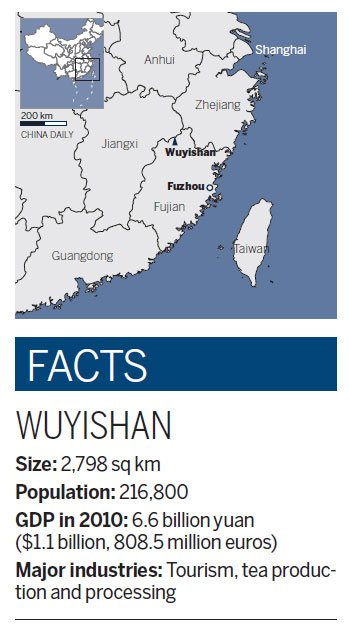
Steeped in rich history, the misty and verdant mountains of Wuyi are set to sport an organic hue that not only promises to bring in the tourists, but also keep the cash registers ringing for tea growers. Tea has been one of the most important exports from China for several years now with the Wuyi blends being the pride of choice among connoisseurs of Chinese tea.
Black tea is one of the major components of global tea trade and accounted for 66 percent of the some 4.06 million tons of tea produced in 2010, according to the latest available figures from the China Tea Marketing Association. Exports of black tea stood at 1.3 million tons in 2010, and accounted for nearly 75 percent of the global tea exports. Nearly 44 percent or 40,000 tons of the black tea produced in China comes from Fujian, especially from the Wuyi Mountain.
In spite of these impressive figures, black tea exports from China currently are less than 5 percent of the global total. Stiff competition from other growing nations on the pricing front and stringent quality controls imposed by importing nations have queered the pitch for many tea growers in China.
But things are set to look up again for tea growers as consumers across the world are becoming more health conscious and turning to products with more natural ingredients.
|
||||


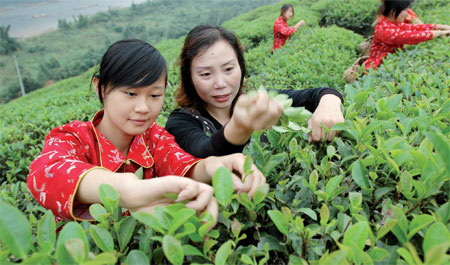
The city has 592 companies and 958 family workshops that are engaged in tea production. Many of them have already turned to organic cultivation with an eye on the future.
Tribute Tea Co is one of the first local companies that pioneered organic tea farming in Wuyishan.
|
Wuyishan has 592 companies and 958 family workshops that are engaged in tea production. [Chen Hao / for China Daily] |
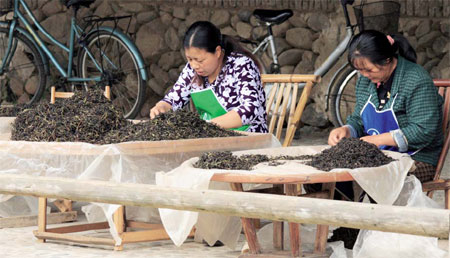
Yu Zeqin, general manager of the company, says that the Wuyi Mountain is particularly suitable for organic tea cultivation.
"The temperature difference in the mountain range is huge during day and night, which makes tea trees less vulnerable to diseases and pests. Hence it needs less pesticide and fertilizers," Yu says.
Established in 2007, the company has 35 hectares of organic tea gardens in the Wuyi Mountain, with 90 percent of its employees being tea farmers.
"Tea is a special commodity. Its price and profit varies based on the quality," says Yu, adding that better quality will help tea growers have a better say in product pricing. Some tea growers have seen their revenue grow five-fold after getting an organic certification, he says.
The local government has also taken several steps to encourage organic planting and invested 22.1 million yuan ($3.5 million, 2.7 million euros) to build a 2,800-hectare organic tea garden in the city.
According to the city's 12th Five-Year Plan (2011-2015), Wuyishan plans to build a tea technology center with an additional investment of 600 million yuan. The center will take up an area of 13 hectares and serve as a tea trading and logistics hub, help to standardize tea production systems, perform product quality testing and provide technical support for the Wuyi Mountain tea to go global.
Over the next five to 10 years, Wuyishan plans to become the provincial tea production base, with an annual tea processing output of 200 million yuan by 2015.
During the 12th Five-Year Plan period, the provincial government will spend more than 30 million yuan every year on the tea industry, especially in tea resources protection, building an organic tea garden and tea testing institutions, mechanized production and promotion. It also aims to encourage at least three tea companies to get listed on overseas bourses and two in China.






Today's Top News
- China reports 20% rise in inter-regional trips on first day of New Year holiday
- China rebuffs criticism over drills around Taiwan
- Mainland pledges deeper cross-Strait integration in 2026
- Lai's 'separatist fallacy' speech rightly slammed
- Xi's message for New Year widely lauded
- Swiss bar fire kills around 40, injures more than 110