Communist Party of China in brief









1. History
The Communist Party of China (CPC) was founded in July 1921.
From 1921 to 1949, the CPC led the Chinese people in their arduous armed struggle and finally succeeded in overthrowing the rule of imperialism, feudalism and bureaucrat-capitalism and establishing the People's Republic of China (PRC). After the founding of the PRC, the CPC led the Chinese people of all ethnic groups in defending the independence and security of the country, successfully completing the transition from new democratic revolution to socialist revolution, carrying out systematic large-scale socialist construction, and achieving economic and cultural progress unparalleled in Chinese history.
After the Third Plenary Session of the Eleventh Party Central Committee at the end of 1978, the country embarked on the biggest change in the history of New China. From 1979, the CPC began to carry out the reform and opening-up policy initiated by Deng Xiaoping. In more than two decades since the initiation of the reform and opening-up, China's economic and social development has been crowned with remarkable success and the country has taken on a new look. This has been the best period since the founding of the PRC in which the Chinese people have reaped the most material benefits.
By the end of 2011, it had 82.602 million members.
Hu Jintao is the current General Secretary of the Communist Party of China.
2. Nature
The Communist Party of China is the vanguard of the Chinese working class as well as the Chinese people and the Chinese nation. It is the core of leadership for the cause of socialism with Chinese characteristics. The Party represents the development trend of China's advanced productive forces, the orientation of China's advanced culture and the fundamental interests of the overwhelming majority of the Chinese people (the Three Represents).
The Communist Party of China takes Marxism-Leninism, Mao Zedong Thought, Deng Xiaoping Theory and the important thought of Three Represents as its guide to action.
The basic line of the Communist Party of China at the primary stage of socialism is to lead the people of all ethnic groups in a concerted, self-reliant and pioneering effort to turn China into a prosperous, strong, democratic and culturally advanced modern socialist country by making economic development our central task while adhering to the Four Cardinal Principles and persevering in the reform and opening up.
3. The Principle of Democratic Centralism
Individual Party members are subordinate to the Party organization, the minority is subordinate to the majority, the lower Party organizations are subordinate to the higher Party organizations, and all the constituent organizations and members of the Party are subordinate to the National Congress and the Central Committee of the Party.
The Party's leading bodies at all levels are elected except for the representative organs dispatched by them and the leading Party members' groups in non-Party organizations.
The highest leading body of the Party is the National Congress and the Central Committee elected by it. The leading bodies of local Party organizations are the Party congresses at their respective levels and the Party committees elected by them. Party committees are responsible, and report their work, to the Party congresses at their respective levels.
Higher Party organizations shall pay constant attention to the views of lower organizations and the rank-and-file Party members, and solve in good time the problems they raise. Lower Party organizations shall report their work to, and request instructions from, higher Party organizations; at the same time, they shall handle, independently and in a responsible manner, matters within their jurisdiction. Higher and lower Party organizations should exchange information and support and supervise each other. Party organizations at all levels should enable Party members to keep well informed of inner-Party affairs and to have as many opportunities as possible to involve themselves in them.
Party committees at all levels function on the principle of combining collective leadership with individual responsibility based on division of labor. All major issues shall be decided upon by the Party committees after discussion in accordance with the principle of collective leadership, democratic centralism, individual consultations and decision-making through formal meetings. Members of the Party committees should earnestly perform their duties in accordance with the collective decisions taken and division of labor.
The Party forbids all forms of personality cult. It is necessary to ensure that the activities of the Party leaders are subject to the supervision of the Party and the people, and at the same time to uphold the prestige of all the leaders who represent the interests of the Party and the people.






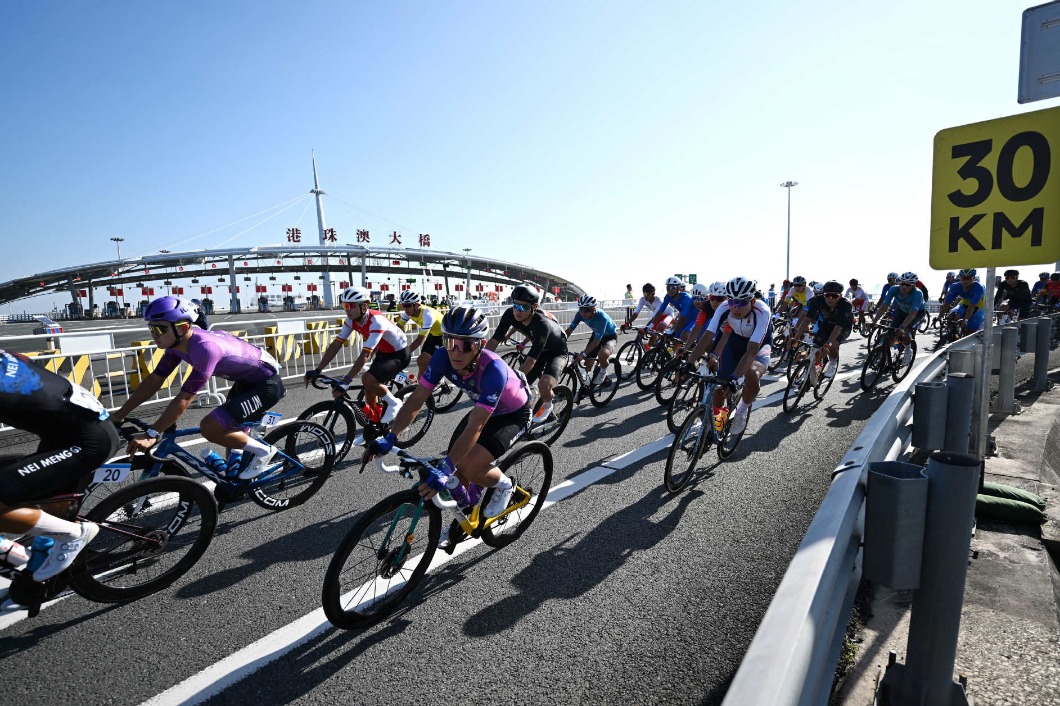
- First cross-border event debuts at the National Games
- China Focus: National Games enhances coordination under 'one country, two systems'
- China's Fujian aircraft carrier to make regular appearances on high seas: spokesperson
- A decade of dialogues
- HK: a stage for art and cultural dialogue
- Tapping truly unknown wonders