Take care on road to development









Following in China's footsteps helpful but there could be stumbling blocks
China has made great economic strides since its reform and opening-up in the 1970s, so it is natural for most countries in Africa to want to learn from the Chinese experience when pursuing their own development.
But they must bear in mind that there are big differences between African countries and China, and the measures taken in China may not be entirely suitable. African countries can refer to some of the experiences of China, but not all.
Similar problems to those China faced in developing the market economy include an imbalance in the development of cities and rural areas, unemployment and the widening gap between the rich and the poor. African countries can learn from China's experience in these areas, but they cannot replicate it because of the differences in social, cultural and economic conditions between the two regions.
First, on population as we all know, China has the largest in the world, and that can have both positive and negative influence on development. Comparatively speaking, countries in Africa do not have such a big population, and even though they are facing increased population growth, its influence is still small.
Second, there is a huge difference between the state of the heavy and chemical industries in Africa and China in terms of major development advances, which would make it difficult for African countries to learn from the Chinese example.
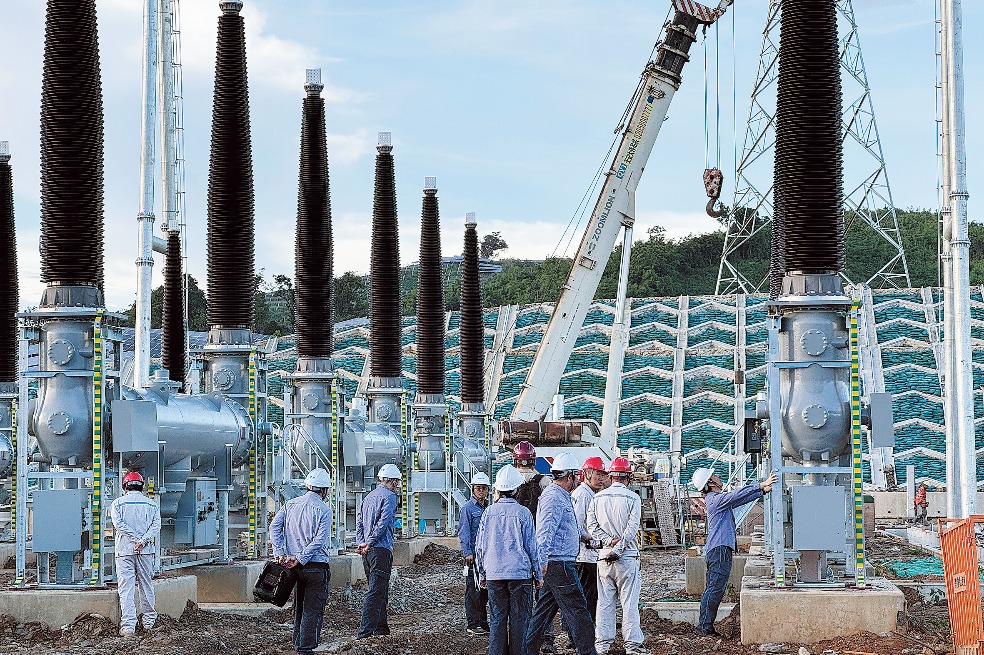
As the second-largest economy in the world, China has a comprehensive structure in these industries, as well as in the manufacturing industry. In fact, China had carried out large-scale industrialization before its reform and opening-up, and even though it experienced obstacles and difficulties, these systems are now solid.
Although countries in Africa have been committed to the diversification of their economies, their industrial structure tends to be one-dimensional and narrowly focused, with manufacturing less developed and weak support facilities.
On the third point, compared with countries in Africa, China has enough capital, reflected in high family savings, large bank deposits and inflow of foreign capital. African nations, on the other hand, have a shortage of funds, low domestic savings and little inflow of foreign capital.
African countries, therefore, should not just pay attention to the successes that have happened in China, they should also note the problems caused by China's speedy development. There is environmental pollution, the widening gap between the rich and the poor, and social problems in areas such as education, healthcare and housing.
Housing prices in China, for example, have put populaces under pressure as they are too high for ordinary families. Also, some local governments in China want to increase the amount of foreign capital, unconcerned about the quality of investments, and this has resulted in some high-polluting companies trying to cut costs.
These are the kind of lessons that should be learned by Africa from China's experience, and that will help reduce the risk of the same problems occurring in its countries.
Finally, it must be kept in mind that there are more than 50 countries in Africa, and all have different characteristics in terms of culture, geography, politics and economy. Each therefore will pay attention to different aspects of China's economic growth.
Also, there are other countries apart from China that have successful economic models to look at, including some in Africa itself.
Today's world is a diversified world, and there is more than one way to successful development. It is best for African countries to find the way that suits them, and then for them to explore and plan how to implement it.
The author is a researcher of the division of African Studies at the Institute of West-Asian and African Studies, the Chinese Academy of Social Sciences. The views do not necessarily reflect those of China Daily.



Today's Top News
- Xi congratulates Samia Suluhu Hassan on assuming presidency of Tanzania
- Xi stresses adopting high standards for building Hainan Free Trade Port
- China, Samoa exchange congratulations over 50th anniversary of ties
- Transform food systems for a hunger-free world
- China shows path to shared modernization
- China's vision expected to benefit Africa