In a world of shifting sands









Chinese companies should seize the chance in Africa
Despite a bleak global economy, developed countries and large emerging economies such as China and India hold positive views on the prospect for sub-Saharan Africa's economy. Reasons why they are optimistic include an abundance of raw minerals, a huge demographic dividend and potential purchasing power.
The International Monetary Fund says that Africa's total labor force will reach 1.1 billion by 2040. Combined with cheap labor and a 50 percent urban population, the market potential is endless. In 2050, Africa will have 2 billion consumers, the world's largest market, and the emerging middle class will number 60 million.
China has long been dominant in the world's industrial export markets. Compared with low-income countries that have just entered the global market, its competitive advantages are obvious. But the cost of land and natural resources in China is rising, and these factors are eroding China's cost advantage.
Moreover, this change will accelerate in the next few years. Reallocation of labor-intensive manufacturing industry will bring African countries industrial opportunities, help them increase their private economic investment and create jobs. In addition, in the current global economic circumstances the cost of domestic labor will rise quickly, and it will be more difficult to explore domestic markets.
In the meantime, traditional US and European markets will remain bleak as a result of economic downturns. So Chinese manufacturing that moves to Africa can take advantage of the local labor, energy, raw materials, and stay close to the market with the most potential.
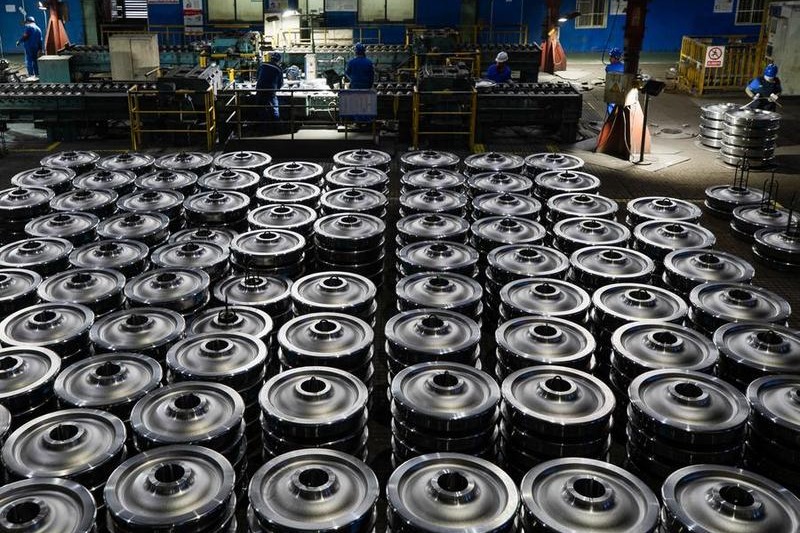
Manufacturing in Africa in general is relatively underdeveloped. Chinese manufacturing enterprises with their equipment and technology are winning the African market.
Chinese companies also realize that only by helping Africans establish their own manufacturing can there be a consumer market, so that Chinese manufacturing and local African enterprises are complementary. So labor-intensive enterprises in Africa have huge potential.
China and Africa have a very cordial relationship, which explains why Africans are more than willing to do business with Chinese enterprises. African consumers widely welcome them and their products, and the Chinese have seized the opportunity to go deep into the African market, reaping rich rewards.
For example, Hisense Group and Sany Group have been active in Africa, setting up factories and chains.
Whatever the aims, whether it be to improve the degree of internationalization or seek new markets, for Chinese enterprises the vast and rich potential of Africa beckons.
If they can win market share in Africa, they will be able not only to effectively get around trade sanctions that developed countries frequently impose, but also to gain more room for development.
Much of Africa is politically stable, and countries will give top priority to developing their manufacturing and service industries, accelerating the pace of economic restructuring and structural adjustment, opening their markets and attracting foreign direct investment.
The vast majority of African countries have removed restrictions on foreign capital. In most places, controlling stakes are no longer mandatory, and sole proprietorships are allowed. African countries have also launched attractive and encouraging policies to lure foreign investment, including simplifying investment approval procedures, setting up export processing zones and encouraging foreign investment in infrastructure and export manufacturing.
For example, Nigeria no longer requires foreign joint ventures only in oil and mining sectors. Ghana and Benin are further expanding the field of foreign investment access by reducing investment categories.
African countries have in recent years speeded up opening up markets, and established and improved market mechanisms. Many have developed new foreign investment laws, including tax relief. Egypt, for example, provides duty-free preferential terms ranging from five years to 15 years. The country also provides duty-free land to investors involved in high-tech and labor-intensive industry projects.
Many African countries have set up investment promotion agencies in the world's major industrial economies to provide "one-stop" service to investors. Their main function is to attend to investment applications, promote investment opportunities, provide information about the investment environment and legal aspects, and help negotiate the relationship between investors and the local government.
Now many Chinese companies wish to gain a foothold in Africa, but are unfamiliar with the commercial environment there. Chinese investment in underdeveloped regions may face severe challenges.
For Chinese enterprises, the development of modern manufacturing in Africa must be based first on a favorable investment environment that includes necessary infrastructure such as transport, urban construction, utilities, social services, a mature and matching judicial system, and political stability. These are the factors that Chinese enterprises need to consider seriously.
The author is a professor at Nankai University in Tianjin, who specializes in China-Africa investment and market policies. The views do not necessarily reflect those of China Daily.
(China Daily 03/01/2013 page7)






Today's Top News
- Spanish king on first state visit to China
- Japan must stop playing with fire on the Taiwan question: China Daily editorial
- The one who tied knot must untie it: China Daily editorial
- Xi congratulates Ouattara on re-election as president of Cote d'Ivoire
- Supercarrier to be put through paces
- Game changers for China's sports industry