Steven Lewis: A career of studying China









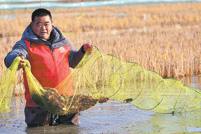
| Steven Lewis has been invited before Congress numerous times to help lawmakers better understand China. May Zhou / China Daily |
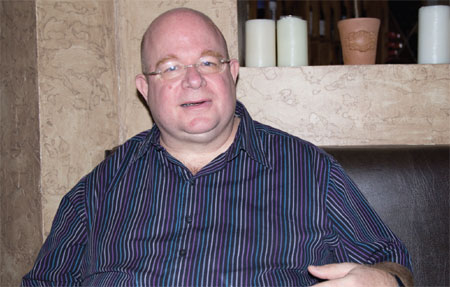
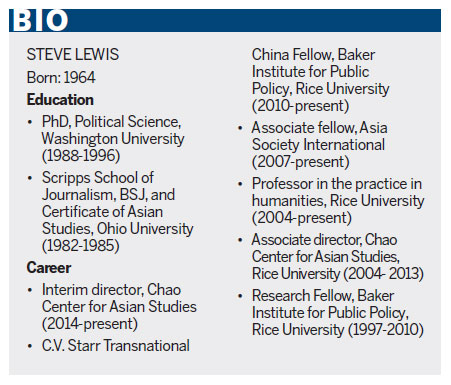
Lewis also helped secure a $15 million grant from Houston's Chao family to establish the interdisciplinary Chao Center for Asian Studies at Rice, where he has been associate director since 2004 and currently acts as the interim director.
Lewis' passion is in the study of politics and government, which is how his journey into China scholarship got started. Lewis chose Chinese as his foreign language at Ohio University in the 1980s. "I was interested in being a foreign correspondent," he said.
After graduating in 1985, Lewis went to China to improve his language skills. While teaching English at Beijing Normal University from 1985 to 1988, Lewis hired a professor to coach him in Chinese. The professor taught him how to read the work report of the 13th party congress, which got him into Chinese politics.
During his time in Beijing, he also worked at Xinhua News Agency one summer as a copy editor, then got a job at Newsweek magazine's Beijing bureau as a news archivist.
Lewis' dreams of becoming a foreign correspondent were shattered through the experience of one of the magazine's Beijing correspondents. "She spoke very good Chinese," he recalled. "She spent almost half year getting interviews with the Minister of Defense and various generals."
However, Newsweek's New York editor rejected the piece and requested a story about pandas instead. "She was so angry she was punching the office refrigerator: 'Pandas? God damn pandas?!' she said. I realized then I didn't want to be a reporter," Lewis said.
As a news archivist, Lewis kept files on all the top Chinese leaders. "I remember Hu Jintao, Wen Jiabao and all those new leaders who had just come out. I had files on about 200 Chinese leaders." Lewis realized his interest was in politics.
In 1996, he completed a PhD in political science at Washington University in St Louis. His dissertation was on how theories of property rights changed as China moved from a planned economy to a market economy.
The same year, Lewis got a one-year position at Rice University. At the time, Nobel Prize-winning economist Elinor Ostrom visited Rice and she had a profound impact on Lewis.
"I told her nobody was interested in China, seriously, nobody cared, I was the only China person there. She told me, 'You have to do what you love and if you are persistent, eventually something will happen'," he said.
Lewis took her advice to heart and opportunity indeed did present itself. Ford Motor Company and Cooper's Library gave $500,000 to the Baker Institute to study Chinese culture and how it's changing. Lewis got the job in 1997 and started his now often cited Transitional China Project.
The project has functioned as a platform for discussion, as well as a teaching resource, on China. Chinese writer and former Minister of Culture Wang Meng was the first speaker. Other eminent speakers followed over the years: renowned writers such as Yu Hua and Bai Xianyong, cultural critic and professor of Peking University Dai Jinhua, Chinese scholar of philosophy and history Li Zehou, and former prime minister of Singpore Lee Kuan Yew, among others. Overall, the project has hosted close to 40 speakers to discuss various aspects of China.
"We took the discussion transcripts and translated them and put them on the website. The program was very popular, it was new and very fresh, and many scholars were using our discussions and citing our conversations in their articles. Also students were using it for study," Lewis said.
Lewis is also interested in the relationship between China's central government and local governments and publicity. Since 1998, he has been conducting another two studies of subway advertising and public service advertising in China, traveling there almost every year for them.
"I ride the Beijing and Shanghai subways and take pictures of every advertisement. I want to see how they change over time," he explained. He now has an archive of 4,500 images from 1998 to 2003, with another 10,000 from 2004 to 2010 ready to be added.
For the public service advertising project, Lewis picked five districts in Beijing and five districts in Shanghai. "I pick a shopping road and a residential road of a mile or two, walk down the street and take pictures of every single one I see. I keep them and compare them every five years," he said.
The results? "I wrote a paper after the first five years that showed that there are big differences between the districts. The local government in each district had a lot to say about what messages to put out."
To Lewis, China is far from a centrally controlled state. "Most people would argue that you need look at decisions at the central government," he said. "However, China is largely decentralized, very localized."
Lewis said that "in many ways China and US are very similar. Both governments are very strong in both countries, both love to compete. Americans are finally figuring it out that the Chinese like to compete with them, but it does not mean they want to kill us".
"China and America are the two biggest consumer societies in the world, if they pick up a standard, the rest of the world will have to follow. That means we have to learn from each other. What's good for Americans is also good for the Chinese," Lewis said.
mayzhou@chinadailyusa.com


Today's Top News
- China to apply lower import tariff rates to unleash market potential
- China proves to be active and reliable mediator
- Three-party talks help to restore peace
- Huangyan coral reefs healthy, says report
- PLA conducts major drill near Taiwan
- Washington should realize its interference in Taiwan question is a recipe it won't want to eat: China Daily editorial