Time to revive HK's industrial strength









Eddy Li points out that innovative insights can turn technological advances into winning products - but we need the right environment
The word "reindustrialization" has been mentioned frequently in Hong Kong over the past few years. As Chief Executive Leung Chun-ying said in his final Policy Address, "The government has made a substantial investment of HK$18 billion to enhance Hong Kong's innovation and technology ecosystem. These measures include promoting reindustrialization, funding universities to conduct mid-stream and applied research projects, subsidizing industry adoption of technology to upgrade and transform, and supporting startups."
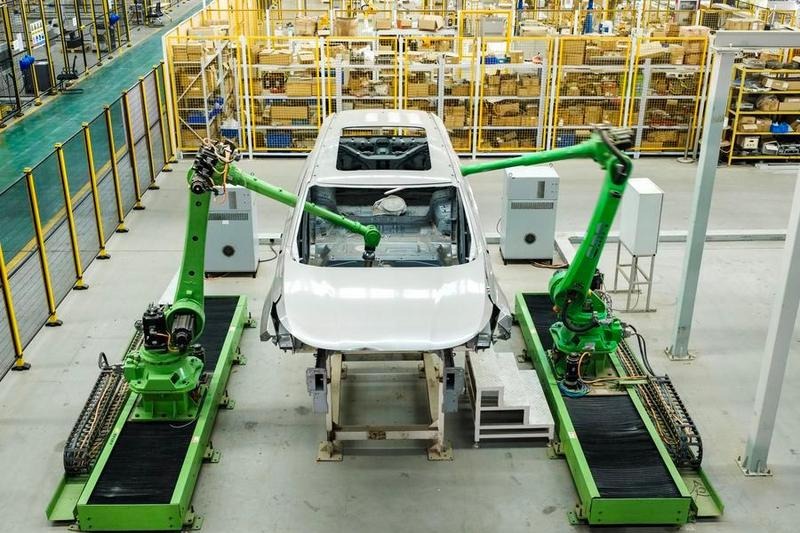
Reindustrialization might, at first glance, give a misconception of heading back to the old-school labor-intensive industries. Decades ago, manufacturing laid a solid foundation for the prosperity of our city. But even though labor costs on the Chinese mainland - where most Hong Kong companies establish their factories - have increased substantially, conditions in Hong Kong do not allow for a return to traditional manufacturing like the 1960s and 1970s. And that's why reindustrialization, which is essentially promoting technology-oriented manufacturing that relies more on advanced technologies than manpower, is suitable for Hong Kong's manufacturers.
But how can we achieve reindustrialization?

Most important of all, innovation and technology must be a focal point of development. Innovation and technology are the dominating factors in international competition nowadays. They are the main motive powers for economic growth and the development of emerging industries. This is true for reindustrialization, too. Smart manufacturing is closely related to the internet of things, cloud computing, artificial intelligence, upgrading and restructuring operations, automation, customizable small-scaled production, and so on, all of which cannot be implemented without innovative and technological support. Only by integrating advanced technologies with traditional production lines can customers participate in the design and production process of a product, so as to manufacture high value-added and individualized products.
But technically speaking, innovation and technology are two different domains. We need to view them separately. Technologies require long periods of time and a wealth of research and development resources but innovation puts more emphasis on the ingenious inspiration that flashes across one's mind. But the government seems to have attached more importance to high-tech development than innovation. As much as I appreciate the government's great support to develop Hong Kong as a smart city and IT hub, I do think we lack measures to embrace creative ideas. If well used, these ideas can generate economic benefits instantly.
Actually, there is much invention and innovation talent in Hong Kong. Many local inventors have won international awards and drawn widespread attention, even including in-school students. The public wouldn't have noticed them without media coverage, and even if they have, they won't know exactly how the invention could help with daily life. But local authorities and enterprises, which ought to act as a bridge between invention and industrialization, seem to have also neglected them. The government, industry, academia and the research sector should be integrated under the leadership of the special administrative region government so as to cut down regrets for being unable to employ all the talents.
Reindustrialization is not returning to the old style of manufacturing but it is not giving up manufacturing, either. Hong Kong should keep its good relationship with the Pearl River Delta (PRD) region. Last year, the Chief Executive and secretary for innovation and technology visited two Hong Kong-funded factories in the PRD. Both of them adopt smart design, production and management systems to make sure their products are original and superior in research and development, design and technology in the world. They have also taken advantage of Hong Kong's high value-added services - financing, logistics, and professional services included. By doing so, they both have a dominant global market share in their own industries. These successful cases have inspired us with an advantageous operation model of "operated in Hong Kong, made in the Chinese mainland, sold abroad".
I hope reindustrialization can revitalize the spectacle of manufacturing industry and boost our economy again by developing innovation and technology.
(HK Edition 04/03/2017 page7)

Today's Top News
- Crossing a milestone in the journey called Sinology
- China-Russia media forum held in Beijing
- Where mobility will drive China and the West
- HK community strongly supports Lai's conviction
- Japan paying high price for PM's rhetoric
- Japan's move to mislead public firmly opposed