Are human space babies conceivable? Tianzhou-1 experiment may give clue









BEIJING - As astronauts continue to break records for time spent in space and manned Mars exploration is under discussion, scientists in China have begun a groundbreaking study to determine if humans can reproduce in space.
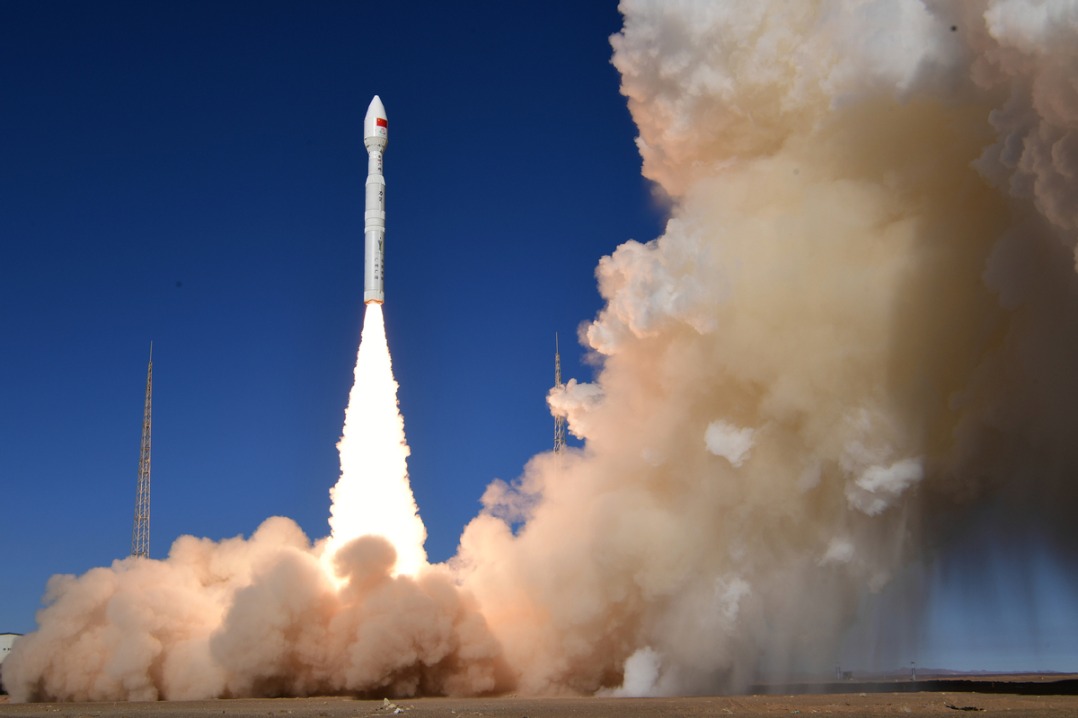
Scientists will for the first time conduct an experiment to induce the differentiation of human embryonic stem cells into germ cells on China's first cargo spacecraft, Tianzhou-1.
The experiment aims to study the effects of the space environment on human reproduction, beginning with the study of microgravity on human stem cells and germ cells, says Kehkooi Kee, lead researcher on the project.
Kee, a Malaysia Chinese professor at China's prestigious Tsinghua University, says the unprecedented experiment will study the basic development and maturation of germ cells in the micro-gravity environment, and the developmental potential of human embryonic stem cells.
The research is expected to provide a theoretical basis and technical support to solve the possible problems of human reproduction caused by the space environment, Kee said.
"It's an important experiment because it is the first step towards directly understanding human reproduction during space exploration," he says.
What kind of difficulties could people face by having children in space?
Experts say that in the known space environment, micro-gravity, radiation and magnetic fields could have a great impact on human reproduction. Among these factors, micro-gravity could be the largest challenge.
At the cellular level, micro-gravity might affect cell division or polarity. The cells of living organisms contain many organic molecules. These molecules and cells are evolved to function under the earth gravitational force. But scientists are still not clear how micro-gravity could affect the physical force governing the molecular interactions and developments of the cells, says Kee.
The United States, Russia and Europe have conducted many space experiments to examine if micro-gravity is harmful to astronauts, especially the effects on the muscle and bones. However, microgravity effect on human reproductive capacity has been rarely studied.
Previous research in this area mainly focused on monitoring the reproductive hormone levels of astronauts. Due to the ethical and physical constraints, it has been very difficult to directly obtain and study their germ cells.
"If we aim to directly study human reproductive biology in space, we need to build an in-vitro platform to study the germ cells. So we chose to use human embryonic stem cells to differentiate into germ cells," says Kee.
In 2009, he and his colleagues used human embryonic stem cells to create human primordial germ cells and sperm-like cells for the first time. They published their research in the academic journal Nature.
Currently, the team has successfully obtained egg-like cells from human embryonic stem cells and will be publishing this novel finding soon.
Human embryonic stem cells can be induced into primordial germ cells and further differentiate into sperm-like or egg-like cells. But differentiating embryonic stem cells into sperm-like or egg-like cells is very difficult because they require more developmental steps and more cellular factors, says Kee.
Although other scientists have conducted similar experiments, none has made human germ cells differentiate into such a mature state as Kee's team has.
"We have compared the in-vitro cultured cells with in-vivo cells, and found they have many similar characteristics. But we can only call the in-vitro ones sperm-like cells or egg-like cells, because we still can't prove they are exactly the same until we conduct functional experiments," Kee says.
So far, all such experiments have been conducted on the ground, so scientists do not know whether micro-gravity will affect the differentiation of human embryonic stem cells and the formation of germ cells.
"In the experiments on the ground, it usually takes six days to culture and obtain primordial germ cells, and about two weeks to form sperm-like or egg-like cells," says Kee.
"The experiment on Tianzhou-1 will last 30 days. To what extent the human embryonic stem cell can differentiate in space is still unknown. Will the process be delayed? If so, by how much?" asks Kee, adding they expect to see at least the first stage of the primordial germ cells appear.
Scientists on the ground will remotely control the research equipment to change the cell-culture medium to induce the human embryonic stem cells to differentiate into germ cells. Images of the cells under the microscope will be transmitted to earth.


- Guangdong urged to drive high-quality development
- Shanghai hosts 6th intl 3E talent fair
- Xi's special envoy attends inauguration of Bolivian president
- Countdown to 15th National Games: On-site warm-up entertains audience
- Eight missing after cargo ship collides with fishing vessel near Shandong
- Investing in people: a worthwhile investment