Monks who made masterpieces









An ongoing exhibition at Beijing's Palace Museum showcases the works of Hongren, Kuncan, Bada Shanren and Shitao from the early Qing Dynasty (1644-1911)
Among Buddhist monks in ancient China, they are considered to be some of the best painters. Hongren, Kuncan, Bada Shanren and Shitao from the early Qing Dynasty (1644-1911), are referred to as the "The Four Monks" in Chinese fine art history.
An ongoing exhibition in the Hall of Martial Valor at Beijing's Palace Museum, China's former royal palace from 1420 to 1911 - also known as the Forbidden City - showcases their works through 163 pieces on display.
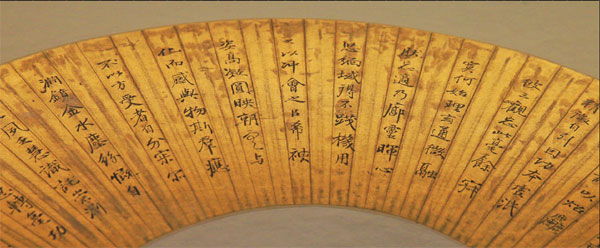
| An ongoing exhibition in the Hall of Martial Valor at Beijing's Palace Museum showcases paintings and calligraphic works by Hongren, Kuncan, Bada Shanren and Shitao, also known as "the Four Monks" in Chinese fine art history. Photos by Jiang Dong and Wang Kaihao / China Daily |
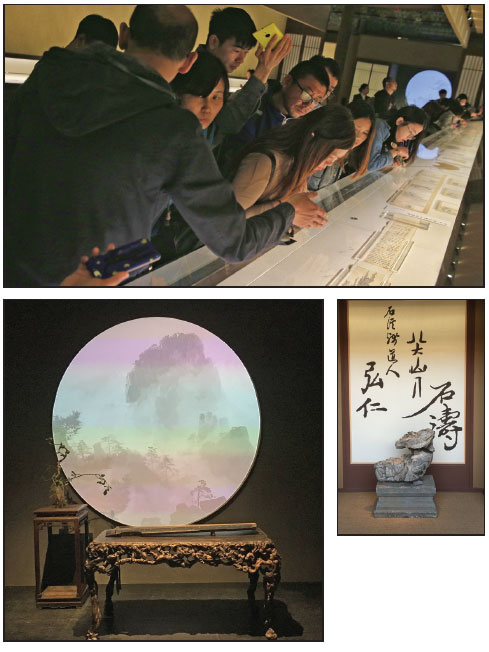
Visiting the Painting and Calligraphic Works by the Four Monk Artists from the Permanent Collection of the Palace Museum is not only an experience in admiring fine art, but an exploration for those seeking the inner peace of Zen.
"They (the artists) may not belong to the same school of art but they endured many ups and downs in their lives," says Wang Hu, curator of the exhibition.
"Being loyal to the previous Ming Dynasty (1368-1644), they had strong views about the newly established empire of the Manchu."
The exhibition has four sections, one for each artist.
In Bada Shanren's works, there are animals with rolled eyes to show rebellion.
However, in one painting, Cat, Stone and Flowers, he has a chubby and sleepy cat on a stone. This work is exquisite as it has different layers created with the skillful use of ink.
"It seems like a reflection of a leisurely lifestyle," says Wang. "However, it also shows that the painter is looking for inner peace after enduring anger and worries."
Wang says some of the works are milestones in the development of Chinese painting.
For instance, a scroll painting by Shitao comprising breathtaking landscapes of mountains shows skills from previous dynasties mixed with his own techniques.
In the work, he combines his observations of mountains all over the country into one work.
This work is commonly considered to be one of his most representative works.
Speaking about the artists, Wang says that the vitality and creativity in their ink-wash paintings influenced many generations of artists, and continue to do so today.
According to Wang, the Qing Dynasty emperors had little interest in the Four Monks' works, and all the 200 paintings from the four, which are now housed in the museum, were bought or collected after the founding of New China in 1949.
Sun Miao, who is in charge of the layout of the exhibition, says that this event is also an attempt by the museum to create a different experience for visitors.
"We've introduced many things from modern art galleries for this exhibition," he says.
"This is to better show the monks' spiritual world."
A miniature Buddhist meditation room has been created in the center of the Hall of Martial Valor. And, the bright red columns in this old palace building have been repainted in a darker tone to coordinate with the simple and elegant style of the exhibits.
At the event, some display boards are made of traditional rice paper.
Stones and the old Chinese plucked musical instrument guqin are also used to decorate the space.
The corners of the hall are dotted with bonsai - not real, but made of jade, coming from Qing royal collections.
"We wanted to make this space a garden with a strong literati atmosphere," says Sun.
Between 2008 and 2016, the Hall of Martial Valor held nine seasonal exhibitions of ancient Chinese paintings from the Palace Museum collection but they were not themed.
That exhibition model has now been abandoned.
Speaking about the ongoing event, Zeng Jun, head of the ancient painting and calligraphic works department at the Palace Museum, says: "We've never taken so much effort designing an exhibition hall before.
"But it is better to narrow down the topics and give more detailed introductions of each artist. Exhibitions are not only about exhibits but cultural experiences too."
She says the next exhibition will be on Zhao Mengfu, a 13th-century painting and calligraphy master.
wangkaihao@chinadaily.com.cn
(China Daily European Weekly 05/19/2017 page21)



Today's Top News
- Lai's 'separatist fallacy' speech rightly slammed
- Xi's message for New Year widely lauded
- Swiss bar fire kills around 40, injures more than 110
- New Year's address inspiring for all
- Xi congratulates Science and Technology Daily on its 40th anniversary
- Xi congratulates Guy Parmelin on assuming Swiss presidency