Moody's subjective analysis goes awry









There's no need to fuss over downgrade of China's sovereign credit rating; instead, there is reason for confidence
Moody's Investors Service has lowered China's sovereign credit rating from Aa3 to A1, and upgraded the country's outlook from "negative" to "stable". But the changes will not have as much impact on China as on other emerging markets that rely heavily on foreign debt for financing.
The international rating agency has erred on three fronts. First, Moody's has overestimated China's reliance on stimulating policies to stabilize its growth, and underestimated the country's resolve to restructure its economy.
The credit rating agency predicts that China will continue to implement stimulating policies to maintain its economic growth, which will aggravate the overall debt pressure. But the fact is, China has been making efforts to transform its economic development model and promote innovation to maintain steady growth. The fast rise of emerging industries and the economic data for this year show Moody's prediction is not based on facts.
Second, Moody's has overrated the Chinese government's liability level and faulted the government debt stability.
Moody's analysis includes the unpaid debts and contingent debts of local governments' financing companies and other agencies, such as State-owned enterprises, in the central government debt. This method does not conform to the Guarantee Law or Budget Law of China, according to which the above-mentioned agencies' debts are not part of the central government debt. The central government's assumed obligation to these agencies' debts is limited by its amount of contribution.
Therefore, even if some SOEs are unable to repay their debts, they can be reorganized. Such measures are necessary for the stability of the economy and the progress of the market. And the debts of SOEs cannot directly influence the government's fiscal and liability conditions.
In fact, the Chinese government made it clear way back in the late 1990s that it would not shoulder the responsibility of repaying non-sovereign debt of the bankrupt Guangdong International Trust Investment Corp. Thanks to China's laws, more than 130 international creditors of the company and the entire international financial market knew at that time that the Chinese government cannot be made to pay SOEs' liabilities. Nearly 20 years on, Moody's forgot the case and China's laws.
Third, Moody's applies one set of standards to China and another to Western economies.
Although Moody's has admitted that the Chinese government's liability level is not rare among the "high-ranking" economies, it has also asserted that Western countries have higher per capita income, and more developed financial markets and institutions than China, which can help them improve their ability to repay their debts and lower the risks of spreading the shocks, if any.
The logic seems flawed. How many years passed between the subprime crisis and the sovereign debt crisis? And didn't the subprime crisis originate in the United States and the sovereign debt crisis in some European Union member states, which Moody's says are more capable than China of repaying their debts?
International rating agencies such as Moody's have often erred in their analyses because they rely on their subjective "institutional factors" and lack foresight.
The market need not overreact to the Moody's downgrading of China's rating, not least because 95 percent of China's liability is internal debt and Chinese household savings rate is still about 50 percent. And given that China's foreign exchange reserve is more than $3 trillion, the government has huge amounts of liquid assets. As such, China's debt will not evolve into a debt crisis.
Moody's lowering of China's rating cannot be compared with the downgrading of ratings of other emerging economies that rely on foreign debt for financing. So there is no need to fuss over Moody's report.
The author is a researcher of trade with the Ministry of Commerce of China. The views do not necessarily reflect those of China Daily.
(China Daily Africa Weekly 06/02/2017 page13)




Today's Top News
- China to apply lower import tariff rates to unleash market potential
- China proves to be active and reliable mediator
- Three-party talks help to restore peace
- Huangyan coral reefs healthy, says report
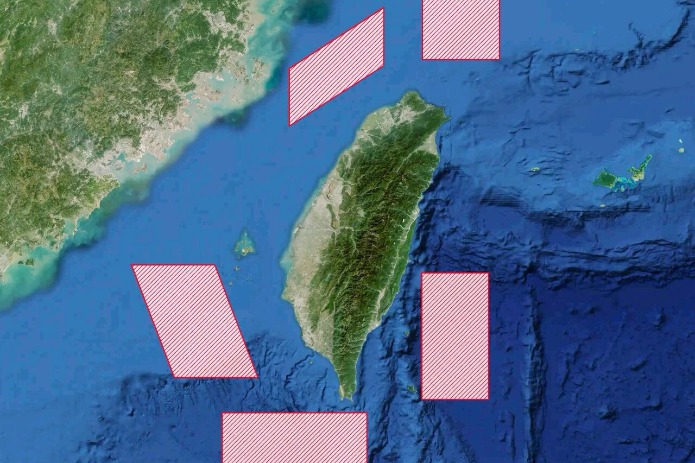
- PLA conducts major drill near Taiwan
- Washington should realize its interference in Taiwan question is a recipe it won't want to eat: China Daily editorial