



Are we ready for the new revolution?









Technological advances are about to bring massive changes that some nations will cope with better than others
A while ago, a host of voices - including some leading management consulting firms - predicted a significant paradigm shift in manufacturing. They claimed that manufacturers, fed up with rising labor costs in China, would pack their bags and move back to America.
This "reshoring" movement, they said, would cripple China's competitiveness in manufacturing. In a small way, these people were correct. Labor-intensive, low value-added manufacturing such as garment and toy manufacturing did indeed move out of China to developing nations such as Vietnam, Cambodia and Bangladesh. However, China was able to retain the type of industry the United States hungers for - high value-added manufacturing. The massive "reshoring" wave never materialized, or at least it hasn't yet.
Whereas the original predictions were based on the rudimentary argument that focused on labor costs, it ignored the much more important, bigger picture. High value-added manufacturing is rooted in China because of an intricate ecosystem that includes industrial clusters, infrastructure and logistics. This ecosystem has fed the world's increasing appetite for more "connected" and sophisticated devices, which not only favors technologically involved manufacturing staying in China, but also promises its growth.

According to market research company IBIS World, for the five years up to 2016, manufacturing of smartphones in China grew on an annual basis of 40.6 percent and was valued at $126 billion (110 billion euros; £97 billion) in 2016. Tesla, the world's leader in electric vehicles, is planning to open a plant in China. These are just a few examples of a broader trend of China becoming an epicenter for technologically sophisticated projects.
To understand this manufacturing macro trend, we must examine it within the context of China. There are two forces concurrently at work. From the top down, the Chinese government is driving national policies such as Made in China 2025 with the goal of cementing the country's position as the global hub of technologically sophisticated, high value-added manufacturing. From the bottom up, China's thriving innovation and entrepreneurship are major engines fueling exponential growth for the country. China's entrepreneurs are rapidly adopting more state of-the-art technology, from industrial robotics to 3-D printing, in a drive to be better than others in manufacturing. Even though not all of these entrepreneurs will be successful, some will and, given China's sheer scale, a small percentage of a very large number is still a large number.
This dual drive sets the foundation for China's probable up-and-coming leadership position in the Fourth Industrial Revolution. China is already the world's leading market for robotics. Local manufacturers are investing heavily in automation technologies, and China's shift toward a consumption-based economy has sparked a massive shift toward smart and adaptive logistics systems and supply chains. Furthermore, China has become a global center in the development of artificial intelligence, big data and other next-generation technologies.
However, the disruption that will be created by the Fourth Industrial Revolution, while bringing opportunities, will also bring about major challenges. The factory of the Fourth Industrial Revolution will likely be nearly or completely automated. Countries where a sophisticated manufacturing sector now employs large numbers of the working class could find themselves with social issues such as widening gaps in income and standard of living between a small creative, educated class that benefits from these innovations and the population now made redundant by the technology.
Innovations will also create new job opportunities, in the way online marketplaces like China's Taobao have created new opportunities for a large number of small to medium-sized enterprises across the country. The big question is always whether the jobs created are sufficient to offset the loss of those in other areas. Resolving this and other potential issues resulting from the Fourth Industrial Revolution will require governments to take innovative approaches to the welfare of their citizens.
The Fourth Industrial Revolution offers both fantastic opportunities and serious quandaries. It has the potential to take global commerce to new heights, but will also put a magnifying glass on the structural weaknesses of 20th century nations in a 21st century world. Is the world ready for the Fourth Industrial Revolution? While change can be feared or abhorred, it is nonetheless unstoppable. We witnessed the era of globalization throwing the final punch at America's hollowed-out manufacturing sector, yet we also saw Germany's manufacturing sector maintain its position as a global powerhouse. The Fourth Industrial Revolution will create anew set of winners and losers. Some current job categories will disappear and new ones will appear as the pattern of demand shifts. New industries and sectors will arise with these pattern shifts, creating new opportunities and new livelihoods. For China, the Fourth Industrial Revolution is anew chapter of opportunities and challenges.
The author is founder and CEO of Gao Feng Advisory Co, a global strategy and management consulting firm with roots in China. He is also the author of China's Disruptors. The views do not necessarily reflect those of China Daily.
(China Daily European Weekly 06/30/2017 page8)




Today's Top News
- Confidence, resolve mark China's New Year outlook: China Daily editorial
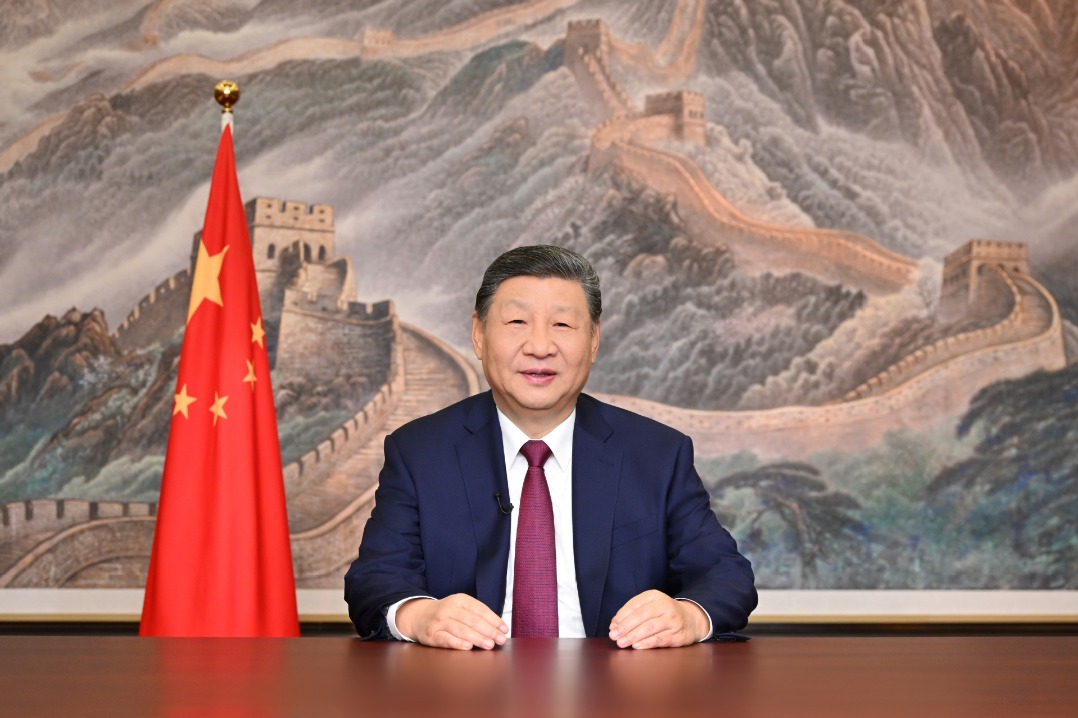
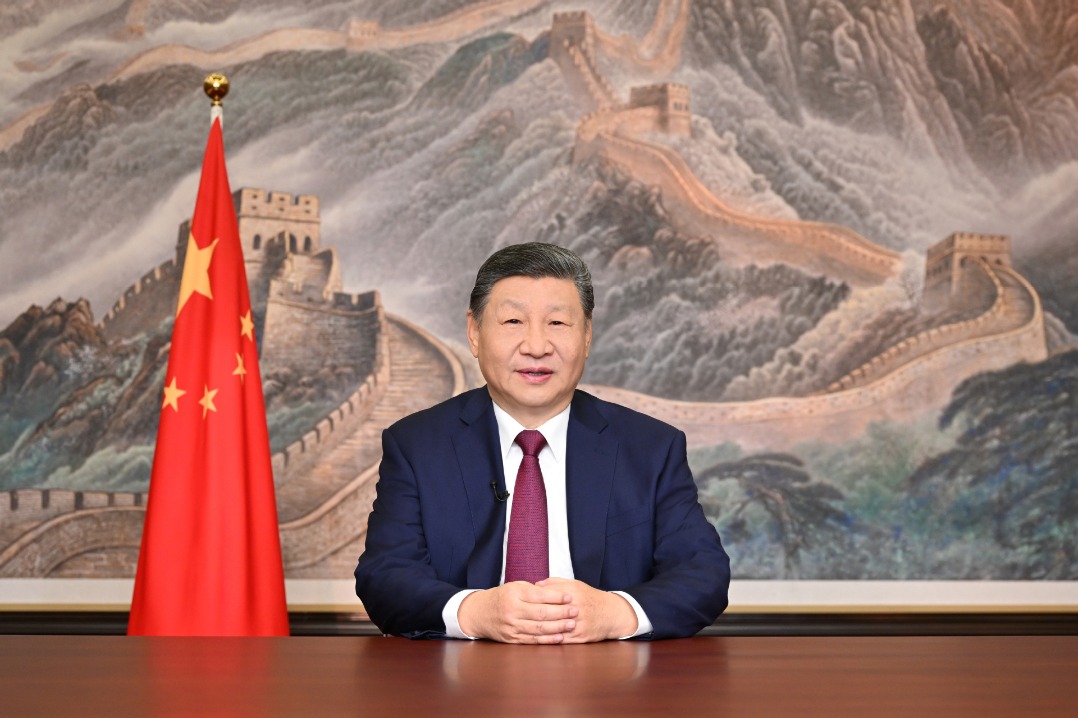
- Key quotes from President Xi's 2026 New Year Address
- Full text: Chinese President Xi Jinping's 2026 New Year message
- Poll findings indicate Taiwan people's 'strong dissatisfaction' with DPP authorities
- Xi emphasizes strong start for 15th Five-Year Plan period
- PLA drills a stern warning to 'Taiwan independence' separatist forces, external interference: spokesperson








