Facing up to facts of the Joint Declaration









Chan Tak-leung notes document was simply confirmation, for all the world to see, that Hong Kong was to be handed over; it was never designed to hold sway into perpetuity
Is the Sino-British Joint Declaration null and void or still alive and kicking? That is the question but let one examine the facts to establish a definitive answer, factually and honestly.
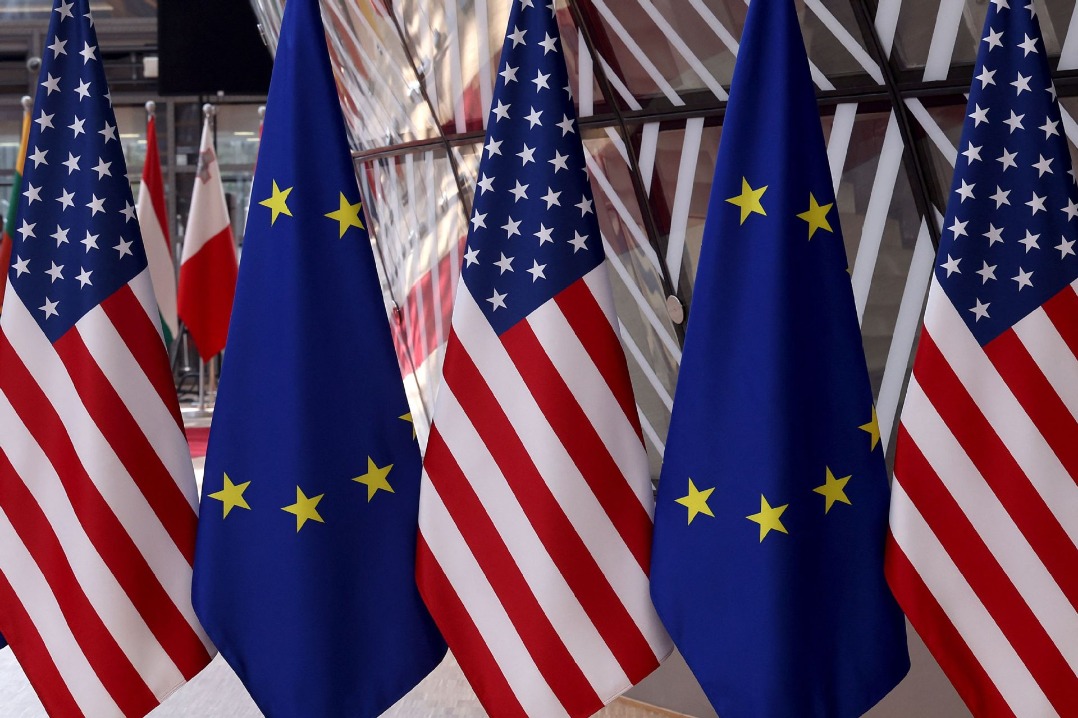
The debate was sparked off on the eve of the 20th anniversary of Hong Kong's return to China after the United Kingdom and United States governments issued statements on the political condition of the city.
Let us remind ourselves that the Joint Declaration was first and foremost exactly that, no more no less, a "joint declaration" with Britain and China as co-signatories in 1984. More importantly one believes that full title of the document will provide the first clue and answer to the question posed for it. The document was formally known as "The Joint Declaration of the Government of the United Kingdom of Great Britain and Northern Ireland and the Government of the People's Republic of China on the Question of Hong Kong". In other words, its principle function was to confirm that "a proper negotiated settlement of the question of Hong Kong" and since such an agreement has been reached, the two countries"agreed to declare" that China would "resume the exercise of sovereignty over Hong Kong with effect from 1 July 1997" whereas the British government would "restore Hong Kong to the People's Republic of China" on the same date.

One would expect that when a joint declaration was ratified, signed and the two parties carried out their respective responsibilities, that would be the end of it. To have the document with the United Nations was a formality like the hundreds and thousands of other documents and declarations registered with it. To draw a comparison, there had been nearly 60 former British colonies, ranging from the United States in 1783 to Brunei in 1984, which had "declared" their independence from Britain, either bilaterally or unilaterally, but none of these nation states would have gone through the same treatment of having six monthly updates by their colonial master for once, not to mention for 20 years.
Why the discrepancies? Was it to protect British interests in Hong Kong or the fact that, despite China being a permanent member of the Security Council of the UN for years now, Britain still finds it hard to relinquish her colonial grip in this golden and profitable goose?
Coming back to the Joint Declaration, Britain and China jointly declared in the first three paragraphs on what they have agreed upon as solutions to the outstanding question of Hong Kong after 1997. There were further paragraphs which covered transition, setting up of the Sino-British Joint Liaison Group (which successfully delivered its roles and was disbanded two years after the establishment of the special administrative region) and land lease. It also contained annexes of memoranda by both nations. For China's part, it outlined detailed policy areas, more or less laying down the foundation and framework according to the "one country, two systems" principle and contents of the Basic Law upon resumption of sovereignty. In comparison, Britain's memoranda were much shorter and referred to only one topic - the status of British Dependent Territories Citizens after 1997.
There was definitely no mention of how Britain would be empowered or required to monitor events, political or otherwise, after returning Hong Kong to China. Not to mention that it was jointly declared with much clarity that China, upon resumption of exercising sovereignty over Hong Kong, will administer the region under the "one country, two systems" principle and Basic Law. The useful function of the Joint Declaration, in other words, was to ensure that the international community was informed that through the process of discussion, agreement and declaration, the "question of Hong Kong" had been successfully resolved. Deploying a document 30 years after its joint declaration would be considered not only by China but by any other nation as a direct infringement of its sovereign rights and is an issue which ought to be raised through diplomatic means at the highest level.
(HK Edition 07/13/2017 page8)






Today's Top News
- Disrupting market under fabricated veneer of 'national security' hurts US' own interest: China Daily editorial
- Yasukuni visit would add insult to injury: China Daily editorial
- Judicial reform critical for modernizing governance
- Effective use of investment emphasized
- China's shuttle diplomacy strives to reach ceasefire
- Nanjing Museum's handling of donated art, relics being probed