Optimizing overseas investment through Belt and Road Initiative









 |
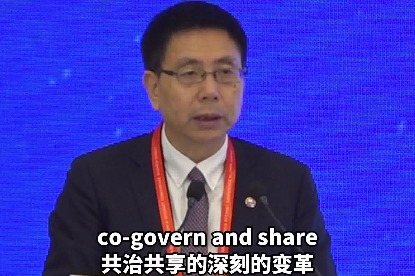
| Qi Bin, China Investment Corp's executive vice-president. [Photo/VCG] |
Since the outbreak of the global financial crisis in 2008, Western developed countries have long been trapped in a slow economic recovery and high levels of debt. Protectionism, populism and anti-globalization have begun to emerge, casting a shadow over world economic progress.
Breaking trade barriers, seeking a win-win situation and promoting growth are the major challenges posed for these countries. As for China, the Belt and Road Initiative paves the way for coping with these challenges through promoting economic cooperation and mutual benefit.
The Belt and Road Initiative proposes a new version of economic globalization unlike the one traditionally led by some developed countries.
First of all, it is backed by China's 1.3 billion consumers. They have formed the world's largest and most promising consumption force, which is the key driver to the economic growth of China and the rest of the world. Such market demand is fundamental to the Belt and Road Initiative's rollout.
Furthermore, it entails an open, inclusive and sustainable process of globalization. The traditional model we have witnessed is somewhat unbalanced, uncoordinated and unsustainable, causing a series of conundrums. For example, regional economies integrate while the global economy fragments, and global wealth surges while the gap between rich and poor widens. The Belt and Road Initiative maintains the principle of achieving shared growth through discussion and cooperation, strives to connect with each participating economy's development roadmap, and commits to be open and practical in its approach.
Also, the Belt and Road Initiative is dedicated to bringing equal cooperation and mutual benefits to all economies involved. Traditional economic globalization has been more of a zero-sum game where developing countries are drained of resources, and it might pose threats to the health of the world economy. The Belt and Road Initiative, in comparison, is based on the notion of China and participating economies each playing to their different kinds of advantages, and it therefore can shape a more vibrant, open and sustainable global economy.
The Belt and Road Initiative was proposed and launched as China's economy enters the new normal. As China carries out supply-side structural reform and sees growing overseas investment, we should establish a scientific investment strategy, and ensure effective implementation, and optimize investment through Belt and Road Initiative projects to promote the new version of economic globalization whilst accelerating China's economic transformation and structural upgrade.
China's overseas investment volume is growing as a result of increased economic strength. Since 2015, the tide of overseas mergers and acquisitions has been turning from resources and energy to the high-tech, manufacturing and consumer sectors-reflecting a vast shift of economic focus, now on domestic demand as opposed to exports.
Developing countries typically have an edge in terms of abundant resources and low production costs, while China has a palpable advantage in infrastructure and manufacturing. Opportunities for cooperation in these aspects are surely worth exploring.
For instance, China can support developing countries in building railways, highways and bridges and profit from offering added value to these countries' economic growth. Turning to Southeast Asian countries which are known for low production costs, China can move over certain manufacturing facilities and in turn provide cheaper products for other markets-a classic win-win move which structurally upgrades China's economy while boosting these countries' domestic growth.
As for developed countries, China can focus on investing in advanced technologies, products, services and business models. A successful overseas investment should be grounded in domestic strengths creating synergy with the domestic market; be able to uplift domestic technologies and economic growth, enhancing industrial upgrading; benefit the investment destination countries to yield win-win relationships. Investment sectors that are in line with the aforementioned aspects refer to both cutting-edge industries and certain traditional manufacturing sectors.
For instance, the midwestern United States has traditional manufacturing industries including automotive and agricultural machinery, as well as emerging industries such as healthcare and bio-pharmaceuticals, all of which have big prospects in terms of cooperating with related industries in China. Investment in these areas will benefit China's industrial upgrading and implement the Made in China 2025 initiative, while creating job opportunities for the investment destination countries' local markets.
In the meantime, we shall leverage our technological strengths in high-speed rail and nuclear power, among others, encourage Chinese enterprises to go abroad to seek investment opportunities, promote industrial cooperation, and work to move the Belt and Road Initiative forward.
- Belt and Road indexes to aid investors
- Key Belt and Road economy research center settles in Xiamen
- Think Tanks Need to Play a Leading Role in Advancing the Belt and Road Initiative
- The Belt and Road Initiative Will Reshape China's Regional Development Pattern
- Belt and Road Initiative will attract more FDI into Sri Lanka: Experts