Can shared cars help to solve congestion?









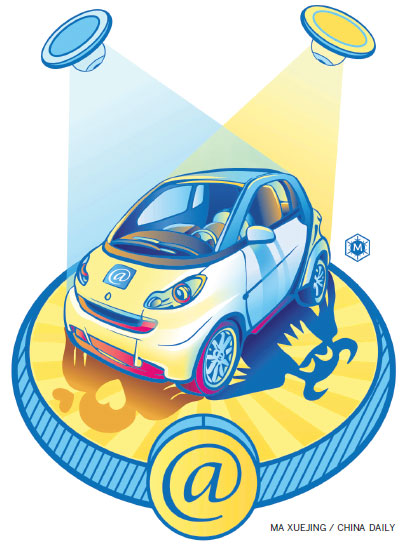
Editor's note: Car-sharing services are emerging in cities such as Beijing. But is this a good solution to the road congestion problem? Four experts share their views with China Daily's Wu Zheyu:
Traffic jams are a different ballgame
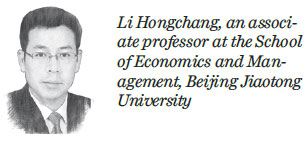
The car-sharing business will not help reduce traffic jams. Those who say it will assume that the availability of shared vehicles will diminish people's urge to buy cars, which in turn will reduce the number of vehicles on the road. These people also ignore the fact that a majority of those using car-sharing services today were earlier using public transportation to commute. Which means the number of vehicles on the road has not reduced.
The car-sharing service therefore should not be used to commute within city limits. It is, however, apt for driving to and from scenic spots and rural areas where public transportation service could be irregular and erratic.
Bright prospects await the sector
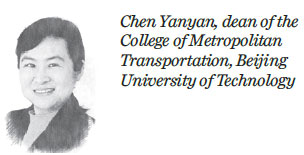
The car-sharing service model is based on car rentals. It is essentially car-lease service combined with technological support such as GPS, online booking, big data and electronic payment. But compared with a traditional car-lease service, it offers more tailored and effective contracts with flexible choices of "hiring" and returning a car.
If car-sharing companies operate on a park-and-ride (P+R) model to supplement public transportation, they will not only make commuting easier but also ease the pressure on public transportation vehicles and reduce traffic jams. Under the P+R model, facilities such as parking lots are built close to bus or subway stations, generally on the outskirts of cities.
Therefore, the authorities should encourage car-sharing services, and they can do so by granting car-sharing companies some tax deductions and/or offering them more subsidies.
Indirect promotion of new energy cars

A notable factor in the car-sharing business is that, instead of hiring the vehicles, many car-sharing companies own them, and thus can use the profits they earn to buy new energy vehicles. For example, Yiyi Auto owns more than 100 electric cars and 15 charging stations in Beijing.
In fact, new energy vehicles already have a large share of the car-sharing market. So by promoting the car-sharing business, the authorities will indirectly promote new energy vehicles, which are less harmful to the environment. One way the authorities could promote car sharing is by allowing car-sharing companies to use under-used parking lots.
Also, the car-sharing business is not likely to turn into an investment war, such as the one between Didi Chuxing and Uber. Despite investing heavily to purchase or hire cars, the car-sharing companies cannot expect booming business or rapid growth in the short term.
In all likelihood, the car-sharing business will grow at a steady pace, because to expand rapidly, the companies will need huge investment. And they are more likely to use the profits to expand their businesses than passing them on to users in the form of concessions or subsidies, ruling out the chances of a price war.
Problems of identity and liability
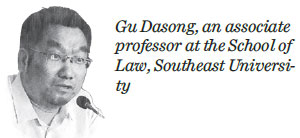
Shared cars have become a cost-effective choice for people who are eager to make the best of limited resources. But, like all other new business models, the car-sharing business also comes with challenges as well as opportunities.
The first challenge is to ensure people use their real identity to register for car-sharing services. True, service providers require a valid driver's license for identity authentication. But users can steal other people's personal information to register, which could be dangerous, especially if the user is a minor or juvenile.
Technical measures are both available and advisable for car-sharing companies, including using facial recognition to ensure a person uses genuine personal data to register. In addition, regulators and car-sharing companies should join hands to set up a credit system, which can be used to prepare a "blacklist" of wayward users and deduct penalty points from their record.
The second challenge is to identify the liabilities in case of a traffic accident. Most car-sharing service providers put an exemption clause in the contract, saying they cannot guarantee their cars are entirely safe, asking users to stop driving as soon as they sense a possible danger and contact personnel in the customer assistance section. That is a tricky clause, as most users cannot analyze the signs of a malfunction. That the clause frees the car-sharing companies from sharing any liability, even if a car malfunction leads to an accident, is, to say the least, unfair to users.
Therefore, regulators need to work out targeted regulations to deal with the multifarious problems that could arise in the car-sharing business.
(China Daily Africa Weekly 07/28/2017 page11)





Today's Top News
- Wang to meet foreign ministers of Cambodia, Thailand in Yunnan
- China's top legislature concludes standing committee session
- Thailand and Cambodia agree to temporary ceasefire
- NPC's 4th annual session slated for early March
- Civilizational links for a fairer world
- Manufacturing in China spurs global growth