Capturing China's middle class potential









Success will depend on how much and how fast companies can adapt to new realities presented by this rapidly emerging sector
The emergence of China's middle class is one of the greatest economic stories of the 21st century and a game changer for the global markets. This phenomenon has been written about by a wide range of sources, from investment banks such as Goldman Sachs to academic think tanks like the Center for Strategic and International Studies.
In a recent article titled "How well-off is China's middle class?", CSIS notes that in 2002, China's middle class was only 4 percent of its population, and by 2012 that number had climbed to 31 percent - encompassing more than 420 million people - and is expected to reach 550 million by 2022.
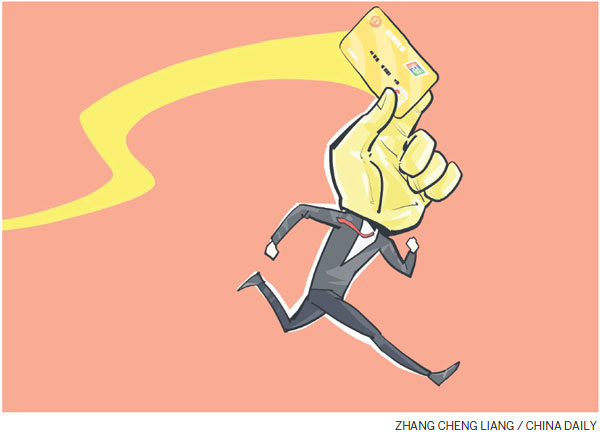
The enormous purchasing power of this bloc is already creating new records on various fronts: auto purchases (last year, 23.9 million cars were sold in China, compared with 17.5 million in the United States); global travel (Chinese spent over $250 billion - 213 billion euros; £191 billion - abroad); and online purchases (650 million orders totaling 17.8 billion were shipped on Alibaba's 2016 Singles' Day).
China's middle class is not only growing in purchasing power, but also enhancing its purchasing mindset. They are "trading up" for lifestyle products and services, becoming increasingly sophisticated and aspiration-driven. Purchase decisions are no longer made based on brand or social status only, but also the associated lifestyle values and the desire to express individualistic pursuits and dreams.
The emergence of China's growing middle class is not just a China story, but increasingly a global one, and this has major implications for foreign multinational companies and Chinese companies alike.
With the increasing number of Chinese outbound tourists, multinational companies have realized that their "China strategy" is no longer solely about winning over the middle class's wallets in China, but also about capturing the overseas spending of Chinese consumers abroad. Whether it's offering Chinese digital payment solutions like Alipay or WeChat Pay in a Parisian boutique, or directly selling products from their global product portfolio through cross-border e-commerce, companies are facing massive shifts in the new consumer landscape.
As consumption power grows in China, attempts by foreign and domestic companies to tap into the middle class's demands seem to be mixed. Players that once believed themselves to be unassailable titans in their respective markets often find their positions increasingly tenuous. They are unable to fully acknowledge the new dynamics and strategic implications of the middle class and the overarching China context.
Many multinational companies tend to copy and paste their global strategy to China, believing models that worked in other markets can translate equally well to the China market. Companies that were successful in winning previous generations of Chinese consumers often fail to understand the differences between the older consumer generations and the new middle class, as well as the underlying drivers of demand.

This lack of an understanding of the China context and an awareness of the need to adapt locally puts these companies at serious risk. On the other hand, companies such as Nike and Starbucks have found great success in China because they are able to tailor their products and their brand communications in a way that reverberates with China's middle class. Starbucks' brand in China has come to represent the sophistication and worldliness that China's middle class craves, while Nike has become a symbol of China's middle class's desire for health and well-being. These companies are not merely selling products, but selling aspirational values and dreams.
China's middle class is dynamic and rapidly evolving. Several drivers of middle class behavior stand out: technology, communication and geographic diversity.
Technology has become highly prevalent in China, from mobile internet to artificial intelligence. Chinese consumers are more digitally connected than any other country today, not just in information gathering but also in transactions, entertainment and communications. These elements will not only continue to shape new demand patterns, they will also enable new capabilities for suppliers to offer more personalized products and service offerings that address the demands of the Chinese middle class.
Increased communication is taking place with the benefits of the proliferation of smartphones and mobile internet. Consumers are now forming online communities and sharing information to different degrees of separation. The emergence of new social platforms has created new forms of online key opinion leaders and online celebrities, who have become new brand advocates and customer contact points between brands and consumers. Social media have become a ubiquitous mechanism for interactive and open communications with consumers.
The new generation of Chinese middle class consumers is becoming more geographically diverse. In the past, wealth and consumption were virtually limited to first-tier cities such as Beijing, Shanghai and Shenzhen, and some second-tier cities located mainly on China's east coast. The current middle class can be found increasingly throughout China, from the traditional centers of wealth on the east coast to the lower-tier cities of China's interior, even extending to the rural areas experiencing pseudo-gentrification due to the Chinese government's New Rural movement.
Business-to-consumer companies that want to be successful in China need to go back to the fundamentals of their strategy and examine three key elements for connecting with the new Chinese consumers in the digital age: "Segment of One", communities and interactivity.
With technology enablers, instead of segmenting product-markets using a finite number of segments, companies can increasingly identify consumers on an individual basishence "Segment of One" - and build connectivity with the middle class consumers on an individual level.
On the other hand, China's middle class consumers are also gravitating toward communities, often through virtual means, where they are able to express their own aspirational goals and lifestyles with other individuals that share the same desires. Jiang Xiao Bai, a young local brand of baijiu (traditional Chinese white spirit) was able to successfully win over Chinese millennials by building a community around the lifestyle that Jiang Xiao Bai depicts, which speaks directly to the dreams, desires and hopes of China's millennials.
Online word-of-mouth has become a critical element of the Chinese middle class's purchasing journey as they look to others' assessments to supplement their own decisions. In addition, the new Chinese consumers are also asking for two-way communications with the companies. They want their views and input to be heard and to be taken into account by the companies so the companies can adjust their product or service offerings on a frequent and consistent basis.
From smartphones to international hospitality, the swiftly evolving Chinese middle class will bring major opportunities for domestic and foreign companies alike. The scale, speed and intensity of this phenomenon are overwhelming. However, the demand patterns of these consumers are evolving rapidly and their behavior will require companies to undertake a drastically different approach from past efforts.
To what extent companies can capture the rightful potential of China's middle class is a function of how much and how fast companies are able to adapt to the new realities. Surely, some of them will succeed, but many of them won't.
Edward Tse is founder and CEO, Gao Feng Advisory Co, a global strategy and management consulting company with roots in China. He is also author of China's Disruptors.
(China Daily Africa Weekly 08/04/2017 page12)





Today's Top News
- Wang to meet foreign ministers of Cambodia, Thailand in Yunnan
- China's top legislature concludes standing committee session
- Thailand and Cambodia agree to temporary ceasefire
- NPC's 4th annual session slated for early March
- Civilizational links for a fairer world
- Manufacturing in China spurs global growth