Looking to China as a template for industrializing









As Africa gears up for industrialization, analysts say the continent should take a leaf from China's book, taking advantage of their growing cooperation.
Within a period of 30 years, China became the world's largest producer of manufactured goods, an achievement that took the United Kingdom 150 years to achieve.
Currently, China is Africa's biggest trade partner, and so the continent has a precious opportunity to replicate the Asian country's success story.
Bob Wekesa, research associate of the China-Africa Reporting Project at the University of Witwatersrand in South Africa, says it would be possible to replicate China's model in developing Africa's manufacturing sector.
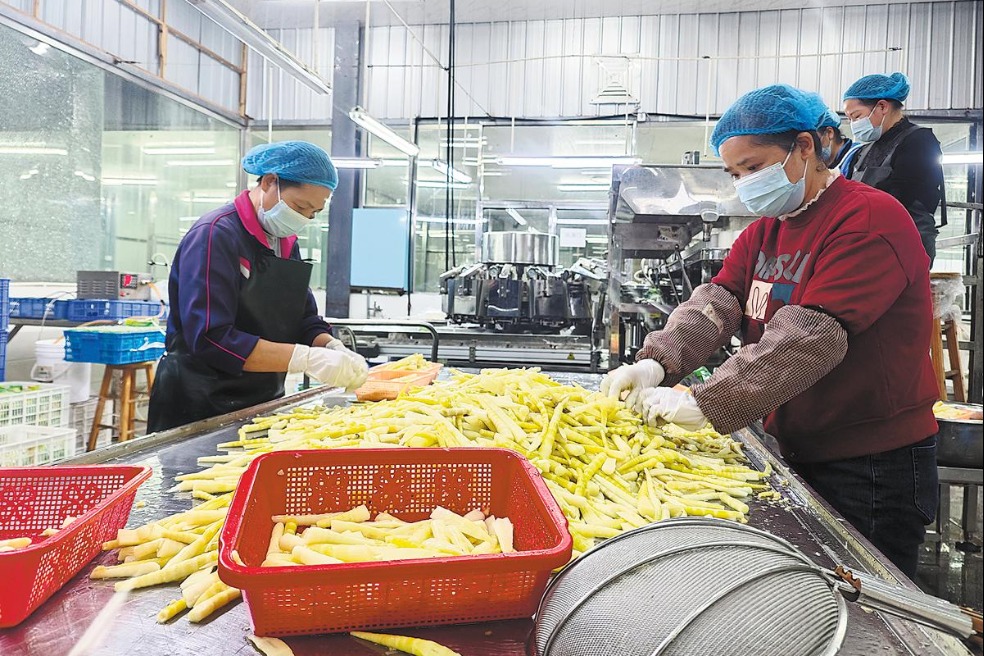
| Sunbelt sunflower oil produced by Sunshine Group, a Chinese agricultural processing company, is mainly for the Tanzanian market. Li Jing / China Daily |

Wekesa notes that China started off with the establishment of special economic zones, which eventually drove innovation throughout the country.
"This is a model that calls for the intervention of governments in matters of development. We call it the developmental state model. It is a model that African countries should emulate," he says.
Similar sentiments are shared by Sikhumbuzo Zondi, research assistant at the Institute for Global Dialogue, associated with the University of South Africa. Zondi says the establishment of special manufacturing hubs in the early 1970s, as part of China's policy to open up to international trade, played a key role in the country's industrialization process.
"Such reforms became the turning point toward its market-oriented economy, as thorough research was done, including the establishment of special economic zones which became the driving force for growth," he says.
Zondi says African countries should work toward setting up and implementing sound policies. This is in addition to improving regulatory frameworks and tax policies in order to attract and encourage investment.
This is because many African states produce similar raw materials, resulting in strong competition between them. To minimize such competition, Zondi says they should develop strategies based on competitive advantage that can maximize potential.
Manaseh Otieno, policy analyst at the Kenya Institute for Public Research and Analysis, says the Chinese industrialization model can be replicated in Africa but within each country's specific context.
"The political environment might play a significant role in their development, but the same might not be replicable in other countries. There are, however, a lot of lessons developing countries can learn from China," he says.
Otieno says developing countries need to learn how efficient and effective use of resources can enhance manufacturing productivity and economic growth.
This, alongside investment in both hard and soft infrastructure, is important for enhancing value chains and value addition for exports.
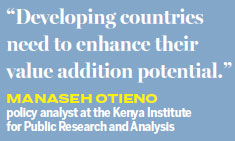
"Developing countries need to enhance their value addition potential," he says.
A report by the World Bank, titled China's investment in African Special Economic Zones: Prospects, Challenges and Opportunities, states that China's recent moves to establish SEZs in several African countries could make a significant contribution to industrialization in Africa.
However, the success of zones is by no means guaranteed. Meeting the objectives of both China and African countries will require an active partnership and a framework for collaboration that includes engagement from host governments.
This is in addition to processes for phasing in local control, communication and enforcement of standards, and support for integration with local economies.
In 2006, the Chinese government announced that it would support the establishment of as many as 50 overseas "economic and trade cooperation zones". Of the 19 approved so far, five are in sub-Saharan Africa: in Ethiopia, Mauritius, Nigeria (two) and Zambia.
The Chinese SEZ projects in Africa might be practical, considering that China is the world's foremost success story in using SEZs as a tool for attracting foreign direct investment and promoting export-oriented industrialization.
However, Jack Ma, the Alibaba Group founder and executive chairman, says replicating China's model may not work for Africa.
"For Africa to develop, Africans should not follow any other country's model," he says. "The continent should come up with its own model, focusing on the use of the modern technology and protecting the environment."
If Africa copies China in building its manufacturing hub, Ma says, it has no future because world manufacturing is shifting from business-to-consumer to consumer-to-business.
"The future of a manufacturing line is not how many T-shirts can be made in one assembly for one hour but how many different, tailor-made T-shirts can be made," he says.
(China Daily European Weekly 08/18/2017 page7)

Today's Top News
- China to apply lower import tariff rates to unleash market potential
- China proves to be active and reliable mediator
- Three-party talks help to restore peace
- Huangyan coral reefs healthy, says report
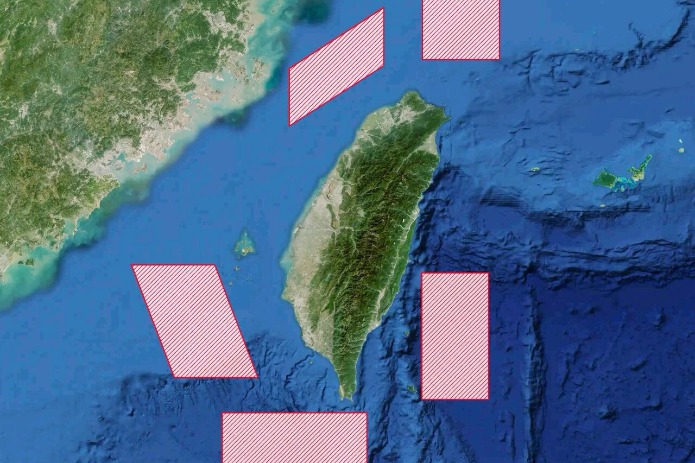
- PLA conducts major drill near Taiwan
- Washington should realize its interference in Taiwan question is a recipe it won't want to eat: China Daily editorial