Healthy cities start with public transport









Harnessing it as an ally in protecting the environment and in improving urban lives will give China yet another reason to be proud
China's extensive highway network and the millions of cars on roads attest to the country's rapid process of urbanization and modernization, driven by economic growth. Unfortunately, while cars were invented to make travel easier and to give us more freedom, they have ultimately enslaved us as we face longer journey times, traffic jams and difficulty navigating sidewalks among the many illegally parked cars.
To help us out of this logjam, "progress" too often dictates that even more roads be built, meaning more cars on the road and more time in traffic jams, ad infinitum. The physical and social infrastructure to support modern, people-friendly, public transit systems in China has yet to be fully developed.
That's why the World Health Organization China was pleased to support China's Public Transportation Promotion Week, from Sept 18 to 24, which was jointly organized by the Ministry of Transport, Ministry of Public Security and All-China Federation of Trade Unions.
The promotional week and its many public transportation activities across the country brought our attention to important questions that must be asked - and answered - about how we are constructing our urban spaces and the costs to human health.
How can we divide up the limited amount of transit space more fairly among pedestrians, cyclists, cars and buses? What does the sharing economy - including shared rides and shared bicycles - teach us about the public's willingness to embrace new transit services, and the flexibility of our transit systems to incorporate these innovations? Have sufficient incentives been put into place that promote healthy behaviors, such as encouraging people to walk, cycle or use public transportation instead of driving and parking private cars?
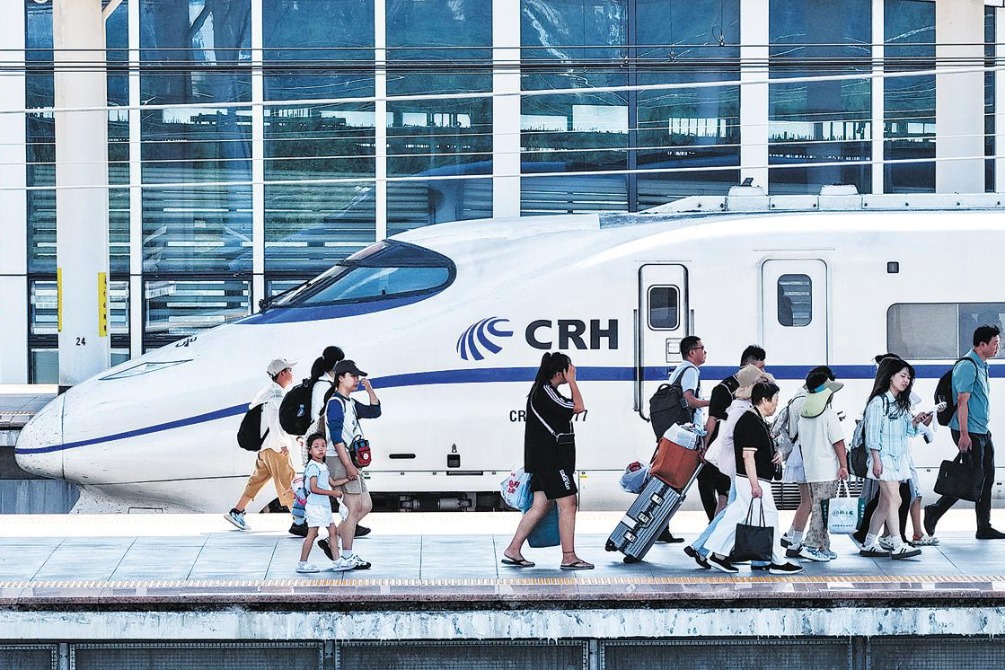
When people use public transportation, they usually walk or cycle more between home, office, bus stops and train stations.
As a keen cyclist myself, I can attest to the immense enjoyment it gives me and to the health benefits it provides. Whenever it's possible, whether it be for business or pleasure, I always call on my trusty bike, the bus and the subway to get me from destinations A to B and then from C to D. Indeed, I encourage all my colleagues at WHO China to do the same. And the environment-related benefits would subsequently contribute to better human health when we breathe cleaner air.
How do we achieve this?
We need transportation policies that actively incentivize healthy, green and people-centric transportation. That includes investing more in public transportation networks and rationalizing the allocation of space so that the overwhelmingly positive response to shared bikes doesn't crowd out pedestrians on the pavement. It also means making it tougher to choose to drive and park - governments need to charge people much more for parking, levy congestion charges and get tough on those who park their vehicles illegally.
What is most important is to put people at the heart of city planning. Cities are growing at an unprecedented pace in China. Let's remember that a good modern city is not just a place for people to work and study, but also their habitat - a place where they can live a healthy life, physically and mentally.
As citizens of a fast-developing country, the Chinese have been lucky to be able to learn from the mistakes of others. The country's tremendous achievements in so many different fields, particularly over the past 35 years or so, give cause for this optimism. By harnessing public transportation as an ally in protecting the environment and in improving urban lives, the country and its people will have yet one more thing to be proud of.
The author is the World Health Organization representative in China. The views do not necessarliy reflect those of China Daily.
(China Daily European Weekly 09/29/2017 page13)




Today's Top News
- Thailand and Cambodia agree to temporary ceasefire
- NPC's 4th annual session slated for early March
- Civilizational links for a fairer world
- Manufacturing in China spurs global growth
- Taiwan lawmakers vote to pass motion to impeach Lai
- Xi: Steadfastly implement conduct rules