How leaders are elected to CPC congress









Xi Jinping and 47 other leaders of Communist Party of China membership have been elected as delegates to the Party's 19th National Congress, which opens on Oct 18. Xi, general secretary of the CPC Central Committee as well as China's president and chairman of the Central Military Commission, was elected as a delegate by a unanimous vote at the 12th CPC Guizhou provincial congress in April.
The announcement of Xi's election by more than 730 provincial congress delegates won long and warm applause.
Other members of the Standing Committee of the Political Bureau of the CPC Central Committee-Li Keqiang, Zhang Dejiang, Yu Zhengsheng, Liu Yunshan, Wang Qishan and Zhang Gaoli-were elected delegates, respectively, in the Guangxi Zhuang, Inner Mongolia and Xinjiang Uygur autonomous regions and Yunnan, Hunan and Shaanxi provinces.
They were all nominated by the CPC Central Committee as candidates. These places are major battlefields in poverty alleviation, important places for the Belt and Road Initiative or ethnic minority regions.
The choice of places or electoral units where Party and State leaders participate in elections is intended to strengthen Party governance, assist in implementing national development strategies and allow the voices of grassroots Party members to be heard.
Party and State leaders did not participate in elections in places like their hometowns or where they have worked, except for holding concurrent posts as Party secretaries of electoral units. Leaders from ethnic minority regions can participate in autonomous regions, according to the Organization Department of the CPC Central Committee.
The fact that Party and State leaders, especially members of the Standing Committee of the Political Bureau of the CPC Central Committee, participate in elections in underdeveloped provinces and regions densely populated by ethnic minorities sets an example in the implementation of the Party's and State's major development strategies, said Professor Zhu Lingjun of the CPC Central Committee Party School.
The arrangement is important to forming a sound political atmosphere and motivating cadres and citizens, said Professor Wang Yukai, with the Chinese Academy of Governance.
"We will try to translate General Secretary Xi's concerns and the CPC Central Committee's poverty eradication policies into better lives that the people can see and enjoy," said Yang Bo, a provincial delegate and a village official in Guizhou.
A total of 2,287 delegates have been elected to attend the national congress on behalf of more than 89 million Party members.
Xinhua



- National Games vibe is everywhere in Guangzhou
- Forum unites global experts to enhance city image communication
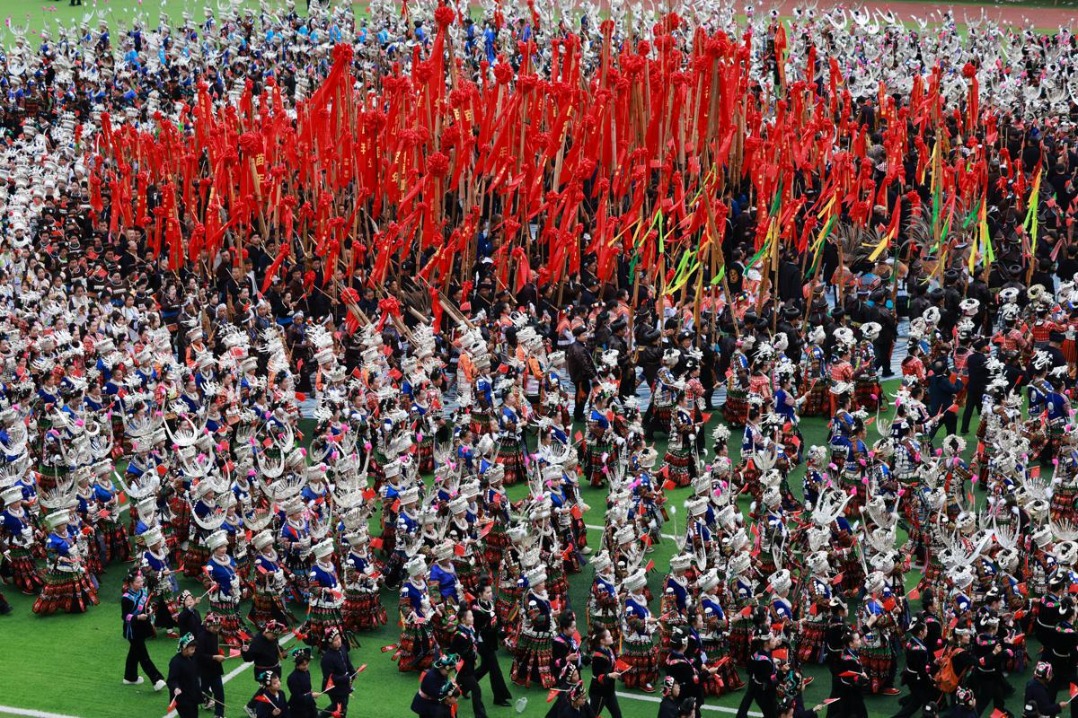
- Miao New Year celebrations get underway in Guizhou's Leishan county
- Mainland spokesman reiterates stand on Taiwan
- Fujian county's rural development becomes a big draw for Taiwan investors
- Nobel laureate in chemistry: Give young scientists more independence