New middle class embraces new patterns of spending









Substance, not style, is seen as increasingly important to China's consumers
China's middle class is expanding at an unprecedented pace.
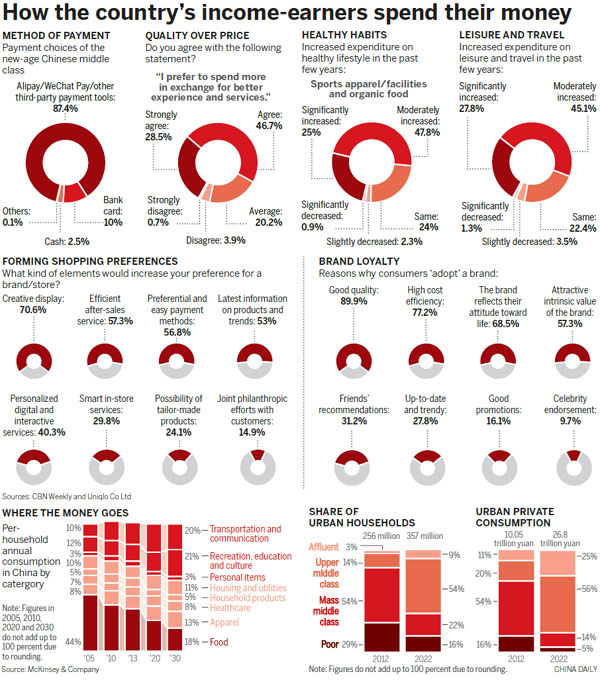
According to McKinsey & Co, by 2020 more than three-quarters of China's urban consumers will earn 60,000 yuan ($9,000; 7,700 euros; £6,800) to 229,000 yuan per year. That translates into nearly 400 million people who are considered by the consultancy to fall into the middle class category.
And thanks to a surging number of higher-paying jobs in the service and technology industries, 54 percent of them will be classified as "upper middle" class, meaning they have an annual income between 106,000 yuan and 229,000 yuan.
Beneath these figures are some significant shifts in consumption dynamics. Using income as the only indicator of spending habits allows some important information to slip through the cracks.
Research co-conducted by Chinese news service CBN Weekly and Japanese apparel brand Uniqlo uncovered the consumption pattern of the country's new middle class, who are able and willing to pay a premium for quality.
The survey, released in August, polled more than 12,000 respondents ages 20 to 45 across the relatively wealthy first-and second-tier cities. Minimum monthly income was set at 8,000 yuan.
Respondents showed a preference for products with good craftsmanship, with 84 percent favoring quality over price.
That said, more than 70 percent believe they shop more "rationally", meaning that despite loyalty to established brands, they are open to a variety of schools of thought and do not necessarily go for big-name items.
Jin Liyin, marketing professor at Shanghai-based Fudan University, attributes the changing attitude toward brands to the evolving benefit structure: from blatant status projection to more substance-driven consumption.
"Gone are the days when people used to define a life of good quality through possession of certain items or conspicuous logos," Jin says. "The new middle class see consumption not as a badge of honor but as a source of value."
Quality of life must be built around personal choices and filled with one's individual traits, the report says. Corporate social responsibility borne by brands will be factored in when consumers shop.
Meanwhile, this group of consumers is, more than ever, seeking emotional satisfaction through better taste or higher status. For instance, a store's ambience may serve as a catalyst for an impulse purchase, according to the research.
China's new middle class tends to place health high up the ladder of priorities. More than 70 percent said they would take up sports and adjust their daily routine to obtain a balance of work and rest.
To be more specific, 73 percent said they had set aside money in their budgets for sports apparel, workout facilities and organic food.
Also high on their radar are arts and leisure; two-thirds reported allocating more money for this sector. About 72 percent said they saw incremental growth in travel spending.
The increasing travel expenditure goes to more sophisticated and experiential activities, according to a report by consultancy Oliver Wyman, which said that overall trip spending surged - against a precarious drop in travel dedicated to shopping - when the Chinese went overseas last year.
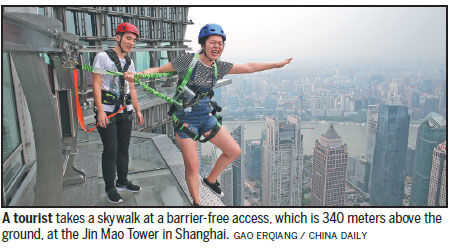
"Chinese travelers continue to shift their spending toward more meaningful experiences, such as exquisite dining, extraordinary cultural journeys and even adventurous sports," says Hunter Williams, a partner at Oliver Wyman.
hewei@chinadaily.com.cn
(China Daily Africa Weekly 10/06/2017 page25)






Today's Top News
- Lawmakers review draft law to expand childcare services
- China's new-style tea brands find a hot new market in US
- Xi extends congratulations to Chilean president-elect
- Japan urged to stop provocative moves
- Shanxi ends province-wide blanket fireworks ban
- Tech park set to lift GBA's development