Ink-brush master Li Keran’s works go on display










New exhibition highlights the stunning bout of creativity unleashed by Chinese ink-brush master Li Keran. Lin Qi reports.
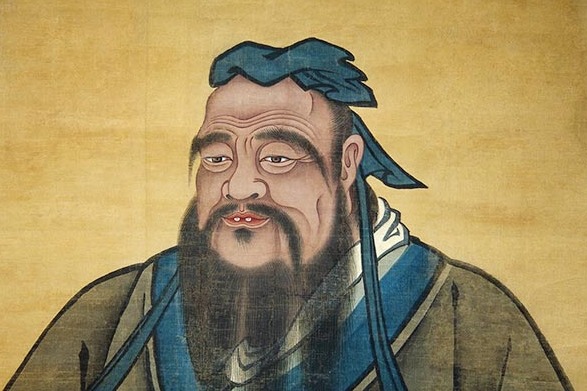
"I am poor in time" and "I don't have much left in my account of the bank of life" were what ink-brush master Li Keran (1907-89) was often heard saying during the last decade of his life.
The period was the most peaceful and busiest time Li had ever experienced. There were no more wars or chaos, no more hunger or forced relocations, to distract him from painting.
The period saw his creativity and imagination erupt. He devoted himself wholeheartedly to pushing the boundaries of Chinese ink-brush art. He produced many dynamic landscape works that dazzled people with their kaleidoscopic variations of ink that burst forth from his brushes.
It was also during this period that he founded the "Li school" of landscape painting. The group has grown into an assembly of younger painters who continue Li's innovative spirit by developing his ink-brush traditions.
Sacred Land of Ink, an exhibition now running at the National Museum of China, celebrates the artistic glory of Li's last 10 years with a showcase of 162 paintings and calligraphic works. It also marks the 110th anniversary of Li's birth.
The works on show have been loaned by his family and collectors from both at home and abroad.
Li was one of the first three modern master artists, including Pan Tianshou (1897-1971) and Huang Zhou (1925-97), whose solo exhibitions ushered in the reopening of the National Museum of China in March 2011 after a four-yearlong renovation.
While the retrospective show held six years ago reviewed Li's lifelong endeavors, the current exhibition focuses on how Li spent his latter years transforming the age-old art form into a more open and inclusive movement.
Wang Mingming, director of Beijing Fine Art Academy, says one reason why Li's works were hailed as the new pinnacle for Chinese ink art is because he absorbed a great deal from tradition.
"He was enormously inspired by two great artists preceding him, Huang Binhong (1865-1955) and Qi Baishi (1864-1957). He didn't repeat their techniques but rather, he studied how they found the keys to modernize the face of ink art while retaining the essence of tradition."
Wang says Li insisted that a painter should be a keen observer of life and sketch a lot, which he himself lived up to. "He worked very hard. He learned as much as he could. This is how he was able to elevate his art to a higher level as he grew older."
Li produced the works now on show at his 20-square-meter studio, famously known as Shi Niu Tang ("a room in tribute to cattle"). It was a room in his apartment in the west of Beijing where he moved to in 1973 and remained until his death in 1989.
Cattle was one of the main recurring subjects in Li's oeuvre. Born in Xuzhou, Jiangsu province, he sought shelter in Chongqing in the 1940s, after the War of Resistance against Japanese Aggression (1931-45) broke out. His home in the city was close to a cowshed. The bucolic scene of boys tending to cows reminded him of similar landscapes in his war-torn homeland in eastern China.