Smart productivity will boost nation's manufacturing strength










Editor's Note: The Communist Party of China concluded its 19th National Congress on Oct 24. China Daily asked business leaders from major multinational companies for their views on economic development here and the country's global leadership role.
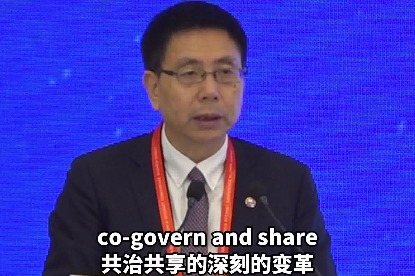
Jonathan Woetzel is director of the McKinsey Global Institute and senior partner at McKinsey & Company, a multinational management consulting firm based in the United States.
What are your impressions about major economic and industrial policies released from the 19th CPC National Congress?
The overall policy direction is consistent with China's transition to a productivity-led economy. Public sector consolidation and reform, support for the private economy, and the acceleration of restructuring based on innovation and digitization, will be critical to sustaining China's development in the next five years.
The country will also continue to modernize its financial system, mitigating the risks of asset inflation and income inequality even as it provides needed capital to a much broader set of enterprises.
What is the biggest challenge China faces, and how can the country overcome it?
It will be to sustain and increase the rate of productivity growth of the economy, which has been declining. China's historical growth has been based largely on a strategy focused on industrial productivity, following the agricultural reforms of the early period.
The same attention now needs to be paid to the broader services sector, including deregulation, investment in human capital, incentives for local government reform and strengthening the rule of law. Stronger productivity growth will also help China to address many of its other challenges as its economy matures, including an aging population, and growing income inequality in urban and rural areas.
Can China's experiences or practices be used to solve global problems?
The experience in urbanization, including infrastructure work, large-scale economic development, and agricultural-urban integration are noteworthy. They could benefit many developing countries and regions.
How do you view China's role in the world today?
The country is a new force in development. As a global civilization, China now has an opportunity to influence and accelerate economic and social development worldwide.
By actively supporting the development of global public goods, including the environment, technology and education, China can reduce the risks of global volatility.
Programs like the Belt and Road Initiative are consistent with a more expansive and integrated role for China in the global economy and society. More recently, the country has become a leader in the digital economy, especially in consumer related areas.
China now accounts for more than 40 percent of global e-commerce transactions. The nation's third-party mobile payment is 11 times larger than that of the United States. China is also home to one third of the world's unicorns (startups valued at more than $1 billion).
The country can share its experience in digital transformation, especially in other emerging markets. It can also contribute to global debates on cybersecurity, technology standards and digital sovereignty to reach a consensus.
What are the most innovative trends or products in China?
The country is good at customer-focused innovation-understanding customers' pain points and addressing them through the rapid introduction of new products, services and business models. Chinese innovators use this massive consumer market to turn new ideas into commercial success.
Consumers are quick to embrace innovation by accepting early versions of products and services, and providing feedback for rapid refinement. We see many examples of this in the internet sectors, such as the evolution of payment or messaging apps into "superapps", which touch every aspect of life.
The massive amount of data generated in China can create opportunities for the nation to become a global leader in artificial intelligence, too.
China is known as a global manufacturing giant, but what will be the nation's "calling card" in the future?
It will continue to be a world manufacturing leader. But if it can leapfrog in productivity and efficiency, it can earn the right to play across the value chain. The further integration of Industry 4.0 technologies could help Chinese manufacturing step up in design and innovation capabilities.
China's manufacturing strength will then be innovation and productivity.
- Top leadership crucial for bank success: Consultant
- McKinsey: Chinese consumer confidence highest in decade
- Chinese consumers more confident and savvy than ever: report
- McKinsey: Chinese banks should make strategic moves to increase their value
- McKinsey: Banks should transform to increase their economic value