Rural residents start to feel urban buzz









Yanhe Tujia autonomous county is one of 14 severely poverty-stricken counties in Guizhou province.
Located in the northwest of Tongren, it is the only severely poverty-stricken county in the city. By the end of last year, about 81,600 people in the county were still living below the poverty line, accounting for nearly 15 percent of the population.
Most of the impoverished residents live in mountainous areas, so relocation from poorly equipped, uninhabitable villages to towns and cities has become the most effective way of raising living standards. Last year, more than 12,000 people from 2,137 families in Yanhe were relocated.
"Initially, many residents were reluctant to move because they were accustomed to life in small communities, where people know each other well. Also, uncertainty about the quality of their new living conditions was a major concern," He Zhigang, Yanhe's deputy Party chief, said.
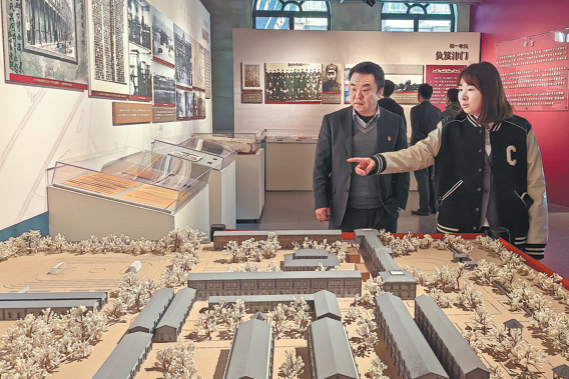
According to He, the county government paid for residents to visit proposed new residential areas, which played a crucial role in persuading them to move. In the past year, more than 1,700 impoverished families visited their future homes in Tongren.
After seeing the new garden view apartments, which are equipped with appliances and furniture provided by the local government, the villagers were won over. By the end of October, 53,077 people from 11,486 families had signed relocation agreements.
To better solve people's difficulties and encourage families to move to unfamiliar places, albeit with better public services and a wider range of opportunities, the Tongren government assigned hundreds of experienced Party officials to a poverty-alleviation team to improve governance and raise living standards.
Teams of three to eight county or city officials have been sent to both the villages and the new homes of relocated residents. The officials, who sign contracts for at least two-years, help the families under their care to solve problems related to the relocation process.
"To understand the villagers' basic needs and concerns, we must become friends and provide solutions. People will only trust us if they know we are helping them and will always be there when they have questions or difficulties," said Chen Changxu, Party chief of Tongren.
In May, to encourage more Party officials to work toward the alleviation of poverty, the city government released a guideline that included a number of supporting policies, such as job promotions and year-end bonuses for the best-performing officials, he added. Officials who sustain injuries in accidents related to the relocation process are provided with preferential hospital treatment and also receive government subsidies.
Suggestions
Suggestions from residents are welcomed by the authorities, so the home page of the Tongren government's website features a "message board for local leaders".
In August, a resident posted a message noting that people who relocated from rural areas and are accustomed to working in the agricultural sector find it difficult to adapt to new forms of work. He suggested that the government should encourage these people to find jobs in animal husbandry or to cultivate land in the urban areas.
"The government received the feedback and is formulating a plan to meet such needs. Next year, we will provide relocated residents with land so they can grow vegetables on a small scale," said Luo Ling, a public servant from Yanhe who works in a relocation support group in Tongren's Xiangtanglong community.
Luo said that in the first few weeks after relocation, some senior villagers were afraid of taking elevators and didn't know how to use the induction cookers provided, so she and her team members stayed in the community "on call" day and night.
According to He, the city government is working to create more jobs, and planting bases for kiwi fruits and eatable fungi are being planned in some of the relocation sites.
He said different areas will have government-aided supporting industries, such as the cultivation of tea, organic vegetables and medical herbs, along with livestock farming, based on their climate and geography.
"The biggest challenge is to help the villagers discover their own value in their new communities," Luo said. "Relocation is not the be all and end all, but a start. After they make new friends, receive better educations and job opportunities, they will really feel that they are part of the city."