Waste import ban designed to safeguard health










Shrinking export market
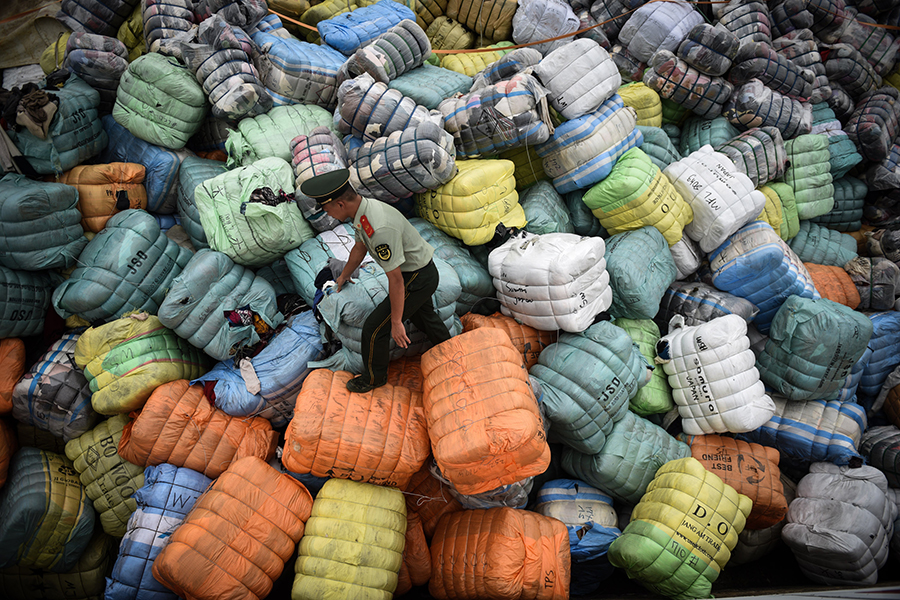
China has been a major processing center for waste for many decades, with imported waste recycled to provide raw materials for the manufacturing sector.
In 2016, more than 43 million metric tons of scrap iron and steel, nonferrous metals, paper and plastics were imported, with nonferrous metals alone valued at $8.42 billion, according to Ministry of Commerce data.
In addition, the largest sources of waste, including the US and European countries, are heavily reliant on China's recycling industry, so they are already feeling the impact of the ban and struggling to deal with the soaring volume of domestic waste.
Landfill and incineration costs are high in Europe, while other countries are likely to charge more than China to accept waste, according to Meadhbh Bolger, a resource use campaigner at Friends of the Earth Europe.
In 2016, the UK collected 2 million tons of mixed paper for recycling, exporting more than half to China. Around one-third of plastic collected for recycling in Europe was sent to China.
Simon Ellin, chief executive of the UK Recycling Association, said the UK government has been "asleep at the wheel" since China announced the partial ban, which followed the introduction of restrictions on waste imports phased in over the past four years.
"We could have a big problem on our hands," he said. "Where is the material going to go? I expect that in the first quarter of next year, we will see the UK awash with mixed paper."
The US is confronted by a similar situation. Restrictions on the export of waste mean it is losing money, while it is spending time and energy attempting to find countries that will deal with the recyclable material China will no longer accept.
Recyclables and waste are the sixth-largest US export to China. In 2016, almost 50 percent of its commodity-grade scrap metal, paper and plastic was sent to China, according to the Institute of Scrap Recycling Industries in Washington.
"Our industry is on tenterhooks right now because of the impact on these high-value scrap commodities, which our members send almost exclusively to China," said Adina Renee Adler, a senior director with the institute.
Some companies, such as Rogue Waste Systems, a waste collector in Oregon, have started to slow processing work to meet the higher quality standards imposed by China, and have sought help from local authorities to allow them to bury excess material in landfills, as indoor stage facilities are full.
In November, the European Union, the US, Japan, Australia and Canada questioned the broad scope of the ban and asked China for a longer transition period of up to five years, according to the statement issued by the WTO.