The digital payment battle in HK









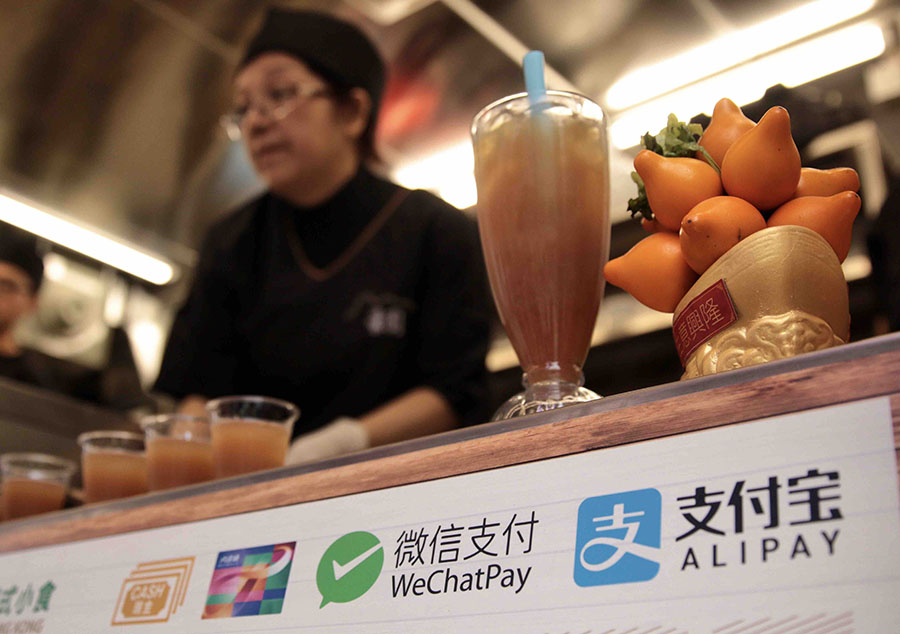
The digital payment market in the territory has long been dominated by the Octopus card. Hailed as the poster child of how innovative Hong Kong used to be compared with its global counterparts, the Octopus card is ubiquitous in almost every corner of Hong Kong people's daily lives, so much so that a staggering 99 percent of local consumers and commuters are seamlessly covered by more than 33 million Octopus cards in circulation.
"Though the over-reliance on Octopus card stands as the oft-cited culprit to Hong Kong's late-mover disadvantages in the rat race of digital payments, the roots of the problem are much more fundamental," said Emil Chan, chief operations officer of CamClaim Ltd, a Hong Kong-based mobile commerce payment platform.
"The story here is not so much with the cutting-edge technologies that pioneering payment platforms like Alipay and WeChat Pay devise on the front end," Chan said. "What matters is an outdated retail payment system at the bottom that fails to allow for immediate or close-to-immediate clearing of transactions, and real-time interbank fund transfer, leaving banks and SVF operators in Asia's financial center largely disconnected."
"This may explain why it would take a whole two days after the transaction for the money transferred from the city's digital payment platforms to eventually show up in local bank accounts," he added.
"With a backward underlying payment system that essentially makes Hong Kong belie its crown as the world-renowned financial hub, any front-end payment technologies cannot be truly given to the full play," Chan reasoned. "No wonder digital payment, which takes many parts of the world by storm within just a few short years, could hardly catch on in Hong Kong."
In a sign of its determination to recover some "lost ground", the city's de facto central bank made the much-awaited move to launch a real-time retail payment system in September last year.
The service, officially called Faster Payment System, or FPS, enables instant or near-instant retail payments, settlement and fund transfers between banks and non-banks.
HKMA Chief Executive Norman Chan Tak-lam believed the system should be the "world-leading" one as it goes the extra mile to connect the city's licensed third-party payment service providers together. Such connectivity could barely be seen between Alipay and WeChat Pay on the Chinese mainland, at least for the time being.
"One of the issues we face today is users and merchants are very often on different payment platforms," said Gary Ng, risk assurance partner at PricewaterhouseCoopers Hong Kong, who anchored high hope on the upcoming payment system.
"The new payment system can solve this problem as it integrates all banks and SVF operators such that their account holders can transfer money between different platforms on an almost real time basis," Ng noted. "It will also come with a common QR code standard, which would promote the wider use of mobile retail payments and greater convenience to customers and merchants."
"The system itself is better than nothing, but far from enough, as early movers like the Chinese mainland, Singapore and the European Union have already rolled out the likes of FPS a couple of years ago," Chan said. "When we cheer for the FPS finally getting off the ground in Hong Kong, the next big things-blockchain technology, for instance-are well underway. We are always one step behind."
"Hong Kong may be late. But we have not missed the boat yet," said Hung, who believed the local payment market, technologically ready for a game-changing moment, calls for a "booster" to fire the first shot.