China's 1st standardized unit of measurement









Widely considered to be China's first standardized unit of measurement, the bronze square sheng dates back to the Warring States Period (475-221 BC).
The relic, which looks like an oblong scoop with a handle, was created by Shang Yang (390-338 BC), a statesman and philosopher of the State of Qin whose policies paved the way for the Qin to eliminate the other six states and unify China for the first time, resulting in the establishment of the Qin Dynasty (221-206 BC).
Shang was also responsible behind the creation of other units of measurement for a variety of things, including land. However, the bronze square sheng is the only relic that remains today.
Gong Xinming (1865-1938), a famed collector of bronze and antiques from Anhui province, bought the bronze square sheng in 1903. Gong gave his son the relic just before his death and told him never to sell it. Following the turmoil caused by the "cultural revolution" (1966-76), the family gave away most of its antiques to the Shanghai Museum. The bronze square sheng is the most important artifact from the collection.
The object, which measures 18.7 cm long, 6.9 cm wide and 2.32 cm high, has a weight of 480 grams and a volume of 202.15 milliliters. According to Li Zhongmou, deputy director of the Shanghai Museum, the state of Qin required its citizens to pay their taxes in the form of grains. As such, a standard unit of measurement was required.
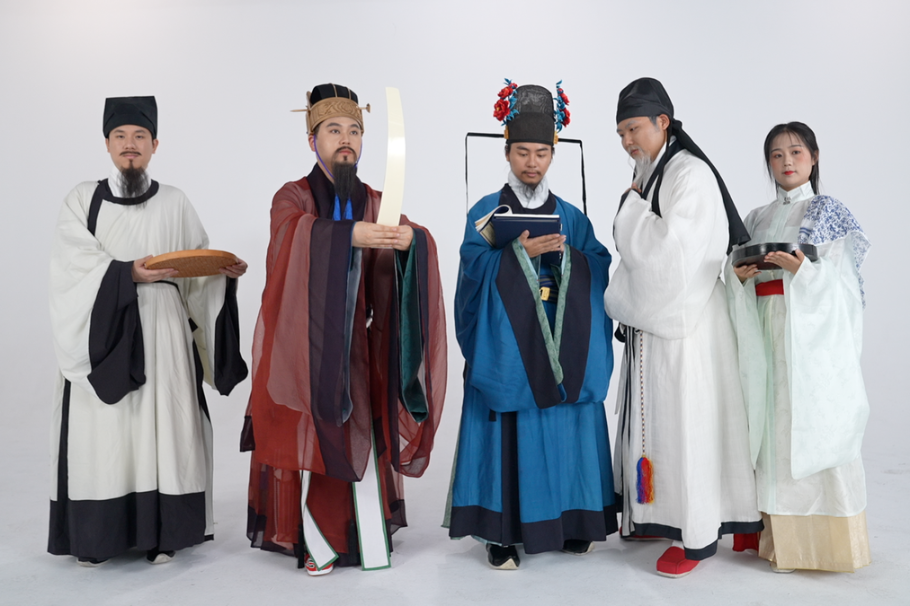
Huang Lei, host of the National Treasure episode that featured the sheng, said that Shang started his career as a low-ranking official in the state of Wei. He later won the support of Duke Xiao of Qin, who enabled him to carry out a number of reforms starting in 356 BC which helped the state of Qin to become a strong kingdom with great military might. His reforms included establishing a new system of land division and a strict rule of law, as well as boosting the productivity of farmers, laborers and the military.
One of Shang's most important reforms was changing the ownership of farming land from the state to the farmers. Soldiers were also awarded land for their merits during service. This move proved to be a masterstroke — the people became highly motivated and in turn helped to boost the state's tax revenue and military strength. But while the general populace stood to gain from his policies, the aristocrats were deprived of further wealth.
After Xiao died, Shang and his entire family were executed by the next ruler. Shang was tied to five chariots and torn apart as each went in a different direction.
When King Ying Zheng later eliminated the other six kingdoms and founded the Qin Dynasty, he introduced the measurement systems created by Shang. King Ying Zheng is also commonly known as "Qin Shi Huang", or the first emperor of Qin.