Workplace discrimination hits mothers









Demographic time bomb
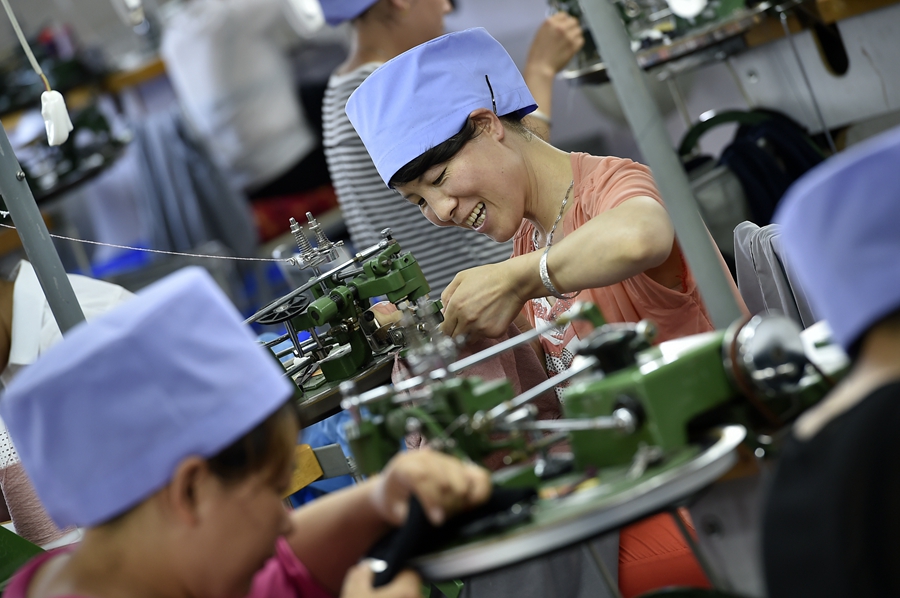
The reluctance to hire or promote mothers is also underscoring two major demographic problems facing the country-a low fertility rate and a rapidly aging population.
In China last year, 240 million people were age 60 and older, and the figure is expected to reach 400 million by the end of 2035, according to official data.
In response, the government is encouraging more couples to have babies, but the discrimination many women face in the workplace means they are reluctant to risk their career prospects.
To address the problem, some people have suggested that new legislation should be formulated.
Li Shouzhen, a member of the Chinese People's Political Consultative Conference and an official with the All-China Federation of Trade Unions, urged lawmakers to enact anti-discrimination legislation to better protect working mothers' rights to employment and career development.
Specifically, he suggested prolonged maternity leave for working mothers who have a second child, extending the period from the current 128 days to six to nine months.
Li also suggested that employers should be encouraged to allow women with two children to work from home, and called for them to be allowed more-flexible working hours.
Ge said women who have children are making a contribution to the country, so the government should sweeten the message by compensating them for loss of earnings and poorer promotion prospects.
"There is no doubt that women can do just as well as men in the workplace, and even better, but it's important to encourage more to stay at home if the country wants to raise the birthrate," he said.
Businesses are encouraged to assume social responsibilities, but it would be wrong to force them to hire women when they prefer men, given the labor costs, he added.
Cao Zhiwei, a member of the Standing Committee of the CPPCC in Guangzhou, Guangdong province, had a different opinion.
He suggested the government should encourage companies to hire more women by giving tax breaks to businesses in which female employees account for a predetermined percentage of total staff members.
"The government could also provide subsidized medical insurance during pregnancy and maternity leave," he said.
"In some countries, such as the United States and Australia, the government pays a new mother's salary during her maternity leave, which cuts employers' costs. China can learn from that, too."
However, Ge said it would be difficult to apply preferential tax policies because that could cause new, complex problems.
Instead, it would be preferable to collect taxes based on a family's combined income, which would rebalance some of the losses women face at work.
"In addition, the authorities should establish a clear complaints channel for women who believe they have been subjected to serious discrimination at work," he said.
Other approaches
Xiang Tao, vice-president of human resources at the Chinese operations of Volvo Construction Equipment, a Swedish machinery manufacturer with global interests, said the company operates a no-discrimination policy.
"We don't rely on government policies to tell us not to discriminate against female job seekers or employees. Instead, our company believes in diversity in recruitment," she said.
To reinforce that message, the company aims to raise the proportion of female employees to 25 percent of its global workforce.
"That's because we strongly believe that gender diversity makes the industry more competitive," Xiang said.
"In China, we passed the 25 percent mark in 2014, and have exceeded it ever since," she added.
"We don't treat our female employees any differently if they have one baby or two, because we think it's natural to have children and we respect their personal choices."
Moreover, when women take maternity leave, the company hires a flexible replacement for six months.
According to Xiang, in Sweden, the government pays the salaries of new mothers and fathers during their combined 12 months of maternity and paternity leave.
"As a company, we handle our labor costs well, but if the Chinese government adopted the practices used in other countries and paid employees' salaries during maternity leave, it would be very helpful," she said.
Contact the writer at dujuan@chinadaily.com.cn






- Chinese lawmakers review draft revision to banking supervision and regulation law
- Administrative organs must secure people's interests: senior judge
- 2,309 regulations filed with China's top legislature for review in 2025
- Chinese researchers pinpoint seed genes for enhancing food security
- Public interest litigation plays prominent role in China's governance
- 15 arrested in 1b yen robbery in Hong Kong