


Himalayan task









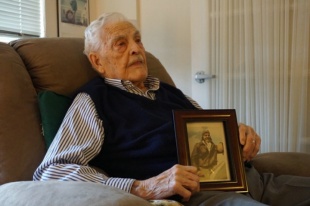
At Richard Daniel Harris' apartment in West Seattle, the 96-year-old former pilot describes his joy at hearing about Japan's surrender in World War II while he was midair, at about 16,000 feet.
When you open his logbook and see the details of the treacherous trips he has made over "the hump," or the Himalayans, you realize how adventurous his life has been.
Between February and October 1945, Harris flew military transport aircraft from India to China in support of the allied war effort against Japan.
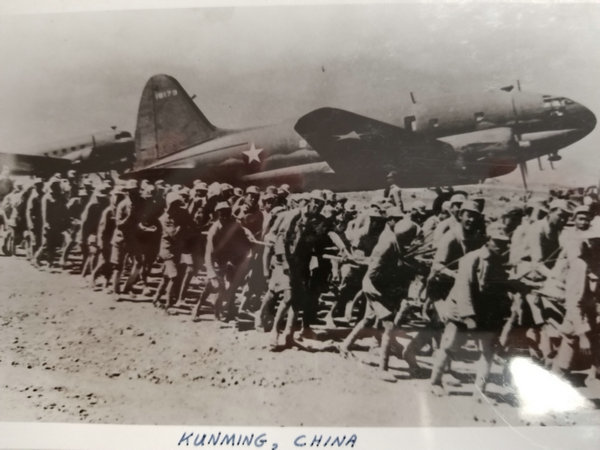
The US Army Air Force's Air Transport Command pilots, such as Harris, flew from bases in India's northeastern Assam state to Kunming in China's southwestern province of Yunnan, about a 500-mile hop, which helped Chinese and American troops after Japan took control of Burma (now Myanmar) and its land routes during WWII.
"When Pearl Harbor happened, there was a call to arms," Harris says. "When we were invaded by a foreign country; when they were at the table, trying to negotiate peace, they attacked and bombed our ships in Honolulu."
Harris volunteered to join the US Army. He served from July 3, 1942 to March 18, 1946, went in as a private and was discharged as a flight officer.
"I didn't expect to go in. ... I had a friend who was interested in it. I had a car and I drove him down. We both went in and took the physical (exam). He didn't pass, ... I did," Harris recalls.
When Harris flew solo for the first time during military training in Lewiston, Idaho, he considered himself a real pilot.
And later, when he flew back and forth over the Himalayas, he says the Japanese planes trailing left the US planes alone, because of the mountains.
"The conditions were too bad for the Japanese bombers to fight. If they did anything, they dropped bombs on the runways we were going to use in China. So we could not land, and we would have to throw our loads out because we could not make it back over the higher altitude," Harris says.
But the task was very risky because the round trip meant heavy wind, subzero temperatures, thunderstorms and mountain peaks rising up to 18,000 feet.
The pilots had no choice but to navigate the obstacles in overloaded C-46 aircraft built specially for the task. They nicknamed the C-46"flying coffins", because of the high casualty rates, "probably one in four, and some never came home".
"We had to use oxygen masks all the time because of the pressure," he says.
"We used them at night from the time we took off to the time we landed. In the daytime, we wouldn't put them on until we got to over 10,000 feet.
"You'd listen for a signal on the radio, but in bad weather you couldn't hear the signal. So you had to rely on what they called a gyrocompass."
Despite the harsh conditions, Harris himself went over and back 72 times, he says.
"We would load our gas tank full and not refuel on the other side and come back. It was important to carry as much as we could and still take off in India," Harris says.
"We carried tons of materials, like bombs, gasoline, ammunition, food, medical supplies, but mainly gasoline and bombs."
The "hump pilots" transported 650,000 tons of material to China at great cost-both in terms of people and aircraft-over 42 months during the last phase of the war.