Sleep disorders rising among younger people









Nationwide problem
According to a report published last month by the Chinese Sleep Research Society, 56 percent of respondents said they slept poorly.
Sixteen percent of respondents who had insomnia worked in information technology, making IT professionals the work group most likely to experience the problem.
They were followed by blue-collar workers, salespeople and consultants, according to the report, which was based on an online survey of 2,000 people ages 18 to 50 in 10 major cities. More than 60 percent of respondents born after 1990 said they had problems sleeping.
While about 70 percent said their sleep was affected by work pressures, other causes of disrupted rest included emotional issues, environmental factors, such as noise pollution, general ailments and lifestyle, such as excessive use of smartphones at night.
The most common problems included frequent dreams, light sleep and postrest fatigue.
A report released by the society in 2016 said that 38 percent of adults in China have experienced insomnia.
In addition, more than 300 million people had sleeping disorders, and the number was rising every year.
While some sleep disorders may simply be an unpleasant fact of life for many people, others-such as inability to fall asleep and rising excessively early or far too late-may be caused by undiagnosed physical illnesses, so people with those problems should seek medical advice, according to Sun, from Peking University Sixth Hospital.
"I received a patient who had experienced insomnia for many years for reasons that had been unclear. A scan showed an abnormal area of more than 5 centimeters in diameter in her brain, which was the major cause of her problem," he said.
The woman was later referred to the neurological department for treatment.
Sleep disorders can occur at almost any age, but in general, women are more likely to experience insomnia, and most of the patients Sun sees are age 45 and older.
Guo Xiheng, director of the Respiratory and Sleep Medicine Center at Beijing Chaoyang Hospital, said rising awareness of sleep disorders in recent years has seen a growing number of people seeking help at clinics, and the average age of patients is falling.
"In the past, most insomnia patients were middle aged or elderly, but now more young people are experiencing these problems," he said.
Compared with seniors, whose sleep patterns deteriorate as a result of advancing years, sleep disorders in young people are more likely to be the result of bad lifestyle choices, such as staying up too late and irregular sleeping schedules, he said.
The report released by the Chinese Sleep Research Society last month showed that 31 percent of respondents said they needed more than 30 minutes to fall asleep.
Nearly 60 percent of those born after 1995 used smartphones for as long as 80 minutes before going to bed for activities such as chatting and watching movies online, the report said.
Sun said people with sleep disorders may be offered a range of treatments, including psychotherapy, medication and even surgery if it is deemed necessary.
"Many illnesses can cause sleeping disorders, and they should be noted during diagnosis so they can be treated," he said.
A prime treatment for insomnia is cognitive-behavior therapy, which includes fixed times for getting up and going to bed, avoiding afternoon naps and undertaking relaxation training.
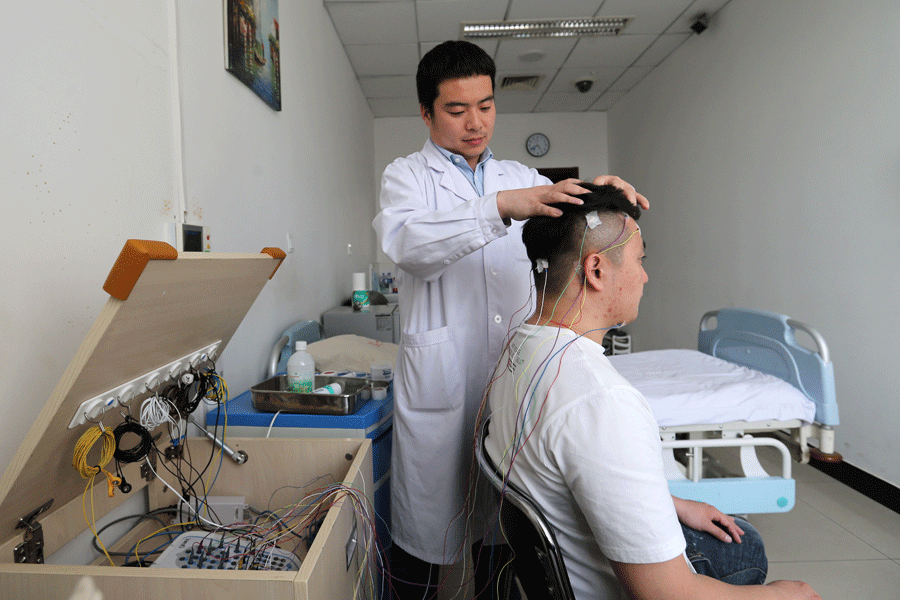
A relatively new treatment involves transcranial magnetic stimulation, where special equipment is used to produce a magnetic field around a patient's head that can alter their mood, according to Sun. "Patients with mild problems may only need clinical treatment, but patients with serious disorders may need to stay in hospital for treatment for about two weeks," he said.






- Countdown to 15th National Games: On-site warm-up entertains audience
- Eight missing after cargo ship collides with fishing vessel near Shandong
- Investing in people: a worthwhile investment
- Exhibition commemorating the epic relocation of universities opens in Fujian
- Twelve punished for scaffold collapse that killed 7 in Shandong
- Slovenian official visits whole-process people's democracy practice site of CPPCC committees