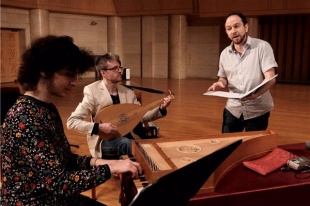



Ensemble to perform music by Latin poet-composer









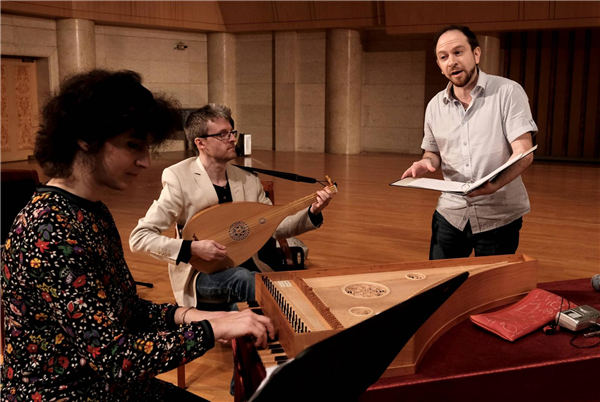
On April 20, the Basel-based ensemble, La Morra, will present a concert at the Forbidden City Concert Hall in Beijing, with music by Latin poet-composer Petrus Wilhelmi de Grudencz, a name not very familiar to Chinese audiences.
"The programs are not even familiar to audiences in Europe," says Polish lutenist Michal Gondko, co-director of the ensemble.
"People come to our concerts and read the program. But they don't know the music."
According to Gondko, the discovery of the medieval composer is one of the most remarkable achievements of 20th-century Eastern European musicology.
In 1975, while working on a 15th-century polyphonic composition called Pneuma/Veni/Paraclito/Dator, Czech musicologist Jaromir Cerny noticed a name, Petrus Wilhelmi de Grudencz, in the text.
Since Cerny has previously seen similar works in Central European music manuscripts, he realized that many of them had a name "Petrus".
Little is known about the composer's life.
But Petrus Wilhelmi de Grudencz was born in 1392 in Poland and his father may have been a knight.
From 1418, he studied at the University of Krakow (in Poland) and in 1452 he traveled to Rome.
The ensemble, La Morra, has revisited Central European manuscripts of 15th-century music to create a program, which highlights the personality of this poet-composer, and places his works in a broader context of a music culture that nurtured his creativity.
"The significance of Petrus lies, above all, in the fact that he is one of the few Central European composers whose works survive (in large numbers)," says Gondko.
"Today, more than six centuries later, it is not easy to understand why and for whom Petrus Wilhelmi was writing his words and composing his melodies. But it seems probable that they were intended for literate people, who enjoyed poetic musical style.
"For the audience, the works of Petrus Wilhelmi - all of which are devotional in nature - could have been an eloquent way to pray. It may be the reason, why in certain parts of Central Europe, the works of Petrus were still sung in the 17th century."
During its concert in Beijing, the ensemble will perform with two medieval and Renaissance instruments: a clavicembalum (a kind of harpsichord) and plectrum lute.
With seven members: singers Doron Schleifer, Ivo Haun de Oliveira, Giacomo Schiavo and Sebastian Leon; and instrumentalists Corina Marti, Anna Danilevskaia and Gondko, the ensemble formed in 2000 has gained wide recognition for its interpretations of the late medieval and early Renaissance repertoire.
The ensemble has performed at some of the most prestigious early music events worldwide, including the Festival van Vlaanderen in Belgium; the Voix et Route Romane in France and the Tage alter Musik in Regensburg, Germany.
Currently, the ensemble is on its first China tour.
Before the concert in Beijing, the ensemble performed at the Tianjin Grand Theatre Concert Hall on April 19. And it will perform at the Qintai Concert Hall, in Wuhan, in Central China's Hubei province, on April 21.
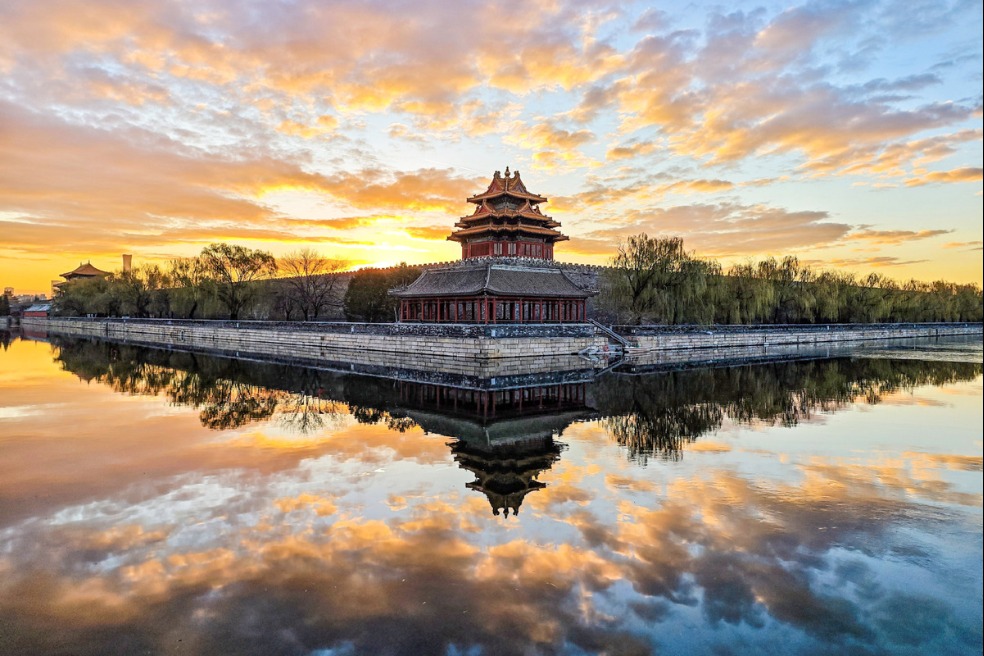
The La Morra concert in Beijing will open the performance season of the Forbidden City Concert Hall, in which international musicians will gather at the venue to perform music by composers from the Middle Ages to the 17th and 18th centuries.
On May 6, French conductor and opera singer, Nathalie Stutzmann, who is renowned for her contralto voice, will make her first trip to China by leading her chamber orchestra, Orfeo 55, to perform works by composers such as Antonio Vivaldi, Antonio Caldara and Francesco Cavalli.
On May 27, the Amsterdam Baroque Choir will perform under the baton of Dutch conductor Ton Koopman, with Johann Sebastian Bach's Singet dem Herrn ein neues Lied, BWV 225 (for two four-part choruses), Meine Freude, BWV 227 (for five-part chorus), and Johannes Brahms' Wechsellied zum Tanz (Exchanges At The Dance), Op.31 No.1, The Zigeunerlieder (Gypsy songs), Op. 103, and Der Abend (The Evening), Op. 64, No. 2.
If you go
7:30pm, April 20. Forbidden City Concert Hall, inside Zhongshan Park, Xicheng district, Beijing. 010-6559-8285
- Chinese producer, Singaporean artist capture sound of Himalaya
- Exhibition 'Ming Dynasty: The Radiance of Knowledge' held in Moscow
- Thematic show gives artists a comprehensive platform
- Japanese violin prodigy to perform at Shanghai Oriental Art Center
- Kunqu Opera version of Lonesco classic to be staged in Beijing