Railways in China were dirty, noisy, but not anymore









Old-timers recall evolution from coal-fired boilers to electricity
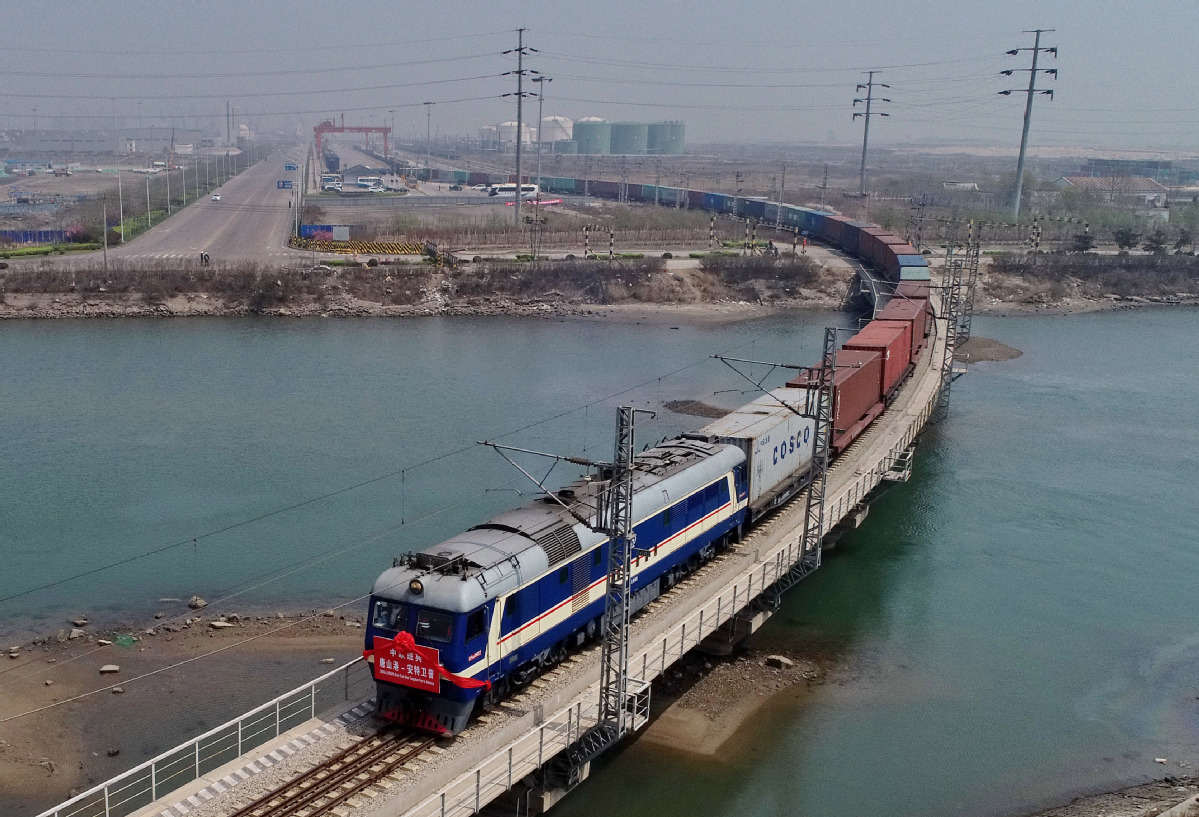
A train loaded with 41 steel shipping containers departed from Tangshan, Hebei province, in late April, marking the inauguration of an additional line of freight between China and Europe.
The train was scheduled to travel 11,000 kilometers in 16 days to the Belgian city of Antwerp through Kazakhstan, Russia, Belarus, Poland and Germany.
By March, freight trains were operating between 43 Chinese cities and 41 cities in 13 European countries, becoming a major means of freight transport between them.
Tangshan, a coastal city some 150 km from Beijing, is known for its coal resources and steel industry.
In 1881, a 9.7-km rail line from Tangshan to Xugezhuang, Hebei province, opened for coal transport. Designed by British engineer Claude W. Kinder, it was the first line with a global-standard track gauge of 1,435 millimeters in China.
As the conservative imperial family of the Qing Dynasty (1644-1911) believed noisy moving locomotives with steam and smoke were inauspicious and would disturb the souls resting in the imperial tombs not far away, carriages on the line were approved only when pulled by horses and mules.
Coal carriers
Earlier, local coal had to be carried out on horseback to the seaport before it was loaded on ships to Shandong province for use, said Liu Fuzeng, deputy Party chief of the Tangshan locomotive operations and maintenance section of the Beijing Railway Bureau. The bureau manages railway operations in Beijing, Tianjin and Hebei.
The line was later extended to Mukden, now called Shenyang, in Liaoning province, transporting cargo and passengers.
During the extension project, Zhan Tianyou, a Yale graduate and designer of a railway bridge along the line - Luanhe Bridge - drew the attention of the government, Liu said.
Zhan was later appointed as chief designer of the Beijing-Zhangjiakou line, the first railway designed and built by China in the early 20th century. It is still in use.
"Although the design and construction were done by Ch - se people, all parts - including every single spike - was brought in from abroad," said Gu Lin, a manager at Tangshan South Station, the starting point of the Tangshan-Xugezhuang line.
While the line was being built, a locomotive designed by Kinder was secretly being assembled with a secondhand boiler and cylinders.
The locomotive, put into use in 1881, was called "Rocket of China", according to a book by British writer Peter Crush, Imperial Railways of North China.
Having no idea of what a rocket was, the "fire-breathing, smoke-and steam-puffing monster" was dubbed "the dragon" by Chinese mine workers.
Li Zhensheng, 57, joined the locomotive's crew as a boiler worker after he retired from the military in 1986. He and the assistant driver had to take turns stoking the fire with coal, spade by spade. The water they drank was filled with coal dust.
As the boiler blocked the drivers' view in the front, they had to pop their heads out of the side window constantly for safety checks. Many of them developed shoulder and neck problems.
When Li served as an assistant driver of a diesel-powered locomotive in 1989, he considered it "leapfrog progress".
"No more dirty coal, dusty air and constant stretching outside, and we even had fans and an electric stove," he said. When the electric locomotives came to the line in 2010, drivers even got air conditioning and a microwave oven.
"The trains became faster and faster, and more and more comfortable," Li said.
Wang Lanbiao, a locomotive maintenance worker, said the reduced vibration of the trains was partly attributable to the shock-absorber technology.
"Unlike trains in the past that had springs to reduce the vibrations, now the trains are equipped with hydraulic dampeners and even shock-absorbing air bags," he said.
On a China-made high-speed train, which runs as fast as 350 km per hour, a coin is able to stand on its edge.
At the new Tangshan Railway Station, 71-year-old Zhang Shuyun was waiting for her train to Tianjin's Binhai New Area. The G1262 train takes 20 minutes to carry her home, a mere one-sixth of the time she would spend 40 years ago.
It was the first time for Zhang, a former primary schoolteacher, to revisit Tangshan since her retirement 18 years ago.
Smoke and smell
Zhang recalled that in the past, the train coaches were full of smoke and unpleasant odors, and the train was very crowded, with some passengers standing in lavatories or sitting on the basins.
"When someone had to use the toilet, those packed inside had to get out before letting him or her in," she said.
Back then, Tangshan was the only passage to reach Northeast China by rail.
Since China began its reform and opening-up drive in 1978, a market economy has resulted in increased freight and passenger mobility.
The railway network in the country hit 127,000 km in total length in 2017, including 25,000 km of high-speed lines. China also helps build railways in other countries, such as Zambia and Kenya.
Increasingly, the railway lines are built solely using parts made in China.
The changes are likewise amazing in urban construction. Zhang, who hadn't been to Tangshan for years, found herself lost in the city.
"I failed to spot any former buildings, and I knew none of the street names mentioned by the taxi driver," she said, adding that she had to call her former students to pick her up.
Wu Zhanguo, deputy director of the railway affairs office of Tangshan, said construction had begun on a new station complex that would combine airport, railway, subway and bus facilities.
"Easier traffic will surely help attract talent here," he said.



- National Games vibe is everywhere in Guangzhou
- Forum unites global experts to enhance city image communication
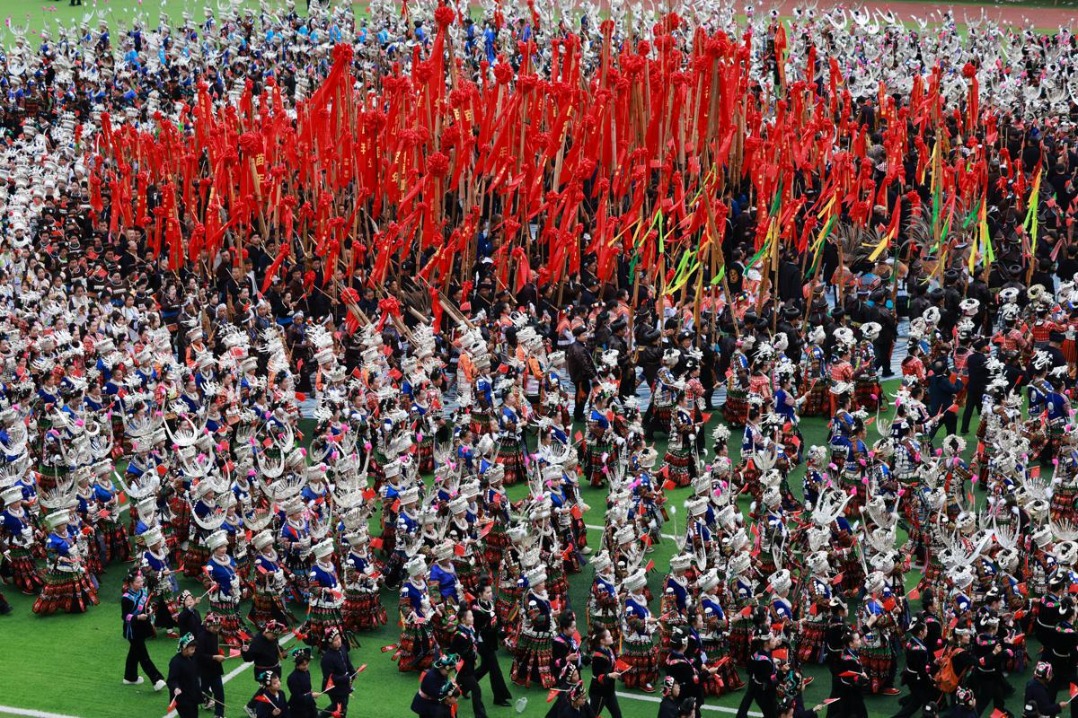
- Miao New Year celebrations get underway in Guizhou's Leishan county
- Mainland spokesman reiterates stand on Taiwan
- Fujian county's rural development becomes a big draw for Taiwan investors
- Nobel laureate in chemistry: Give young scientists more independence