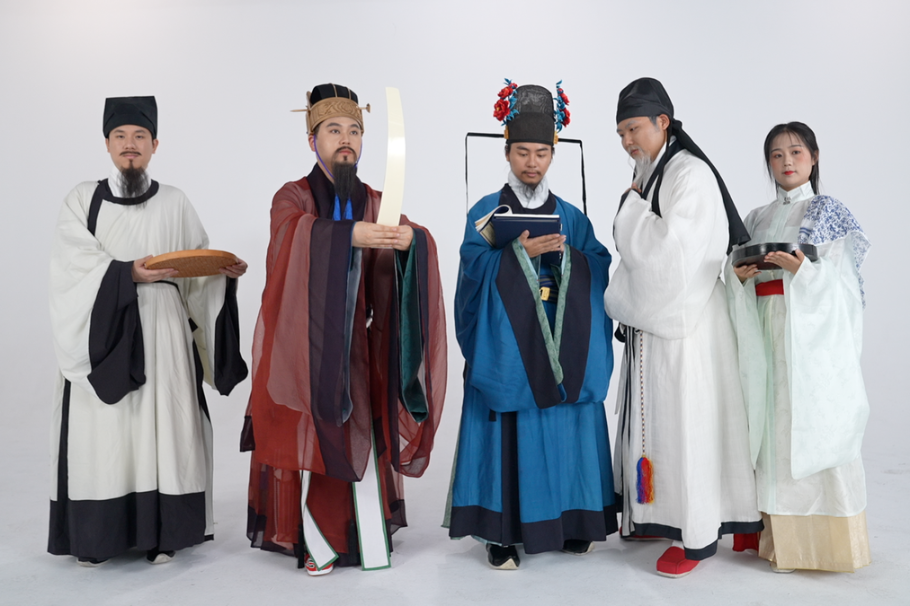
The evolution of marriage customs









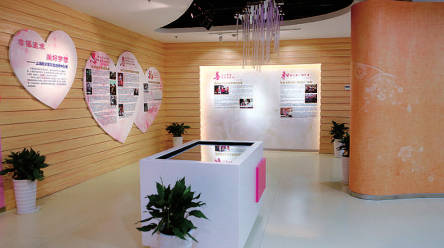
A wedding culture exhibition which shows the evolution in local marriage customs since Qing Dynasty (1644-1911) opened in Shanghai on May 1.
Believed to be the first of its kind on a provincial level in China, the Shanghai Nuptial Culture Exhibition has three major sections: marriage registration management system, marital customs, and family precepts. Admission to the exhibition is free.
More than 100 exhibits, including marriage photos, marriage certificates and dowries used during the different periods, are on display.
According to an official from the Shanghai Civil Affairs Bureau, Shanghai's marital traditions changed starting from when the city was transformed into a foreign trade port in 1843.
Despite the growing popularity of modern marriages featuring a mix of Chinese and Western culture, traditional wedding customs, such as parental consent and how the couple should not see one another till their wedding day, has continued to exist.
In the past, when parents wanted to set their son up with a woman, they would first invite a matchmaker to visit the lady's home to inform her of their intentions. After learning of the woman's full name and birthday, the man's parents would seek advice from a fortune teller to determine whether the woman's luck and fortune is a match for their son's. Almost all Chinese families believed in Chinese astrology.
If the fortune teller determined the match to be an auspicious one, the man's parents would present gifts to the woman's family, symbolizing respect and kindness as well as the ability to provide a good life. Gifts to the bride in Shanghai during the Qing Dynasty usually comprised jewelry, clothing and tea. The matchmaker would also be rewarded with gifts and feasts if the matchmaking attempt was successful. The fortune teller would later pick an auspicious wedding date.
Wedding ceremonies in the past began with the groom and his family meeting the bride in her home. Before this day, the bride's dowry would have already been sent to the groom's house. The dowry represented her social status and wealth, and was displayed at the groom's house. The most common dowries included a pair of scissors that symbolized an eternal union and vases which represented peace and wealth.
Before the groom's arrival on the wedding day, the bride would be led or carried by her elder brother to a sedan covered by a red headkerchief. The groom would have to first pass a series of tests before he was allowed to see the bride.
Times have since changed and traditional marriage customs have become mixed with modern practices. Since the founding of the People's Republic of China in 1949, young people have become increasingly inclined to propose without first consulting their parents and adopting simplified wedding customs.
Arranged marriages became obsolete after the implementation of the Marriage Law in 1950. The wedding process also became simpler and marriage certificates from civil affairs authorities became the norm.
In the 1960s and 70s, some couples chose to be wed in the marriage registration office. Others held their wedding ceremonies in the workplace. Some also chose mass wedding ceremonies which were less expensive.
During this period, classic marriage goods were watches, bicycles, sewing machines and radios. In the 1980s and 90s, these items were upgraded to televisions, fridges and washing machines.