US' unilateralism and isolationism will ultimately become a crutch









On May 30, US Secretary of Defense James Mattis renamed the US Pacific Command to "Indo-Pacific Command" to recognize "the increasing connectivity of the Indian and Pacific Oceans".
The United States calls itself a Pacific nation, claiming that its five states border the Pacific Ocean, and it has a number of US allies in the Asia-Pacific region.
The outgoing commander of the former US Pacific Command, Navy Admiral Harry Harris, who has been nominated by US President Donald Trump as ambassador to the Republic of Korea, said great power competition is back in the Indo-Pacific. It's a "region open to investment and free, fair, and reciprocal trade not bound by any nation's predatory economics or threat of coercion, for the Indo-Pacific has many belts and many roads," he said.
Shortly before the name change, two US Navy warships sailed within 12 nautical miles of Chinese islands in the South China Sea. And last week, two US B-52 strategic bombers flew near the Chinese islands in the South China Sea. It seems the US is squaring off for confrontation with China.
Trump pulled the US out of the Trans-Pacific Partnership agreement and declared his predecessor Barack Obama's "pivot to Asia" dead. But his administration has replaced the Obama administration's Asia-Pacific concept with an "Indo-Pacific strategy".
At the recent Shangri-La Dialogue in Singapore, Mattis outlined the vision for "a free and open Indo-Pacific". It is underpinned by tangible "security, economic, and development investments", including the replacement of third-generation fighters with fifth-generation aircraft, and augmentation of the US' "most capable ships" in the Indo-Pacific Command's fleet.
That the White House's 2017 National Security Strategy called China a "strategic competitor" and the Pentagon's National Defense Strategy focused on competition with China and Russia reveal the reasons the Indo-Pacific has become a priority theater for the Trump administration. Through the Indo-Pacific strategy, the Trump-led US has the withering ability to shape the regional trade and security thanks to its trade protectionism and different national interests.
The US is not a member of the region's multilateral trade pacts, already signed or to be inked. The Trump administration's withdrawal from the TPP undermines the US influence in the trade rules of the region. The 16 economies negotiating the Regional Comprehensive Economic Partnership-the US is not one of them-h(huán)ave vowed to wrap up the agreement in 2018.
The Trump administration's unilateral moves, including imposing additional tariffs on steel and aluminum imports on national security grounds and threatening to bury economic pacts and desert trade organizations, have ruffled feathers in the region. And US allies such as Japan are brewing a global trade war against US protectionism.
The US' Indo-Pacific strategy does not have a NATO-like organization to back it in Asia. Australia, India, Japan and the US launched the "Quadrilateral Security Dialogue" in 2007. But the informal security forum eventually fell apart. The resurgence of the "Quad" is still in a nascent stage, as security cooperation among the four countries still seems a distant dream.
Also, India refused Australia's bid to participate in the 2018 Malabar naval exercises that India and the US initiated in 1992. The drills were expanded in 2007 to include Australia, Japan and Singapore. Australia, however, withdrew from the fledgling Quad, which dismantled in 2007.
Although a trilateral relationship between New Delhi, Tokyo and Washington has been rapidly improving, India's refusal to include Australia in the naval drills is bound to raise questions on the vitality of the quasi-Quad.
Mattis conceded to delegates at Shangri-La Dialogue that the Trump administration often uses "unusual ways", and urged patience so that the US' larger economic and security interests and partnerships don't become casualties to temporary trade spats.
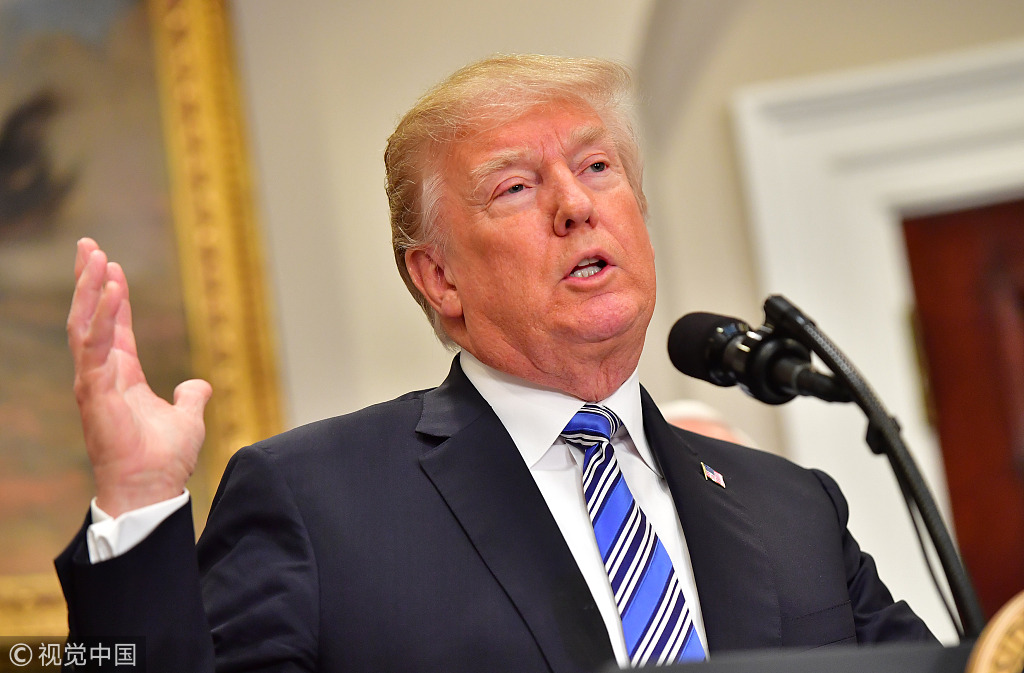
Trump's "Unisolationism", as French ambassador to the United Nations Fran?ois Delattre termed the US foreign policy, is a dangerous "mix of unilateralism and isolationism", which will become a crutch when the US executes its global strategy.
The author is China Daily Tokyo bureau chief. caihong@chinadaily.com.cn