The next big name in beauty









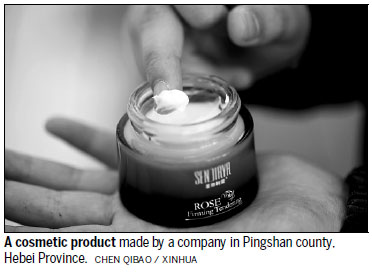
OC&C's survey of Chinese beauty product consumers found that a move to premium products was a major trend, with 58 percent of survey respondents saying they traded up to more expensive product lines within the same brands last year; 36 percent of respondents said they upgraded to more premium brands.
Better ingredients and improved functionality were the key reasons cited by 39 percent of the 2,800 respondents across 20 first-tier to third-tier cities for their decision to switch to more premium lines or brands in the past year.
There is no reason why Chinese brands could not join the premium ranks soon.
Companies such as Jala, Suhu and Shanghai-listed Proya are increasing spending on research and development, or even buying firms abroad, both to diversify and produce higher-quality products. Proya owns the Uzero and Cats & Roses brands and has in recent years launched Hapsode.
Chinese cosmetics producers have been making big hires in recent years, looking to attract top global talent. In doing so they are gaining market share at home and abroad, often at the expense of South Korean cosmetics makers.
The stakes are high. The market research firm Euromonitor International has forecast that the beauty and personal care market in China will be worth almost $62 billion by 2020. Cosmetics sales in China could rise to $40 billion by 2021, making it larger than the US.
And as the country's cosmetics and beauty companies work to grow alongside the Chinese market, they may benefit from a coincidental side effect: The global market is also improving.
In the personal care space, brands such as Shanghai Chicmax, Shanghai Pehchaolin and Jala have taken over the spaces in the top 10 in China previously occupied by Estee Lauder, Amway, Beiersdorf and Johnson & Johnson, Euromonitor says.
The importance of the market can also be seen in the efforts that foreign companies are putting into reaching Chinese consumers. L'Oreal, for example, uses laboratory-grown Chinese skin, reconstructed from living cells donated for research, to test and develop products such as anti-aging or skin-whitening creams or pollution cleansers.
For the time being, foreign companies, manufacturers and brands such as Procter & Gamble, L'Oreal, Shiseido and Unilever control about 90 percent of the market in China, but domestic players are chipping away at that dominance. It is probably just a matter of time before a truly global premium cosmetics brand emerges out of China.
"Chinese conglomerates could do so by either starting a new brand or buying over an existing brand," said Martin of OC&C Strategy Consultants.
Acquiring a brand with a strong history could be the approach a company takes if it wants to expand in premium segments that it does not already have a presence in, he said.
"Chinese companies still haven't invested heavily in this sector as they have done in other areas. And they also have all the best practices in the playbook from most advanced brands to bolster their efforts. Sooner or later they will do it."
Steps have already been taken in that direction. Herborist (or Bai Cao Ji), part of Shanghai Jahwa cosmetics, has held European Union certification since 2008, and opened a flagship store in Paris in April 2015. The brand says it uses the best of Chinese herbs for its range of products and has begun to gain a following in France.
It has also done well domestically. It was the only Chinese brand to be ranked in the top 10 cosmetics brands by market share in department stores in China (at No 8), China Market Monitor says.
What can only help is China's rich tradition of beauty secrets, such as rice water, powdered pearls and a host of other natural herbs and oils. It is perhaps this angle, offering unique, niche products for the market, that will enable Chinese brands to stand out from their international competitors.
For any brand, building a strong signature product is the key to getting customers on board.
"Premium brands are about a more intimate approach and a one-on-one experience, not just an expensive price tag or its origin," Martin said.