



AB InBev breweries go solar









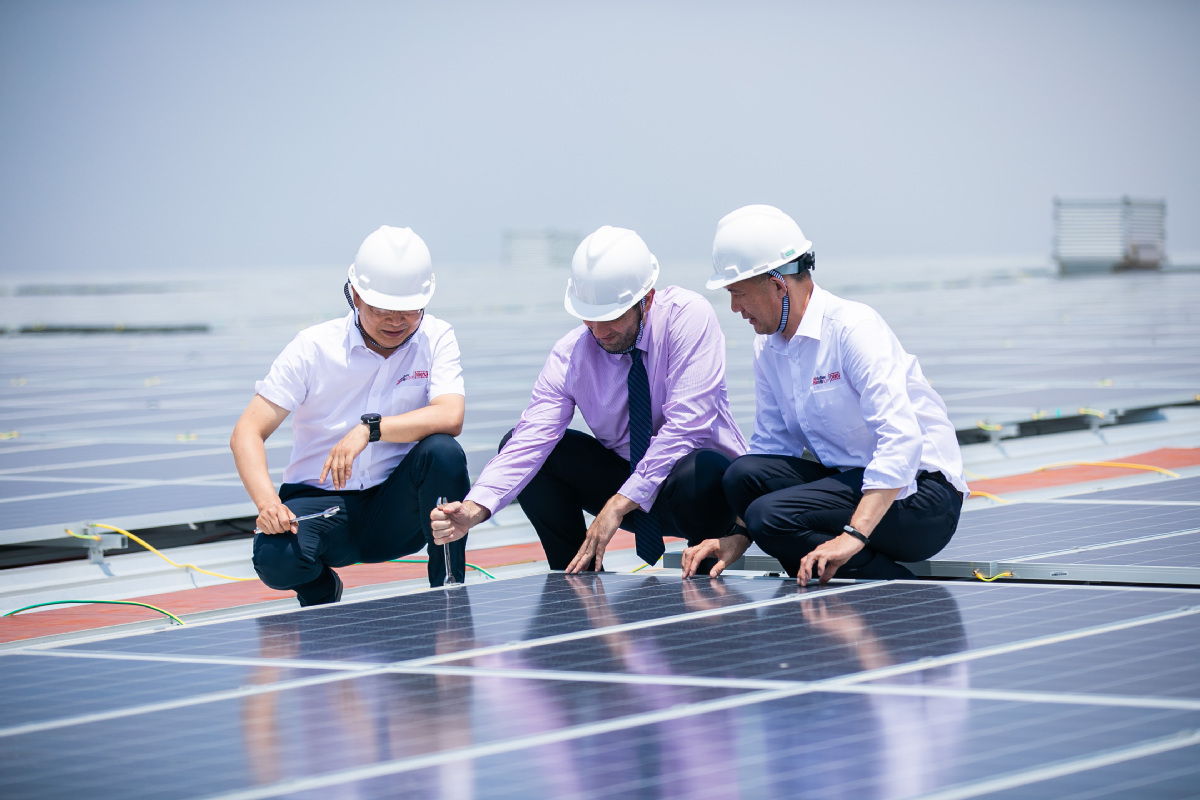
Half of its 40 plants in China will be powered by green energy by 2020
Anheuser-Busch InBev, the world's biggest brewer by production volume, will convert half of its plants in China into solar-powered factories by 2020, to increase the share of non-fossil energy in the country, said a senior executive.
Jean Jereissati, president for the group's operations in the North Asia-Pacific region, said AB InBev plans to secure 100 percent of purchased electricity from renewable sources by 2025.
The group currently operates 40 breweries across China. Supported by more than 25,000 employees in China, AB InBev has invested more than $3 billion in the country since 1995.
The Belgium-headquartered brewer announced the largest renewable energy program throughout China's beer industry at its smart low-carbon brewery in Putian, Fujian province, earlier this month, after investing 105 million yuan ($16.39 million) in the plant.
When in operation, the brewery is set to become Putian's largest distributed photovoltaic power station with a total installed capacity of more than 15 megawatts. It covers all applicable 150,000 square meters of the brewery's plant surfaces with solar power panels, the same as 21 standard football pitches, said Jereissati.
After its scheduled grid connection at the end of this month, the program is expected to generate 15 million kilowatt-hours of electricity annually starting 2019, supplying 18 percent of the Putian brewery's power usage. It will then be able to power production of 360 million bottles of beer, or save 4,800 metric tons of standard coal.
As many global companies have been keen in investing in new areas such as environmentally friendly, high-tech manufacturing, research and development in China, Jereissati said: "AB InBev will continue to explore low-carbon growth models that suit local conditions by working with government and energy solution providers. The overall goal is to actively promote such green models.
"Climate change has profound implications for us and for the communities where we live and work. Cutting back on fossil fuels is positive for both environment and business."
The company announced its 2025 Sustainability Goals earlier this year, seeking long-term sustainable growth in areas including smart agriculture, water stewardship, circular packaging and climate action.
Boosted by summer outdoor activities and the run-up to the 2018 FIFA World Cup, beer sales had already surged in May, with monthly sales volume increasing nearly 100 percent year on year. The single-day sales of beer reached 1.3 million bottles on Tmall, Alibaba's Group's online marketplace for established brands, on May 17.
Frank Wang, vice-president of AB InBev's legal and corporate affairs in the region, said the company will deploy more resources into green supply chain by working with different stakeholders in areas like water resources, packaging and renewable energy.
"We plan to complete installation and grid-connection of our photovoltaic power stations at 50 percent of our breweries across the country by the end of 2020, which are able to output 75 million kilowatt-hours of electricity a year, and supply 15 percent of all power usage at our breweries in China," he said.
Boosted by the green strategy and diversified sales channels, AB InBev, the maker of Budweiser, Corona and Stella Artois brands of beer, saw its revenue rise 5.1 percent to $56.44 billion in its 2017 fiscal year globally, data from its annual financial report show.
The Chinese government has already underlined that one of the country's priorities is quality, green and low-carbon urban development. It has been encouraging the development of green manufacturing and a more carbon-efficient urban public transportation system, besides setting tougher rules on carbon emissions.
"Even though conducting environmental protection activities and raising public awareness are not an overnight thing, adopting renewable sources to generate power can make new attempts to improve the environment of sustainability," said Lin Boqiang, director of the China Center for Energy Economic Research at Xiamen University.
To better use energy, the government can convert excess industrial heat into urban heating through new technologies and international cooperation. It can also build more modern coal-fired power plants that emit 35 percent less carbon dioxide than older plants, Lin said.



















