Investors say more SEZs will help Africa









African countries are planning special economic zones to act as catalysts for the continent's industrialization.
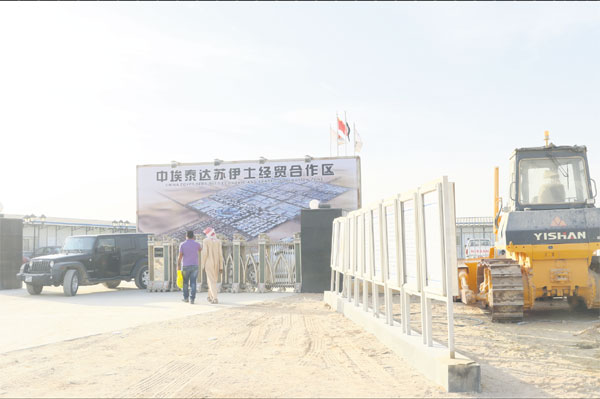
Chinese State-owned and private companies have won bids to design, develop and manage them, riding on successes back home that enabled the country's meteoric rise onto the global stage.
Nevertheless, in spite of a notable increase in the willingness of Chinese private investors to set up in Africa, they say their plans have been held back due to the unavailability of fully operational special economic zones, or SEZs.
During a recent trade visit to Nairobi, Kenya, by entrepreneurs from Guangzhou and Foshan, Guangdong province, the discussion focused on how the Sino-African relationship can be shifted from trade to investment.
The benefits of such a move were seen as twofold. First, by using Chinese investment and technical expertise in the nascent manufacturing sector, export volumes can be improved, ultimately bridging the yawning trade deficit. Second, investment in light industries has the potential to create millions of jobs, consequently checking the illegal flow of young Africans to Western countries.
Therefore, plans for SEZs must be accelerated, the entrepreneurs said.
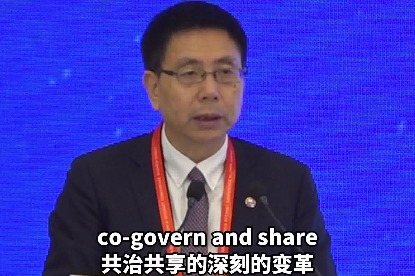
The benefits of such zones were realized in China four decades ago. They were catalysts for market-oriented reforms and helped deepen the country's opening-up and reform process, thereby unlocking foreign direct investment inflows. SEZs are estimated to have created more than 30 million jobs, increased the income of farmers by 30 percent and accelerated industrialization, agricultural modernization and urbanization, said Xian Weijian, chairman of the Guangdong Association.
"Business brings communities together and gives direction to long-term relationships," Xian said during the meeting. "We are looking for opportunities in Africa to provide healthy returns on investment. But this will only be possible in an enabling environment."
SEZs are demarcated areas with regulatory, legal and economic conditions that are different from the rest of the country. The rules are designed to lower the cost of doing business by providing flexible investment conditions, lower tax rates and attractive international trade regulations. The successes of these economic regimens are then replicated elsewhere to widen economic growth.
Africa has begun deep structural transformation, engendered by the African Union. The aim is to boost Africa's share of global manufacturing GDP from the 11 percent recorded in 2014. Experts blame sluggish growth on poor policies.
"We have seen how SEZs strongly impacted China, and so we are betting on their technical and financial assistance in developing zones, in addition to managing them," Adan Mohamed, Kenya's Cabinet secretary for industrialization, told the visiting entrepreneurs. "Our approach is pragmatic and reform-oriented."
Tanaka Chitsa, an economic analyst based in Lusaka, Zambia, said: "Estimates have shown that a fully operational zone can generate millions of jobs within a decade or two. This is besides other fundamental benefits, such as attracting international capital, technology and technical and managerial expertise that stimulate industrial development."
Through the Forum on China-Africa Cooperation, China has established five zones in Ethiopia, Egypt, Zambia, Mauritius and Nigeria. This follows commitments made by China in 2000 to share its experience in investment promotion and management of SEZs with African countries.
The zones have attracted Chinese private investors. In Lusaka, at least 75 percent of the tenants of the Zambia-China Economic and Trade Cooperation Zone are Chinese.
"They are confident settling here because we provide a familiar and predictable environment," said Zan Baosen, the zone's managing director, in an earlier interview. The zone has modern infrastructure such as roads and amenities including water and sanitation. Other foreign investors find the facility to be attractive and competently run by its Chinese managers.