


Decoding the language of the young









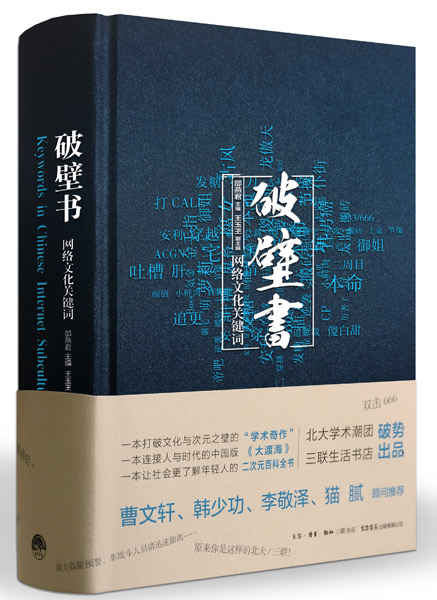
A new book tries to make sense of what the younger generation is saying, Mei Jia reports.
Peking University associate professor Shao Yanjun, 50, is not the first one to discover that the younger generation, growing up with smart devices and the internet, actually use a different language when they are online, and sometimes, offline too, which is not easy to understand for her and her peers.
Therefore she has become the first to direct and guide her doctoral and master's students to write a book about keywords in Chinese internet subcultures.
A pioneer and established scholar on internet culture/literature studies, Shao began to give lectures on the campus about web novels and online literature in 2011. However, outside class, she felt at loss.
"Their language differed from what they used in class, and I noticed jargon," she says.
"And sometimes the phrases seemed to be standard Chinese that you're familiar with, but referred to different things," she adds.
Shao tried to follow up by frequently checking on search engines before she reluctantly used the language herself when chatting with her students, while being "lectured" by the young people.
"Then when I could somehow speak fluently to my students in their language, my peers told me that they found me abstruse."
Giving an example, there's a phrase like "making a call" which would commonly refer to someone using a phone but to the younger generation means showing support for someone. Then, there are young people who say someone is "666", used to indicate that the person is very skilled at what he is doing. The term is originally thought to have come from people involved in gaming on the internet.
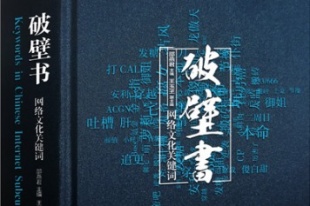
Now, this new language is the focus of The Book of Wallbreaking: Keywords in Chinese Internet Subcultures, published by SDX Joint Publishing Company, written by Shao and a group of her students.
The book focuses on 245 keywords from six genres.
Wang Yusu, a doctoral candidate and deputy compiler-in-chief of the book, says: "These terms are seen and heard widely, but it's hard to explain their meanings and usage even if you search on baidu.com.
"Among the new words, those we chose are the ones that will stand the test of time, and are representative of the internet subcultures."
- Five books that won't fail to pique your interest this summer
- Shanghai exhibition traces early development of Chinese museums
- Artist explores abstract concepts to create 3D sculptures
- Shanghai writer Fan Xiaochun breaks the philosophical mold with new book
- Artist captures lines of the times in ancient Shanxi architecture