Bridge builder of culture helps people come together









Although not an engineer, a public-spirited Chinese man is dedicating himself to building a bridge, not of steel or iron, but of communication, between China and Africa.
Huang Hongxiang, 30, the founder of China House, based in Nairobi, Kenya, is hoping to create a platform to narrow the communication gap between Chinese and Africans.
Educated at Columbia University, he became interested about interaction between China and the developing world when doing research in Ecuador on Chinese investment there.
"When I was there, I saw a huge information and understanding gap between Chinese companies and local non-governmental organizations", Huang said.
He noted that Chinese companies may think they are benefiting local economic development, but this must be communicated to local NGOs who sometimes believe their operations could damage the environment.
This topic is very interesting and important, no matter whether for local development or sustainable development of Chinese outbound investment, Huang said.
Huang came to Africa in 2013 and became the first Chinese investigative journalist to go undercover and report on ivory trafficking and the rhino horn trade in Africa and Asia markets.
His story is featured in a documentary film The Ivory Game which highlights crime fighters risking their lives to save elephants.
Huang’s participation in several undercover operations was motivated not only by his love of animals but by his desire to change the world’s perception of China.
He found out that many Africans have a misunderstanding that all Chinese like to buy ivory.
"Yes, China is a big ivory market, but the Chinese who buy ivory are only an extremely small population, and there are many Chinese who love animals and are working hard to protect them as well - it is time to challenge the stereotype," Huang said at an interview with National Geographic in 2016.
By participating in this film, Huang said he hopes the world to see the efforts made by Chinese people in wildlife conservation.
With the intention to help the Chinese better integrate into Africa, Huang has gathered young Chinese people with an international vision and appropriate communication skills to link Chinese workers in Africa and local people.
His organization now operates in countries across southeast Africa.
Huang's team work with Chinese companies on sustainable investment and corporate social responsibility, research Chinese businesses in Africa and engage Chinese communities there on wildlife conservation and sustainable development.
They have established a workshop to help Chinese companies understand local labor laws and handle employment issues, organize conservation activities and promote African understanding of Chinese companies.
"We are a tiny organization and doing small, small projects to create a communication bridge", Huang said.
China House wants to bring more young people to Africa. Huang believes that with the rise of China and the expansion of the Belt and Road Initiative, Chinese youth with an international vision will play a vital role in telling China's stories in ways acceptable and understood by Africans.
Africa is a diverse and vigorous continent rather than a region that is filled with war and poverty, Huang said, adding that you may not change Africa, but it will definitely change you.
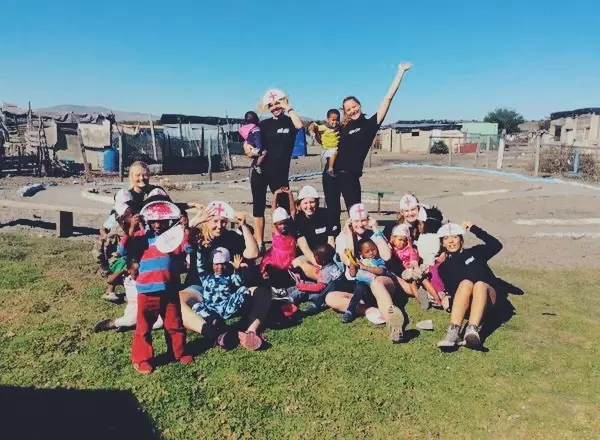
Huang noted that more and more young Chinese people are coming to Africa like volunteers and researchers and many stay and work for local organizations.
China House creates a platform for young Chinese to go to Africa through different programs like internships, research and volunteering.
According to Huang, Africa will not only improve their overall skills, but also bring them opportunities to explore a different world and share new experiences, he said.
"During the process, you will know what you like and what you are good at and lay down your own path", he added.
Most of the young Chinese that attended their programs are graduates and many of them continue to study abroad and take courses like China-Africa relations and international development.
Chinese youngsters with an international background are educated, English-speaking and open-minded, he said, adding that they understand Chinese culture and their situation as well as the work of international NGOs and the Western media. Consequently, they are able to link the two sides and promote mutual understanding.
"We cultivate a new generation of young Chinese who understanding China and understand the world better. They are important for the future development of China and world engagement", he said.
"I think this vibrant generation young of Chinese in Africa is the hope of sustainable development of the China-Africa engagement", he added.