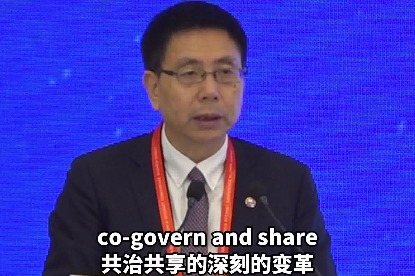
Industrial giant benefiting from country's growth









Germany-based thyssenkrupp grasps opportunities as China market expands
Editor's Note: This year marks the 40th anniversary of China's reform and opening-up. China Daily interviewed top executives of well-known multinational companies for their views on the country's socioeconomic development.
Please use three phrases to describe China's changes in the past 40 years.
Fast: The speed of development has become the most prominent feature of the past four decades in China. The country changes with each passing day.
Colorful: People's lives have become colorful. The diversity has not only been manifested in basic necessities such as food and clothing, but also in the culture and people's perspectives.
Open: China has become an organic part of the global economy and trade, and has greatly changed the course of globalization in recent decades.
What are the biggest achievements in China since the adoption of the reform and opening-up policy 40 years ago?
The biggest achievement is the significant improvement in Chinese people's living standards. It is getting closer to its target of ending extreme poverty by 2020.
Having been lifted out of poverty, the 1.4 billion people have higher demands on their material and cultural lives, and aspire to keep abreast of international standards in every aspect.
As to industry, China has metamorphosed from a barely self-sufficient country into the largest exporter in the world over the past four decades. Now the country enjoys a leading position in many fields, including mobile communications and high-speed railway.
What do you see as the biggest challenge China faces today and how can the country overcome it?
The biggest challenge is also a major opportunity for the country - how to make China's economy not only big but also strong and sustainable.
How has your company benefited from China's reform and opening-up policy?
The reform and opening-up policy is of particular significance to our company. It marks a new era of the close relationship between thyssenkrupp and China.
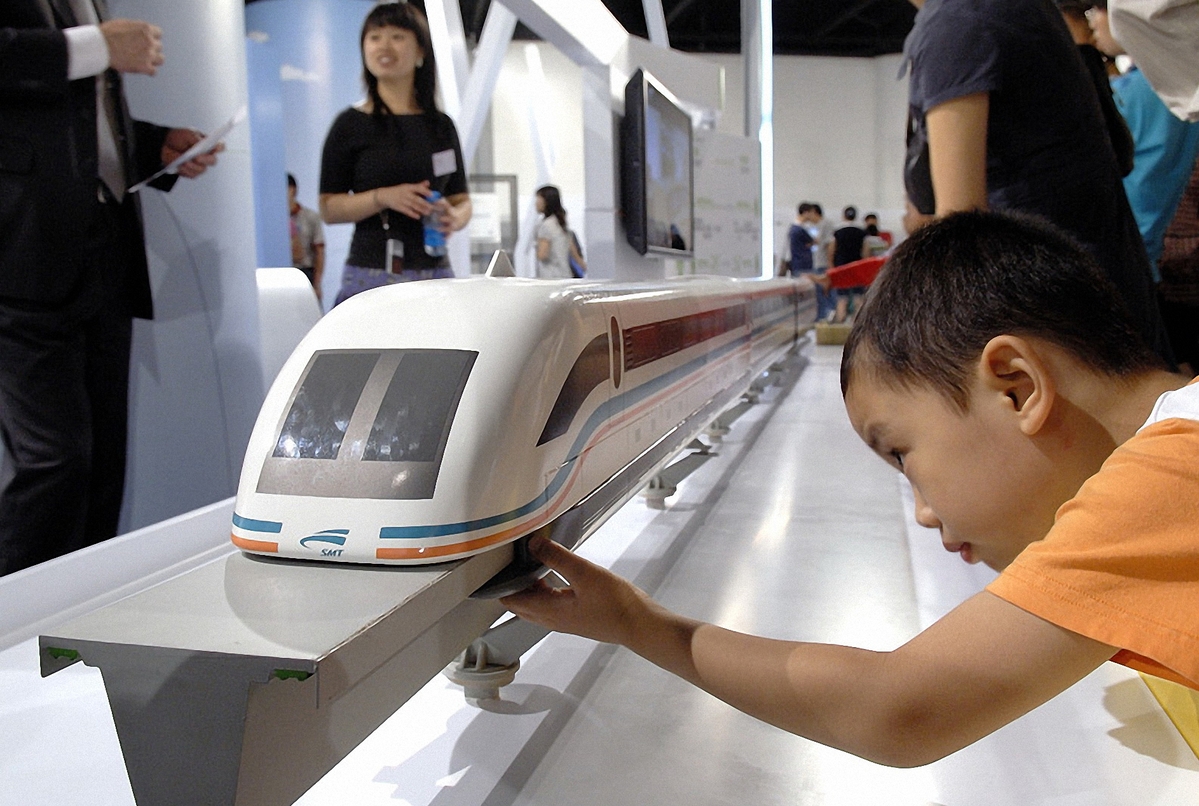
In the 1980s, we set up our first joint venture in China in the coke industry. In the 1990s, we started to produce steel in China in cooperation with local steel companies. And in the new century, we brought the world's first maglev train to Shanghai.
Today, we own about 30 group companies and have around 18,000 employees in China, with an annual turnover exceeding 3 billion euros ($3.42 billion). More and more research and development activities have been established in China.
To be specific, the reform and opening-up policy has brought the following benefits:
First, it has created a huge market and enormous demand, especially for industrial products and consumer goods. Sales of passenger vehicles in China last year ranked No 1 globally, surpassing those in the United States, Germany and Japan. The number of new elevators installed in China accounted for half of the global aggregate.
Second, we have been able to invest directly in China and become an organic part of China's economy, therefore benefiting from its growth momentum. The past four decades have seen us invest more than 15 billion yuan ($2.17 billion) in China.
Third, the policy has enabled foreign enterprises to service the international market with local resources in China.
Do you think competition has become intensified between your company and Chinese companies?
Competition is a normal phenomenon in the market; benign competition shapes a healthy market. Admittedly, the emerging Chinese enterprises have intensified market competition. On the one hand, more and more Chinese enterprises have become powerful participants in the global competition. They possess strong learning skills and flexible responses. On the other hand, in the fields suffering from overcapacity, all the participants are facing increasing pressure from competition.
How do you view China's role in the world today?
In terms of economic volume, market scale, capacity and investment, China has become a major player in the global economy and trade, exerting pivotal influence on the world economy.
In 2017, China contributed over 30 percent to global economic growth. If China maintains healthy growth, it will help to promote the global economy.
More importantly, today China is more than a participant. As the reform and opening-up policy is deepening and the Belt and Road Initiative is being advanced, China is becoming a driving force of globalization and a rule-maker of global trade.
Could China's experiences and practices be used to solve global problems?
China's political structure allows highly efficient decision-making. The country's strong executive power has been fairly demonstrated in various major infrastructure projects. Take a recent example - the way the government promotes ecological development and pursues green growth in China can be a reference case for other countries.
As for corporate management, the fierce market competition and demands from clients impose more requirements on enterprises' ability to innovate and their responsiveness.
What measures are needed if China wants to deepen reforms?
First of all, I hope that new laws, regulations and policies will be thoroughly implemented. Recently we have seen a variety of concrete policies that offer easier market access for foreign investment and protect intellectual property rights. In my opinion, these are very positive signals.
Second, I hope that China will create a fairer and more benign competition environment. Third, I hope that the credit system will be enhanced for a healthier and more positive market atmosphere.
What is the most unforgettable experience you have had in China?
Over the past 25 years, I have been lucky to witness the tremendous change and development in the mobile and telecom industry.
In 1993, as China started to introduce digital mobile technology, I was a sales and project manager at Siemens. In the beginning, it was just about importing technologies, equipment and standards from international suppliers, following the footsteps of others. But now, China is the world's biggest telecom market, as well as the largest smartphone manufacturer and exporter.
Chinese players are taking a leading role not only in technology and products, but also in participating in the standardization process, while many other international key players have disappeared from the market.
What will be the country's "calling card" in the coming 40 years?
I hope one day the Chinese soccer team will become world champions.