Cancer patient faces charges for selling drugs that's now legal









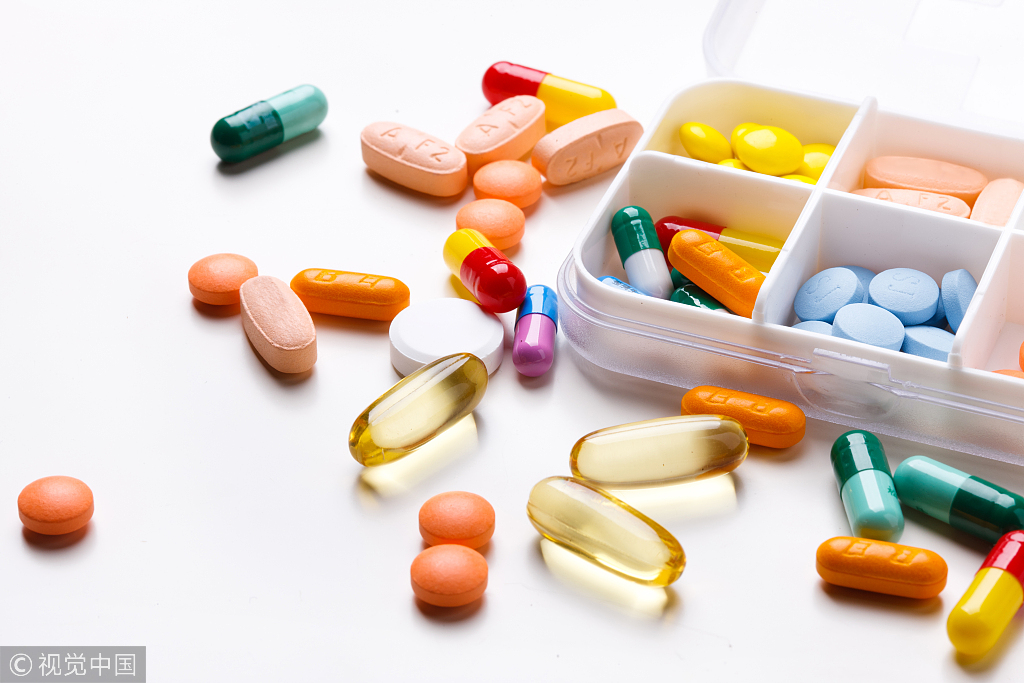
The detention of a liver cancer patient who made a profit selling a cancer drug before it was approved on the Chinese mainland has sparked heated public debate.
Zhai Yiping, a project manager at a Shanghai construction company, was detained by police on July 25 on suspicion of selling "fake drugs" after he imported Opdivo and sold it to other patients with a 5 percent markup, China National Radio reported.
Opdivo, which works with the immune system to halt the growth and spread of cancer cells, was developed by Bristol-Myers Squibb, a pharmaceutical company in the United States.
China's top drug authority, the State Drug Administration, announced on June 15 that the drug had been approved for sale on the mainland. Zhai began selling it in 2016.
According to Chinese law, unapproved drugs are classified as fake medicine, and producing or selling them can result in a prison sentence of up to three years if there are no serious consequences.
However, those who cause serious harm to individuals or society, or make huge profits, can receive much tougher sentences, including the death penalty.
Zhai's lawyer, Si Weijiang from Shanghai's Debund Law Firm, said his client started to buy Opdivo from Germany for other patients he knew at the end of 2016.
Before that, he tried the drug himself for several years to combat his own cancer and found it effective, but at that time the drug was not approved for use in China and was not legally available.
The drug costs about 60,000 yuan ($8,680) a month for liver cancer patients, so most patients only tried the drug for a few months. When they felt their condition had improved, they would turn to other cheaper drugs, Si said.
He said Zhai sold the drugs to other patients at a 5 percent price markup, and that total sales amounted to nearly 1 million yuan, as the drug is expensive.
Si said it was not clear how many patients had purchased the drug from Zhai, but he said there were about 1,000 cancer patients in a social media account where they communicate about treatment, and Zhai was an active member.
"I think the drug should not be considered fake as it is already in use in many other countries and has proved effective," he said. "The 5 percent profit is reasonable, considering the time and necessary money Zhai spent buying the drug."
Zhai was still in detention on Thursday as the Shanghai police investigated the case, Si said, adding Zhai faces 10 years in prison if convicted, considering the value of the drugs he sold.
Shanghai police declined to comment on the case on Thursday.
The case has aroused heated discussion online, with many people likening it to a previous landmark case.
Many people have showed support to Zhai, but some say he should be punished for breaking the law.
"A 5 percent profit is low and reasonable," a supportive netizen said on Sina Weibo. "Plus, the drug was badly needed by many patients."
A detractor said: "The law is the law, and it should be followed by all until it is amended."
In a similar case in 2014, Lu Yong, a businessman and leukemia patient from Wuxi, Jiangsu province, was detained for selling "fake drugs" after buying a generic version of a leukemia drug called Gleevec from India and selling it to patients at a cost of less than one-tenth of the patented original, which was approved by the authorities and legally available on the Chinese market.
Lu was eventually released in January 2015 after prosecutors withdrew the charges following the petition of more than 300 people with leukemia who purchased the copycat drug from Lu because they could not afford real Gleevec.
wangxiaodong@chinadaily.com.cn





- New energy needs amended law
- Scientists find a way to develop crops that can withstand eco-stress
- Ban on mercury thermometers to take effect soon
- Strong policies, digitalization boost immunization program
- China's 3 deep-sea manned submersibles have made over 1,700 dives to date
- 4 dead, 3 missing in coal mine accident in SW China