Companies can handle US soybean slump, say experts









Alternate sources, ingredients can make up for any shortfalls in meal
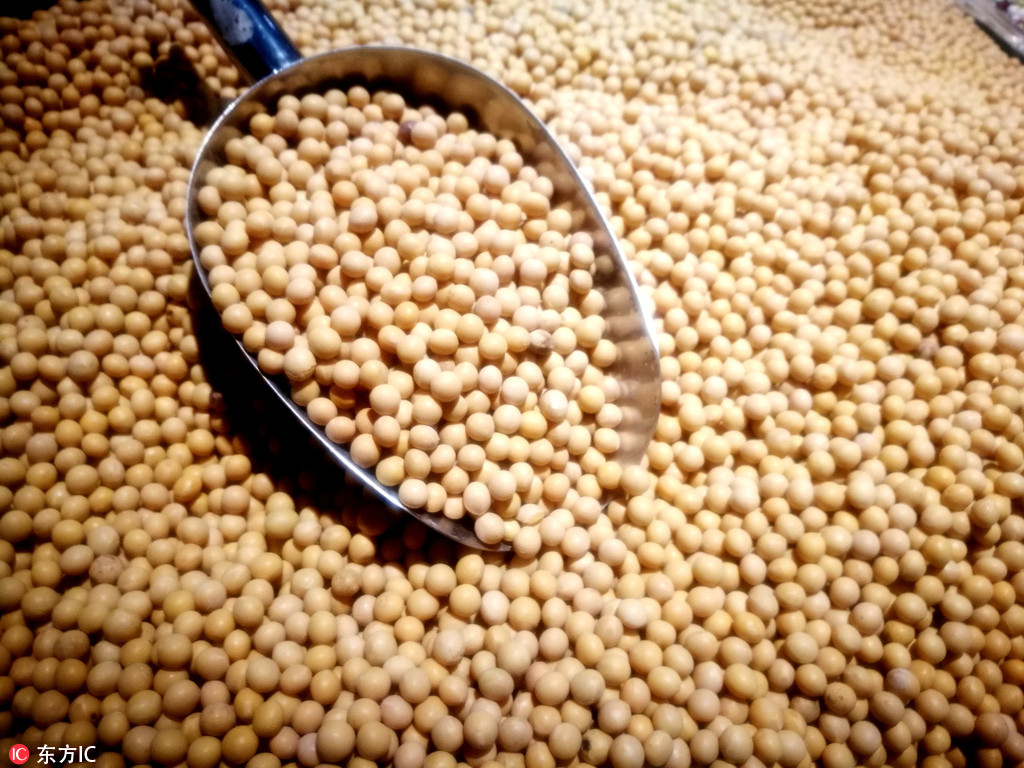
Chinese companies have many ways to meet feed production needs despite the slump in soybeans imported from the United States since the two countries levied tit-for-tat tariffs on each other.
Soybean processors have sufficient stock for production even through early 2019, and many Chinese companies have planned to increase other meal imports, such as sunflower seed meal, to produce feed, said industry experts.
"Any worry that the ongoing trade dispute between China and the US will disrupt China's soybean supplies is groundless," said Li Qiang, president of China JCI, a Shanghai consultancy specializing in the agricultural commodity market and trade.
"China can fully cope with the situation by importing more from soybean markets outside the US and using more alternative ingredients."
South American countries now have about 45 million to 50 million metric tons of soybean stocks, making them ideal sources for Chinese imports, Li said, adding that the proportion of Chinese imports of US soybeans had already declined in recent years, even before the tariffs were levied.
From May to August, more than 36 million tons of soybeans were shipped to Chinese ports from South America, according to the Ministry of Agriculture.
By the end of September, China will have a 3 million ton surplus of soybean stocks compared with the same period last year, and domestic soybean processing companies will have sufficient raw materials even through January, according to the Ministry of Agriculture.
Due to the increase in domestic soybean meal prices and processing profits from March to April, Chinese companies have already imported large amounts South American soybeans, and domestic soybean meal demand has fallen short of monthly expectations by more than 400,000 tons since May, owing to a decline in hog prices.
In addition, South American soybeans purchased by Chinese companies are scheduled to be shipped in September and October and should reach Chinese ports in November.
Chinese companies could also feasibly reduce the proportion of soybean meal as a feed ingredient by at least 3 to 5 percentage points from the current 20 to 22 percent, and raise the proportion of other meals in the formulas, experts said.
Although soybean meal, a by-product of soybean crushing, is currently the main protein feed for Chinese livestock and poultry, other protein feeds-such as rapeseed, sunflower seed, peanut, cottonseed and palm kernel meals-also have high nutritional value, said Wang Changmei, director of the market information department of Chinafeed.com.cn.
Many Chinese companies have already updated feed production formulas to reduce soybean meal and add other meals. Also, as the ethanol fuel sector quickly grows, the supply of DDGS-distillers dried grains with solubles-the nutrient-rich co-product of dry-milled ethanol production, also increases and can be widely used in feed production, said Li of China JCI.
Zhao Changjiang, head of the oil raw material purchasing department of COFCO Corp, China's biggest food conglomerate by revenue, said COFCO plans to increase sourcing of alternative, miscellaneous meals for proteins from the international market to compensate for any possible soybean shortage from the end of 2018 to early 2019 if the trade dispute with the US continues.
The company has inquired on prices of the vegetable, cottonseed and sunflower seed meals in India, Canada, Ukraine and other countries, Zhao said.
Seasonal rapeseed meal in Canada costs about 2,300 yuan ($334) per ton, 150 yuan less per ton than the January 2019 contract price on the Zhengzhou Commodity Exchange, providing another option for domestic feed companies, said Liu Yueshu of soybean processor Zhongken Guobang (Tianjin) Co.