
男女羞羞视频在线观看,国产精品黄色免费,麻豆91在线视频,美女被羞羞免费软件下载,国产的一级片,亚洲熟色妇,天天操夜夜摸,一区二区三区在线电影
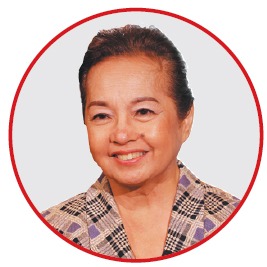
Gloria Macapagal Arroyo
Former Philippine president
BORN:

April 5, 1947, in Lubao, Pampanga province, the Philippines

In 1961, when she was 14 years old, Gloria Macapagal Arroyo's father Diosdado Macapagal was elected president of the Philippines.

In 1964, she studied for two years at Georgetown University's Walsh School of Foreign Service in Washington, where she was a classmate of future US president Bill Clinton.

She earned a bachelor's degree in economics from Assumption College in the US, graduating in 1968. She pursued a master's in economics at Ateneo de Manila University in 1978, and a PhD in economics at the University of the Philippines Diliman in 1985.

Arroyo was an economics professor from 1977 to 1987 at several universities, including the University of the Philippines and Ateneo de Manila University.

She entered politics in the 1992 election, running for senator. She was vice-president of the Philippines from 1998 to 2001, before serving as the 14th president of the Philippines between 2001 and 2010.

She is now a member of the House of Representatives representing the second district of Pampanga and was the deputy speaker of the 17th Congress from 2016 to 2017.

Arroyo was elected speaker of the House of Representatives on July 23, becoming the first woman to hold the position.

She was recognized by Asiaweek as one of Asia's most powerful women in 2001, and ranked fourth in Forbes' most powerful women list in 2005.

A Philippine view of 40 years of 'breathtaking' changes
Former president Gloria Macapagal Arroyo first visited China in 1975
Cao Desheng
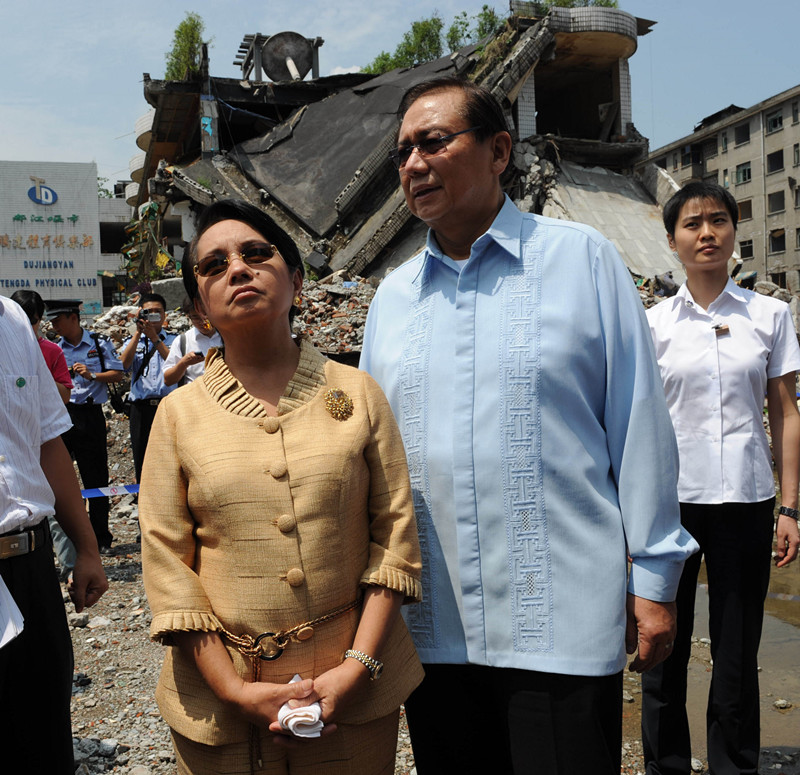
Arroyo visits the area struck by the Wenchuan earthquake in Sichuan province, on Aug 7, 2008, with her husband. YIN GANG/FOR CHINA DAILY

"I was a contemporary of two Chinese presidents, president Jiang Zemin and president Hu Jintao," Arroyo said. "During that time, it was my policy to develop good relations with China, especially with regard to business and economic cooperation.

"These are also part of what I came to realize from my old days in the (Association for Philippines-China Understanding) and because of the great opportunities from our neighbor, China, becoming such an important economic powerhouse."

China's GDP grew by an average of around 9.5 percent a year in comparable prices from 1978 to 2017, and the country's foreign trade has grown by 14.5 percent a year in US dollars in the same period.

Arroyo said one thing that has enabled China to achieve such rapid growth is the country's strong, long-term national vision, along with its strong national will to carry out that vision.

Over the past 40 years, China has continued to remove institutional barriers to development as part of its overall reform and opening-up policy, from the rural household contract responsibility system to urban economic system reform, from the establishment of the Shenzhen Special Economic Zone to accession to the World Trade Organization, from opening the coastal and border areas to developing the western inland region, and from pilot free trade zones to the Belt and Road Initiative.

Analysts have said reform and opening-up has changed the global economic landscape and value chain, and that may lead to an unfolding historic trajectory as China vows to further open up its economy.


|<< Previous 1 2 3 4 Next   >>|
Gloria Macapagal Arroyo
Former Philippine president
BORN:

April 5, 1947, in Lubao, Pampanga province, the Philippines

In 1961, when she was 14 years old, Gloria Macapagal Arroyo's father Diosdado Macapagal was elected president of the Philippines.

In 1964, she studied for two years at Georgetown University's Walsh School of Foreign Service in Washington, where she was a classmate of future US president Bill Clinton.

She earned a bachelor's degree in economics from Assumption College in the US, graduating in 1968. She pursued a master's in economics at Ateneo de Manila University in 1978, and a PhD in economics at the University of the Philippines Diliman in 1985.

Arroyo was an economics professor from 1977 to 1987 at several universities, including the University of the Philippines and Ateneo de Manila University.

She entered politics in the 1992 election, running for senator. She was vice-president of the Philippines from 1998 to 2001, before serving as the 14th president of the Philippines between 2001 and 2010.

She is now a member of the House of Representatives representing the second district of Pampanga and was the deputy speaker of the 17th Congress from 2016 to 2017.

Arroyo was elected speaker of the House of Representatives on July 23, becoming the first woman to hold the position.

She was recognized by Asiaweek as one of Asia's most powerful women in 2001, and ranked fourth in Forbes' most powerful women list in 2005.

A Philippine view of 40 years of 'breathtaking' changes

Former president Gloria Macapagal Arroyo first visited China in 1975
Cao Desheng
Arroyo visits the area struck by the Wenchuan earthquake in Sichuan province, on Aug 7, 2008, with her husband. YIN GANG/FOR CHINA DAILY

"I was a contemporary of two Chinese presidents, president Jiang Zemin and president Hu Jintao," Arroyo said. "During that time, it was my policy to develop good relations with China, especially with regard to business and economic cooperation.

"These are also part of what I came to realize from my old days in the (Association for Philippines-China Understanding) and because of the great opportunities from our neighbor, China, becoming such an important economic powerhouse."

China's GDP grew by an average of around 9.5 percent a year in comparable prices from 1978 to 2017, and the country's foreign trade has grown by 14.5 percent a year in US dollars in the same period.

Arroyo said one thing that has enabled China to achieve such rapid growth is the country's strong, long-term national vision, along with its strong national will to carry out that vision.

Over the past 40 years, China has continued to remove institutional barriers to development as part of its overall reform and opening-up policy, from the rural household contract responsibility system to urban economic system reform, from the establishment of the Shenzhen Special Economic Zone to accession to the World Trade Organization, from opening the coastal and border areas to developing the western inland region, and from pilot free trade zones to the Belt and Road Initiative.

Analysts have said reform and opening-up has changed the global economic landscape and value chain, and that may lead to an unfolding historic trajectory as China vows to further open up its economy.

主站蜘蛛池模板: 瓦房店市| 冀州市| 沅江市| 综艺| 宾阳县| 富锦市| 彭州市| 融水| 廊坊市| 松阳县| 邯郸市| 昌黎县| 延川县| 平度市| 清涧县| 淮滨县| 廊坊市| 溆浦县| 英超| 株洲市| 闽侯县| 汨罗市| 沁源县| 德江县| 普格县| 延庆县| 红桥区| 武清区| 香格里拉县| 梓潼县| 潍坊市| 遂溪县| 桓台县| 同德县| 邹平县| 汾西县| 铅山县| 富源县| 鄂伦春自治旗| 荣成市| 海南省| 增城市| 哈尔滨市| 黔西县| 信宜市| 华容县| 云安县| 女性| 精河县| 深水埗区| 江北区| 渑池县| 吉安市| 遵义县| 宁武县| 简阳市| 浑源县| 莒南县| 剑川县| 灵石县| 五莲县| 江西省| 西安市| 堆龙德庆县| 虎林市| 蕉岭县| 灵璧县| 广德县| 宜兰市| 茂名市| 方正县| 云阳县| 赤城县| 吉林省| 开封市| 图木舒克市| 海宁市| 苍山县| 麻阳| 龙泉市| 剑河县| 张家港市|