Connectivity holds the key to a better, brighter future









Europeans, in general, blame Wall Street's greed for the 2008-09 global financial crisis. A decade since the crisis wreaked havoc across the world, the US administration's "America First" policy is once again causing worldwide turmoil.
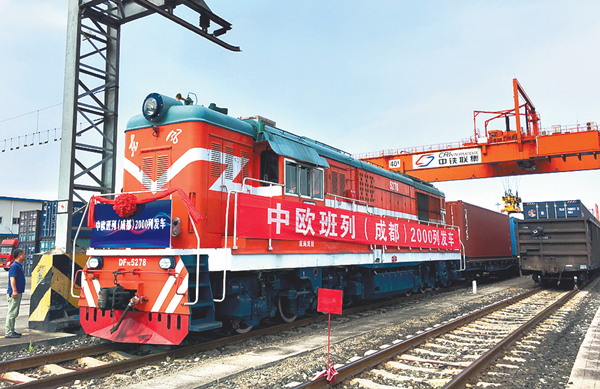
One of the brightest lights shining in these strange times is the Belt and Road Initiative, which President Xi Jinping proposed five years ago. Back in 2013, the world was gradually recovering from the shocks of the global financial crisis, but global economic recovery was relatively slow. By aiming to boost policy coordination among countries, and expedite connectivity by building and improving infrastructure, the Belt and Road Initiative injected new vitality into the economies of Asia, Europe and Africa and brought them closer, which accelerated the global recovery.
Through this global public good, China wants to make global economic growth sustainable, which is significant considering that China has been contributing about one-third to global growth for a decade.
While boosting its economic strength, China has been inspiring other economies to prosper as well. With its population inching closer to 1.4 billion-much larger than the combined population of the United States, the European Union and Japan-China is on way to become the world's largest economy. And the Belt and Road Initiative will help China achieve that goal.
But that is not the only goal China wants to achieve. Thousands of years of Chinese culture and values have promoted the philosophy of harmony, love, peace, inclusiveness and common prosperity. And those are the values the Chinese leaders abide by, and have been promoting through the Belt and Road Initiative.
In its five years, the Belt and Road Initiative has made tremendous progress and taught many a lesson. The initiative's greatest contribution is that it has been playing the catalyst's role in regional economic development and inspiring other countries to boost their economies.
For example, Greece, which this month exited the EU's eight-year bailout program, aims to become a regional shipping, logistics and tourism hub by using its geographical advantages. And Russia and Mongolia have agreed to dovetail their regional connectivity plans with the Belt and Road Initiative.
Besides, the Czech Republic, Poland and Hungary have been thinking of developing Prague, Warsaw and Budapest into regional financial and aviation centers while synergizing their development plans with the Belt and Road Initiative.
But the other aspects of global development is worrying. In Europe, the implications of Brexit, the US' isolationist and protectionist policies, the threat of terrorism and influx of refugees pose big challenges to the EU.
While China and some other countries have offered possible solutions to many of the existing global problems, some economies are creating new problems, many of which threaten to curb China's peaceful rise.
China has resolutely supported the idea that the solutions to many, if not all, of these problems lie in promoting globalization, reforming the global governance system, and boosting regional development and the multilateral trade system. And all this is possible only through negotiation.
In the past five years, the Belt and Road Initiative has promoted coordination and mutual development with other countries, while following the principle of green, healthy and sustainable development. And although the past half a decade has not been absolutely perfect, it has laid the foundation of peace and prosperity.
In other words, given the increasingly complicated global environment, mutual development through improved connectivity holds the key to a better, brighter future.
The author is deputy chief of China Daily European Bureau.