City shifts from coal to cutting-edge









Companies threatened by price slump thrive after charging into new, emerging markets
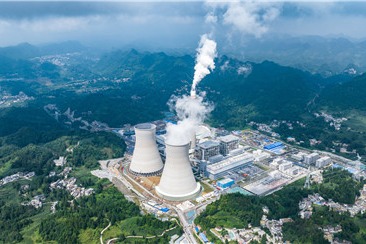
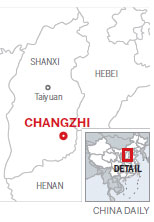
For many people, the name Changzhi is synonymous with coal. The city in northern China's Shanxi province has 90.6 billion metric tons of coal reserves, and the "black stuff" can be found under 61 percent of its land area.
Every year, it produces 100 million tons of coal.
Yet as the nation celebrates the 40th anniversary of reform and opening-up, people are seeing Changzhi in a new light. The city's efforts to become a home for enterprises that offer high added value and cutting-edge technology appear to be yielding encouraging results.
Shanxi Lubao Coking Group was established in 1994 in Dianshang township and is today Shanxi's largest private enterprise, employing about 20,000 people.
While many companies were going bankrupt due to a slump in the coke market between 2008 and 2015 - more than 30 went bust in Dianshang alone - Lubao shifted focus and began manufacturing coke-related chemicals, the prices of which were rising.
It not only survived but thrived, making the company more determined to expand its industry chain and produce high-value-added products, according to its Party secretary, Yang Xiuyuan.
He said Lubao continued its transformation with local government support, largely in helping arrange bank loans at a time when most financial institutions had stopped lending to coking companies because of the sluggish market.
The company established Lubao Xinghai New Material Co and, with total investment of 3.1 billion yuan ($448 million), built a production line with an annual output of 100,000 tons of caprolactam - a compound used in nylon, fiber and plastics - that went into operation in July 2017.
Yang said the company wants to go further and has invested 1.5 billion yuan to construct facilities that allow Xinghai to produce caprolactam that is closer to the finished product.
The subsidiary made 946 million yuan in revenue in 2017, and that is expected to rise to 6 billion yuan after the new facilities go into operation, he said.
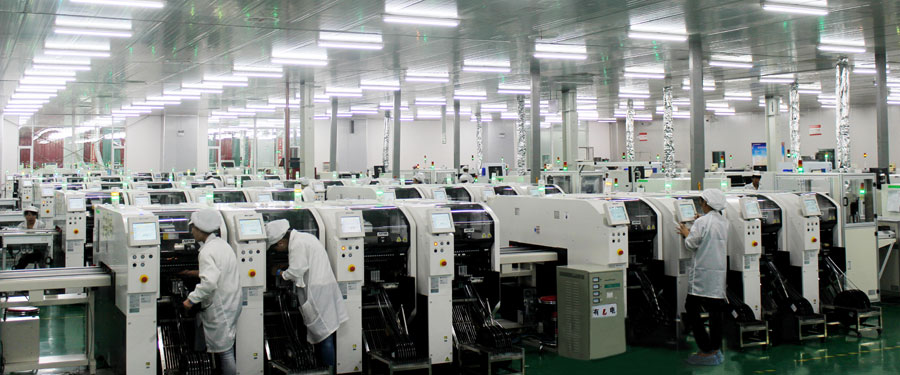
Other Changzhi companies have also diversified, like Nanye Industry Group, which used to focus on coal mining and sales but has now entered the LED industry. It set up Shanxi High-Tech Huaye Electronic Group in 2013 to make LED screens and displays.
With an investment of 5.3 billion yuan, Huaye established a complete industry chain, including LED lamp beads packaging and lighting equipment, its deputy Party secretary, Yuan Xinhua, said.
Nanye's transformation was born from its need to develop and has been carried out under guidance from the government, Yuan said.
"City authorities drafted a development plan for the LED industry early in 2008 when the coal market was still booming," he said. "When the market stagnated in 2013, the provincial authorities arranged for coal company employees to visit LED manufacturers to learn about the industry."
As of last month, Huaye had produced goods worth almost 1.5 billion yuan this year, recording about 1.1 billion yuan in sales, according to data from the company.
Lu'an Group, a Fortune Global 500 company, has also been working on the world's first mass production line for deep-ultraviolet LED chips.
Shanxi Lu'an Photovoltaics Technology Co, a subsidiary launched in 2016, is cooperating on the project with the Chinese Academy of Sciences' Institute of Semiconductors and has initially invested 600 million yuan. The company said the Changzhi government has offered 150 million yuan in financial support.
Deng Ming, president of the photovoltaics company, said the production line's annual output capacity will be 30 million chips. Workers began to debug the facility late last month, and the first chip is expected to roll off the assembly line in November.
Deep-ultraviolet LED chip technology has the potential to disrupt several markets, according to Deng. For example, he said, it may make refrigerators a thing of the past, as light from the chips could provide a continuous sterilized environment that would prevent food from going bad. "China is now neck and neck with Japan and the United States in deep-ultraviolet LEDs," he added.
The Changzhi government has vowed to keep the city's industrial transformation going and has drafted a series of ambitious plans.
In addition to promoting development of modern coal-related chemicals, high-end manufacturing, new energy vehicles, new materials and new-generation information technology, the city also aims to foster five new industries, including photovoltaics manufacturing, general aviation and medical health.
Changzhi's commission for economy and information technology said in a statement that one target is to take the total value of goods produced by its new-materials industry to more than 10 billion yuan by 2020. The figure was 8.3 billion yuan in 2016.
The city government also wants the output value of its energy conservation and environmental protection industry to reach 15 billion yuan within the same time frame, double the value recorded in 2016, the commission said.
According to the city's development and reform commission, its economic planner, 1,190 projects were launched in Changzhi in the first seven months of 2018, with 819 - almost 70 percent - related to industrial transformation.
"Changzhi has been gradually transitioning its development mode from one that relies on consuming resources and materials to one that is more high-end and depends on technological innovation, talent, and a continuous and cyclical use of resources," the reform commission said in a statement.



- Macao International Airport gets materials for expansion job
- Hefei metro station marriage ceremony stuns international bloggers
- China to hold Farmers' Harvest Festival around the country next month
- Ningxia Hui city lights up for Chinese Valentine's Day
- Library with a difference opens in Guangzhou Railway Museum
- Burn survivor enrolls in Nanjing, attempting to create robotic hand