Raise in export tax rebates to boost foreign trade









Adjustment complies with World Trade Organization rules and aims to ease burden on companies, real economy
China's move to raise tax rebates on some exports is expected to ease the burden on the real economy and stabilize foreign trade growth to cope with complicated global scenarios, particularly trade frictions, according to analysts.
The State Council, China's Cabinet, has decided to adjust the nation's rebate policy by raising some rates and trimming the number of export tax brackets from seven to five, according to a statement released after an executive meeting presided over by Premier Li Keqiang on Oct 8.
It said the revised policy, which comes into effect on Nov 1, complies with World Trade Organization rules.
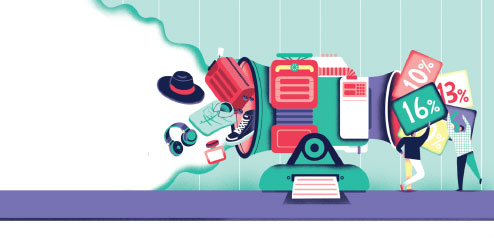
According to the statement, the rebate rate for all exports currently in the 15 percent group and some in the 13 percent group will be set at 16 percent. Exports that now receive a 9 percent rebate will instead get 10 percent, while those receiving 5 percent will be bumped to either 6 or 10 percent.
In keeping with the past two decades, rebates will remain unchanged for goods that consume lots of energy, cause serious pollution and are resources oriented, it said. Products related to China's efforts to cut industrial overcapacity are also unaffected.
China is also simplifying the rebate system to improve efficiency. The executive meeting set a goal to cut the average processing time from 13 days to 10 by the end of the year, while companies with good records will receive rebates faster and more easily, the statement said.
In addition, it said, the authorities will promote paperless applications, while foreign trade service providers are encouraged to help small and medium-sized enterprises apply for export rebates.
China exported goods worth 11.86 trillion yuan ($1.71 trillion) in the first three quarters, up by 6.5 percent compared with the same period last year, according to the General Administration of Customs. At the same time, imports and exports of goods increased by 9.9 percent to 22.28 trillion yuan.
The move to adjust rebate rates has been welcomed among export companies. Liu Mingfang, general manager of Hefei Rijin Electronics in Anhui province, said his company produces components for air conditioners and other electronic devices that are mainly shipped to clients in the United States and Europe.
Rijin's revenue in the first nine months was about 20 percent lower than the same period in 2017, Last year, the company reported a twofold increase in year-on-year revenue growth.
This year's fall in revenue is "partially due to additional tariffs from the trade friction, because many of my downstream manufacturers were worried and planned to cut orders after new tariffs came into effect", Liu said. Increasing the rebate rates, even by 1 percent, will help exporters reduce costs, he said, adding that it was "the right time to make such an adjustment".
China introduced its export tax rebate system in 1985, focusing on coal, agricultural products and industrial commodities, with rates ranging from 3 percent to 14 percent.
The rebates are to refund exporters' indirect taxes, including value-added tax and consumption tax, according to Liu Xuezhi, a senior researcher with the Bank of Communications' Financial Research Center.
He said increasing the rates will directly reduce the burden for enterprises and is in line with China's taxation reform to replace business tax with VAT.
The rebate system mainly refunds VAT payments, he said, adding that in the current circumstances of rising trade protectionism, the latest move by the Cabinet will make exporters better able to cope with external challenges.
Liu Xuezhi's comments were echoed by other experts, including Bai Ming, deputy director of the International Market Research Institute, part of the Chinese Academy of International Trade and Economic Cooperation.
The central government move benefits taxpaying companies at a time when their products face additional tariffs amid escalating trade frictions between China and the US, Bai said.
He said greater rebates can ease the pressure and help them survive during such friction.




- China says ready to work with ASEAN countries on South China Sea peace
- The three Shenzhou XXI crew members lift off towards the Tiangong space station
- Former Gansu vice-governor sentenced to 14 years in major bribery case
- Officials from mainland and Taiwan pledge economic and trade cooperation
- PLA operations counter infringements and provocations
- Education key to APEC tackling future challenges