China, EU can be closer cyber partners









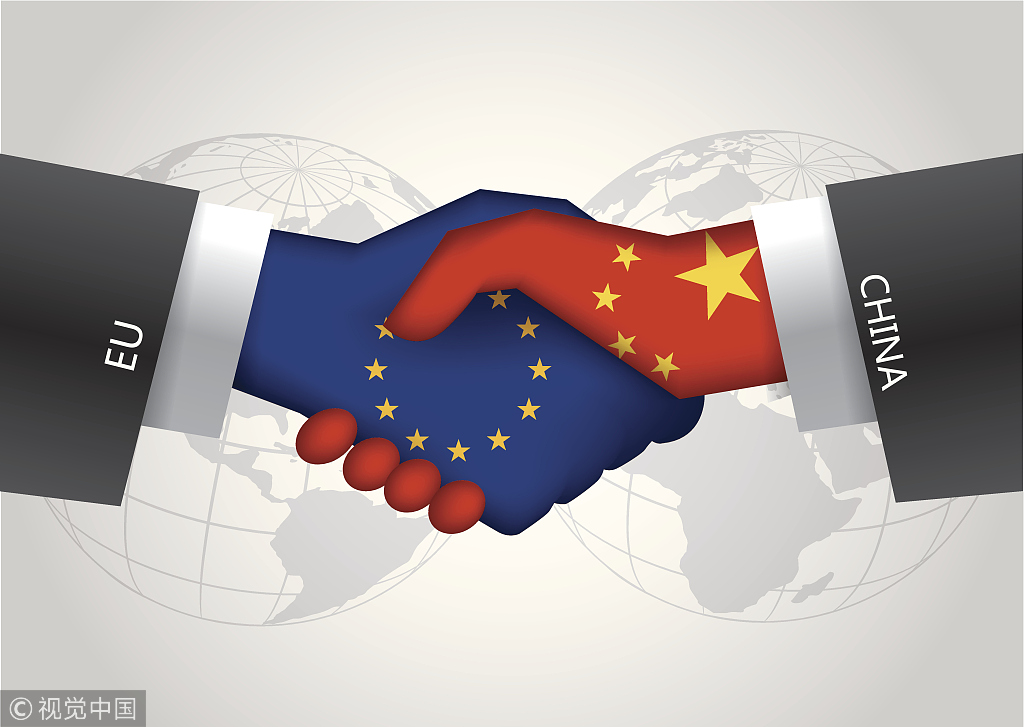
Beijing hosted the fifth annual conference of the Taihu World Cultural Forum in Beijing last week, with its significance highlighted in a congratulatory letter sent by Chinese President Xi Jinping.
As politicians, entrepreneurs, scholars and cultural notables gathered to promote dialogues among civilizations, it was good to see the digital element of our contemporary culture was one of the focuses for those discussions.
Nowadays no one can image our world without cyberspace, which has become an indispensable part of almost every aspect of our current society since the emergence of the internet.
Unlike the land or sea, no national borders lie in cyberspace, meaning it is a new territory that needs joint efforts from the international community to cope with the challenges and ease mistrust.
China's strategy for cyberspace is clear. In December 2016, China released its national cyber security strategy, aiming to push for a peaceful, secure, open, cooperative and orderly cyberspace.
In March 2017, China unveiled an International Strategy of Cooperation on Cyberspace. To many China watchers, Beijing's approaches are inclusive and cooperative.
A cooperative approach makes it easier to win partners and those who are like-minded should work together. In some ways, the European Union has some similarities with China in its approach to cyberspace as Brussels invited international cooperation on cyberspace in its 2013 cyber security strategy.
It is heartening to see dialogues between the EU and China on cyberspace have been conducted since the two launched a cyber task force in 2012. However, the EU and China could move a step further and become truly reliable partners on cyberspace.
First of all, Europe and China could build their trust via dialogue and work closely on addressing cyber security concerns.
Both Europe and China are exposed to cyber security incidents, which are becoming more frequent and difficult to deal with. EU data shows that last year, there were more than 4,000 ransomware attacks per day and 80 percent of European companies experienced at least one cyber security incident.
In the WannaCry ransomware attack in May 2017, both European and Chinese institutions and companies were hit. Cyberattacks are estimated to cost the global economy 400 billion euros ($530 billion) every year.
Technology is evolving, so are cyberattacks. Given the nature of cyber threats, no country can face the challenges alone. Dialogues on cyber security will greatly help build mutual trust to enhance EU-China cooperation on law enforcement to crack down on crimes in cyberspace.
Second, on protecting data privacy.
Europe and China are now ahead of other nations on making laws to protect data privacy.
In the EU, the General Data Protection Regulation, or GDPR, one of the biggest and most empowering overhauls to its data laws, took effect on May 25. The GDPR is designed to make sure that EU citizens' personal information is protected-no matter where it is sent, processed or stored-even outside the EU. The GDPR's impact is global, as long as foreign companies, including many Chinese ones, have to deal with EU citizens' personal data within the EU.
At the same time, China's Cyber Security Law, which has been enforceable since June 1 last year, provides better protection for people's personal information.
However, both the European and Chinese public are yet to have sufficient knowledge of the two important laws. The two sides should work more to raise awareness of the regulations.
Last but not least, on the digital economy.
The digital economy is vital to both European and Chinese prosperity.
The EU's digital economy is burgeoning. The EU's data economy was estimated to stand at 335.5 billion euros ($385,4 billion) in 2017, an increase of 11.8 percent compared to the previous year.
China's digital economy is remarkable. It totaled $3.4 trillion dollars in 2017 and accounted for one-third of its national GDP, making it the world's largest e-commerce market and one that is appealing to European companies.
China is too important to be ignored. Any discussion on the internet or cyberspace without mentioning China, which owns the largest population of netizens in the world, will be empty and meaningless.
As both Europe and China are keen to work with other countries to cope with the challenges and to cooperate in cyberspace, the two should work together to build their resilience, to drive technological innovation together, and as Chinese President Xi urged, to "jointly build a community of shared future in cyberspace".
The author is president of ChinaEU.