Lifan set to ride the reform wave for continued rewards









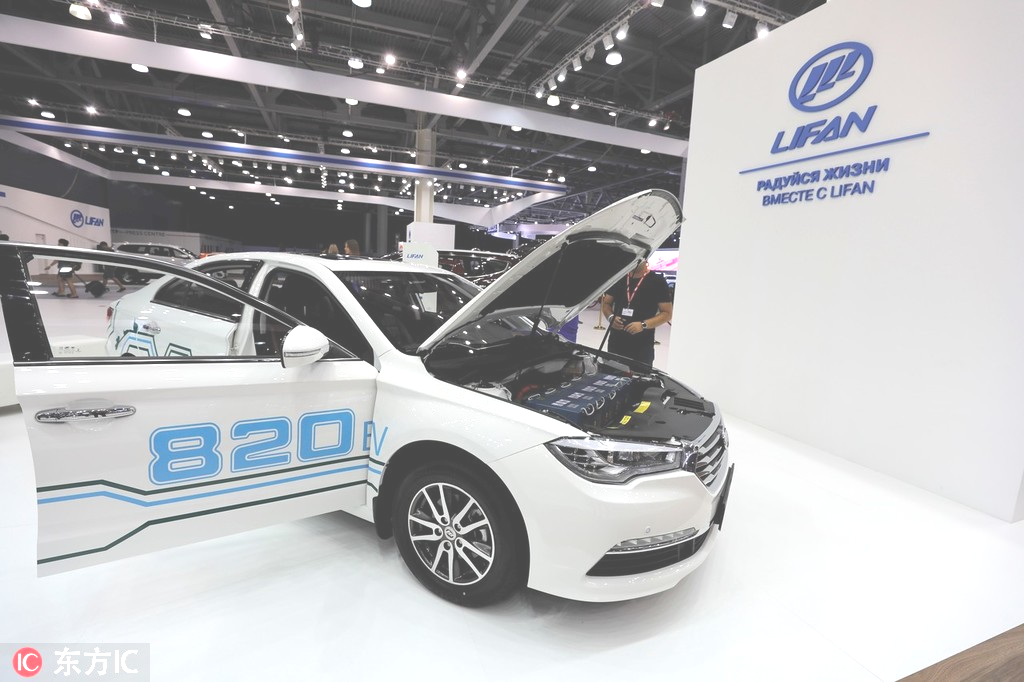
For Yin Mingshan life turned full circle when Lifan Industry (Group), a homegrown motorcycle maker, become one of the nation's largest non-State-owned automakers and a beacon of China's success through reform and opening-up.
Little did the 80-year old chairman anticipate that the blazing trail he charted for Lifan in Chongqing would serve as a blueprint for the success of private enterprises and entrepreneurship, especially in a country where giant State-owned enterprises ruled the roost. The former book editor turned entrepreneur was last month named in the list of top 100 outstanding private entrepreneurs of the past four decades in China, a ranking released in Beijing by the United Front Work Department of the Communist Party of China Central Committee and the All-China Federation of Industry and Commerce.
As the founder of Lifan, one of China's largest car and motorcycle makers, his success story started soon after China embarked on reform and opening up in 1978.
"Lifan has grown from being a small street vendor in 1992 into a public company," said Mou Gang, who became the chairman of Lifan after Yin stepped down last October.
"The 26 years of our development is representative of China's reform and opening-up," he said.
Automobile manufacturing is one of the pillar industries in Chongqing, an industrial city in southwestern China. After Guangdong province, the city is the second-largest car manufacturing base in China with a throughput of 3 million cars in 2017, accounting for 10.3 percent of the nation's total auto production.
In the past four decades, Yin and his company have kept pace with the changes in China's socioeconomic development and made many achievements in the private sector.
"Lifan's development is largely based on innovation, exports and credibility," Mou said.
By the end of 2017, Lifan had 15,000 employees and 23 plants, including seven in countries such as Russia, Vietnam, Ethiopia and Uruguay. Its products have been sold in 140 countries and regions.
True to its commitment, Lifan invests more than 6 percent of its revenue in R&D annually. It has two national level research centers for cars and has motorcycles and applied for over 10,000 patents in 35 countries and the European Union. It has already been granted 9,530 patents, according to company officials. In addition, it has been the leading Chinese carmaker in Russia for seven years in a row.
Yin founded Lifan at the age of 54 in 1992 with only nine employees. The company first only made motorcycles, and became the leader in the sector after achieving exports of over $100 million in 2001.
Though he was happy with this achievement, Yin soon realized that Chinese consumers may need more cars than motorcycles as living standards were improving steadily. In 2003, Lifan began to focus on vehicles and built its first car plant. In 2006, it produced its first car, the Lifan 520, a successful model in the market.
In 2010, Lifan went public and listed on the Shanghai Stock Exchange, the first Chinese private carmaker to do so.
Despite the stiff competition at home and abroad, Lifan is speeding up its transformation and industrial upgrading, and is ready to achieve breakthroughs in new energy and smart cars.
In 2010, Lifan worked with the electric car research center of the Chinese Academy of Sciences to produce new energy cars and its first model, the Lifan 620, was used as a security vehicle at the 2010 Shanghai World Expo. To establish an industrial chain for smart cars, Lifan invested in a car-hailing platform for new-energy vehicles, Pand Auto, in 2015.
The company hopes to have 300,000 electric cars in its rental business by 2020, which will help make it one of the leading new-energy vehicle leasing platforms in China, according to Gao Yu, CEO of Pand Auto.
In the coming years, Lifan will narrow focus to concentrate on vehicle production and further expansion in overseas markets.
"With our ample manufacturing experience and research capability, we will still focus on automobile manufacturing," said Ma Ke, who became Lifan's president last year at the age of 33.
He added that Lifan will continue to make traditional diesel and petrol cars, new energy cars and hybrid electrical vehicles.